
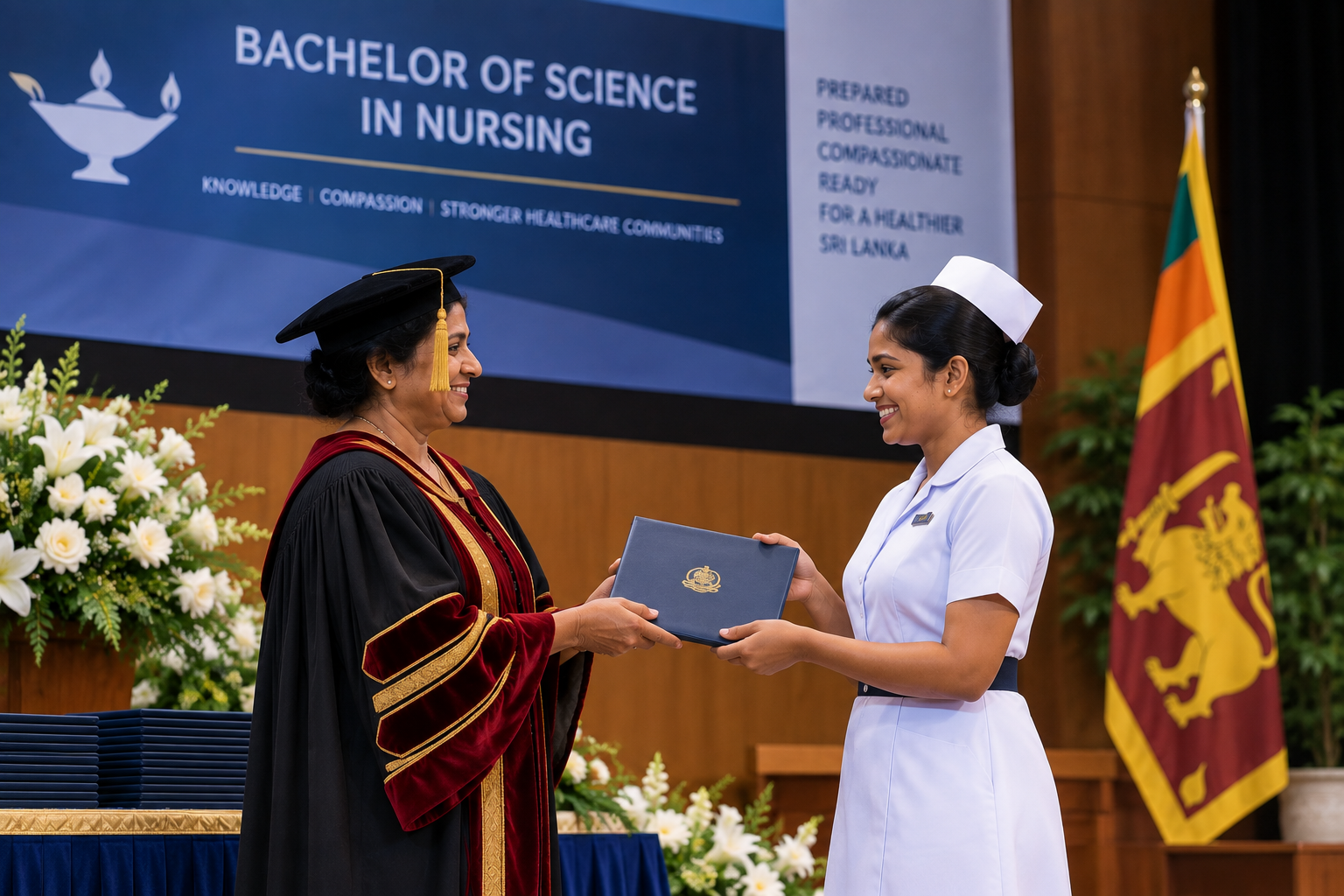
Part 15: Raising the Bar: Why Nursing Education Must Move to Degree Level
Sri Lanka’s nursing profession stands at an important turning point. The challenges we have explored throughout this series, including staffing shortages, burnout, inadequate wages, and weak professional infrastructure, do not have simple solutions. However, some reforms have the potential to address several of these challenges at the same time. Nursing education is one of them.
A Profession Ready for the Next Level
The proposal to require a Bachelor of Science in Nursing as the standard entry qualification for Registered Nurses is not a new idea globally. In fact, it has become the established pathway in many countries whose healthcare systems are widely respected. Canada, the United Kingdom, New Zealand, and Sweden all require a bachelor's degree to become a Registered Nurse.
These programs bring together scientific knowledge, ethics, communication, clinical training, critical thinking, and leadership development. Together, they prepare nurses for increasingly complex healthcare environments where the role involves far more than carrying out routine clinical tasks.
Respecting the Nurses Who Built the System
I understand that this proposal can generate strong reactions. Experienced diploma nurses who have spent their careers providing excellent care under difficult circumstances, and who have personally carried the nursing system through wars, disasters, and pandemics, may reasonably ask why the benchmark should be changed now.
That concern deserves a direct and honest response. Raising the entry standard is not a judgment on the nurses who qualified under the previous system. It is not a statement that diploma-trained nurses are less capable or less dedicated. Rather, it is a recognition that healthcare itself is changing, and the profession must evolve with it.
Patients are becoming more informed and their healthcare needs are becoming more complex. Treatments and technologies are becoming increasingly sophisticated, while the legal and ethical responsibilities surrounding healthcare continue to expand. Preparing nurses for this environment requires a broader educational foundation and greater opportunities for advanced professional development.
A Transition, Not a Replacement
Moving toward degree-level entry should be managed carefully, gradually, and respectfully. Current diploma nurses should be able to continue working safely and confidently, with bridge programs available for those who wish to upgrade their qualifications.
A clear target year, such as 2030, by which all new Registered Nurses entering government service must hold a degree, could give nursing schools, universities, and the Ministry of Health time to develop the necessary infrastructure and plan the transition properly.
Existing nursing schools could also play an important role in this transformation. Rather than becoming unnecessary, they could be repurposed to provide bridge programs, continuing education, caregiver training, or preparation for nurses seeking opportunities in the international workforce.
More Than a Qualification
The long-term benefits of this shift would extend beyond clinical competence. When nursing moves further into the university system as a degree-level profession, society's perception of nursing can change as well.
Young people may begin to see nursing not simply as a caring occupation, but as a serious professional and intellectual career with opportunities for advancement. The profession can attract candidates who see a genuine pathway toward specialization, postgraduate education, research, leadership, and advanced clinical practice.
In countries where nursing has progressed to master's and doctoral levels, advanced nursing roles have also expanded. Nurse practitioners who can diagnose, prescribe, and manage patients independently have helped reduce pressure on doctors and improve access to care, particularly in rural and underserved communities.
Building on What Sri Lanka Already Has
Sri Lanka already has an important foundation on which to build this future. The country has a long history of publicly funded healthcare, established nursing education, experienced healthcare professionals, and nurses who have demonstrated their skills both at home and internationally.
The question is not whether Sri Lankan nurses are capable of reaching a higher professional standard. They have already demonstrated that capability.
The question is whether the education system, healthcare institutions, and policymakers are prepared to create the pathway that allows the next generation of nurses to reach that level from the beginning.
Sri Lanka has the foundation to build this future. What it requires now is the political and institutional will to commit to it.