
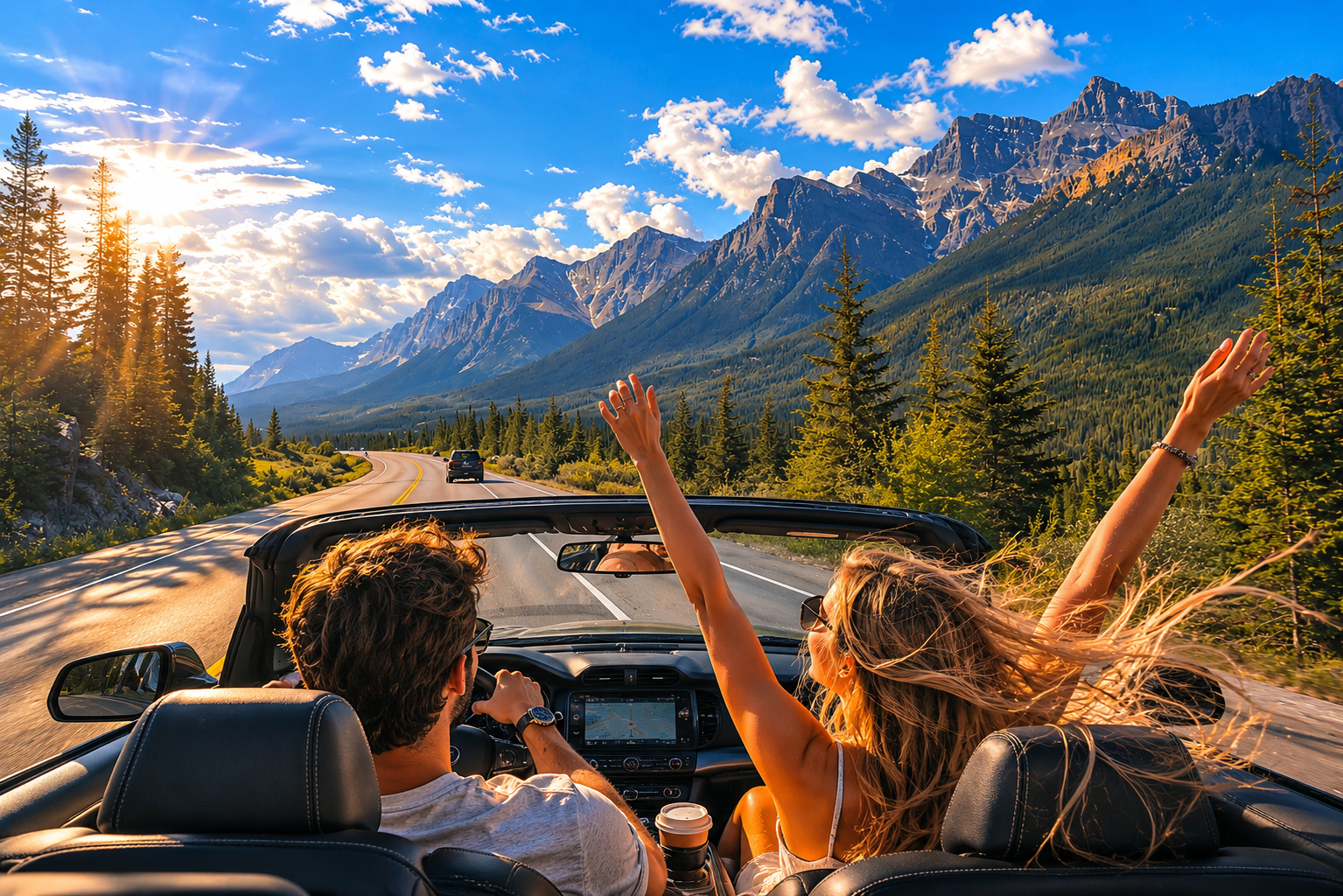
This is not a lecture about seatbelts or speed limits. You already know those matter. This is about the specific hazards that summer brings in Canada — the ones that catch even careful drivers off guard. A photo from a recent collision is what prompted this piece. If even one part helps someone avoid a close call, it was worth writing.
These tips are for anyone currently in Canada, who has lived here, was born here, or is planning to visit. Take what is useful. Add what is missing.
Pedestrians, cyclists, and distracted wanderers
Summer is when foot traffic explodes. People who spent winter commuting by car or transit now want to walk, jog, and cycle. Crosswalks and bike lanes that were quiet in February are busy every hour of the day.
The most important group to watch is what you might call the silent pedestrian , someone wearing noise-cancelling headphones, completely unaware of traffic, stepping off a curb without looking. You cannot honk your way to safety with this person. You have to anticipate them. Make eye contact before moving through a crosswalk whenever you can. If you cannot make eye contact, slow down and be ready to stop.
Cyclists crossing at crosswalks are another common hazard, especially those who ride through instead of walking their bikes. E-bikes, e-scooters, and electric unicycles add to this mix. They are small, quiet, and often faster than they look. Be especially careful when turning right across a bike lane or left across a busy sidewalk — these are the moments when a fast-moving rider can appear from nowhere.
Note for cyclists
If you are cycling through a crosswalk, walk your bike instead of riding it. If anything goes wrong, this one habit gives you much stronger legal standing and is safer for everyone around you.
Weather you do not expect in summer
Summer weather in Canada is not just sunshine. Glare, heavy rain, hail, and sudden wind gusts can all appear within the same afternoon drive.
Glare is underestimated. A low morning sun driving east, or an evening sun driving west, can make the road completely invisible for several seconds. Keep your windshield clean and invest in a good pair of polarized sunglasses. These two things cost almost nothing compared to what they prevent.
Hydroplaning is a hazard most drivers associate with heavy rain, but it can happen in a light drizzle. When a thin film of water , sometimes only two or three millimetres deep , sits on the road surface, your tires can lose contact and the car starts to float. You will feel it as the steering wheel going suddenly light.
"The instinct when hydroplaning is to brake hard. Do not. Ease off the gas, hold the wheel firmly, and let the car track in the direction it is sliding."
Grip returns within a second or two. Once it does, reduce speed gradually and drive with extra care. Sudden braking or overcorrecting will make the situation significantly worse.
Hail storms bring ice balls ranging from pea-sized to tennis-ball-sized. They can crack your windshield, dent your roof, and coat the road in a layer of ice that is every bit as slippery as a winter freeze.
If you get caught in a hail storm
Turn on your hazard lights. Slow down and move to the rightmost lane. If hail is heavy or visibility drops, pull safely off the road onto the shoulder and wait it out inside your vehicle. Never stop under a highway overpass. The wind tunnel effect there makes the danger significantly worse, not better. Stay in your vehicle until the storm passes.
Wind tunnels can appear even on calm days. Certain road corridors, open prairie stretches, and gaps between large structures can produce sudden strong gusts that push a vehicle sideways without warning. If it happens, grip the wheel with both hands, steer toward where you want to go, and reduce speed. Check your mirrors too — a driver beside you may not be handling it as well.
Wildlife on the road
Summer is when animals are most active, most visible, and most likely to cross a road. Deer and moose are the biggest concerns almost everywhere in Canada. Bears, coyotes, and wolves appear depending on the region.
The danger is highest at dawn and dusk. If you are driving through a wildlife area at night, use your high beams when no oncoming traffic is present. Animals' eyes reflect headlights, making them much easier to spot before they reach the road. For deer and smaller animals, you will see two bright dots at road level.
Moose are different and far more dangerous. They are tall enough that headlight beams pass beneath their body. Watch instead for a faint white glow near the ground the pale lower portion of a moose's legs. Some describe it as seeing white socks in the dark. If you see something like that on a dark highway, slow down immediately.
Moose collisions are often fatal
A moose stands roughly two metres tall. When a vehicle strikes one, the animal's body falls onto the roof and windshield rather than being pushed aside. The result is catastrophic for the people inside.
Treat any moose sighting near the road as a serious emergency. Reduce speed, cover the brake, and do not assume the road is clear just because one animal has passed.
The rule with wildlife is simple: where there is one, there are likely more. If an animal appears on the shoulder, slow down, cover the brake, and be ready to stop or steer.
If you hit an animal and it is blocking the road or creating a danger for other drivers, call 911. For situations where the animal has moved off the road, call your local non-emergency wildlife or city line. Never approach an injured wild animal.
One more summerspecific nuisance: in agricultural areas, swarms of grasshoppers and other insects hit windshields and leave a protein film that seriously reduces visibility, especially at night. Keep your washer fluid reservoir full and use a bug-wash formula during insect season. Never run your wipers dry over insect smears — spray washer fluid first, or you will smear the mess across the entire glass.
Motorcycles
Motorcycles come out in force once the weather warms. When you see a large group riding together, treat them as a single large vehicle. Give them space, do not try to split through the group, and let them move as a unit.
Solo riders are harder to spot. A single motorcycle can disappear into a blind spot with ease. Check twice before changing lanes and give extra following distance — motorcycles can stop much faster than most drivers expect.
If you encounter a patch club or uniformed riding group, the only sensible approach is to give them room and keep driving. Do not engage if something feels tense. If you feel unsafe, note your location and call 911 when it is safe to do so.
Other things worth remembering
Construction zones are a summer constant in Canada. Speed limits inside them are enforced aggressively, and fines are significantly higher than on regular roads. The workers inside those zones are real people doing physically dangerous jobs. Slowing down is not just a legal obligation.
Check your tires before summer driving season. Switch to summer or all-season tires if you have been running winter tires. Worn tread dramatically increases hydroplaning risk and raises the chance of a blowout at highway speeds.
Air conditioning check that it works before the heat arrives. Heat-related fatigue is a real factor in driving errors, especially on long drives.
Impaired driving
Summer brings more social events. It also brings more impaired drivers on the road. If you have been drinking or using cannabis, call a cab or rideshare. There is no version of this calculation where driving impaired makes sense.
If you see someone driving erratically, keep your distance and call it in when safe to do so.
Summer driving in Canada is genuinely enjoyable. The roads open up, the scenery changes, and there are long stretches of good light. None of the hazards above are reasons to stay home. They are just reasons to stay sharp.