
💵 Your First Canadian Dollars
One of the small but important adjustments for newcomers is learning how money works in Canada. During your first few days, you may find yourself looking closely at coins, checking prices twice, or mentally converting everything back into your home country's currency.
That is completely normal.
Almost everyone goes through this stage. A cup of coffee, a bus ticket, or a grocery bill may seem expensive or cheap depending on what you are used to. It takes time for your mind to stop comparing and start understanding the real value of money in your new country.
🪙 Getting Familiar with Canadian Currency
Canada uses the Canadian Dollar, often called the "dollar" or simply "bucks" in everyday conversation.
Newcomers are often surprised by the coins because Canada uses several coins regularly in daily life. You will quickly become familiar with the nickel, dime, quarter, loonie, and toonie. At first, they may all seem similar, but after a few shopping trips you will recognize them without thinking.
Many people carry very little cash these days, but understanding Canadian coins and bills is still useful, especially during your first few weeks.
🛒 Understanding Prices
One thing that surprises many newcomers is that the price you see on a shelf is not always the final price you pay.
In Canada, taxes are often added at the cash register. You may see an item priced at ten dollars, but the final amount could be slightly higher after taxes are included.
This confuses many newcomers at first because in some countries the displayed price already includes tax.
Do not worry. After a few shopping trips, it becomes second nature.
💳 Paying Without Cash
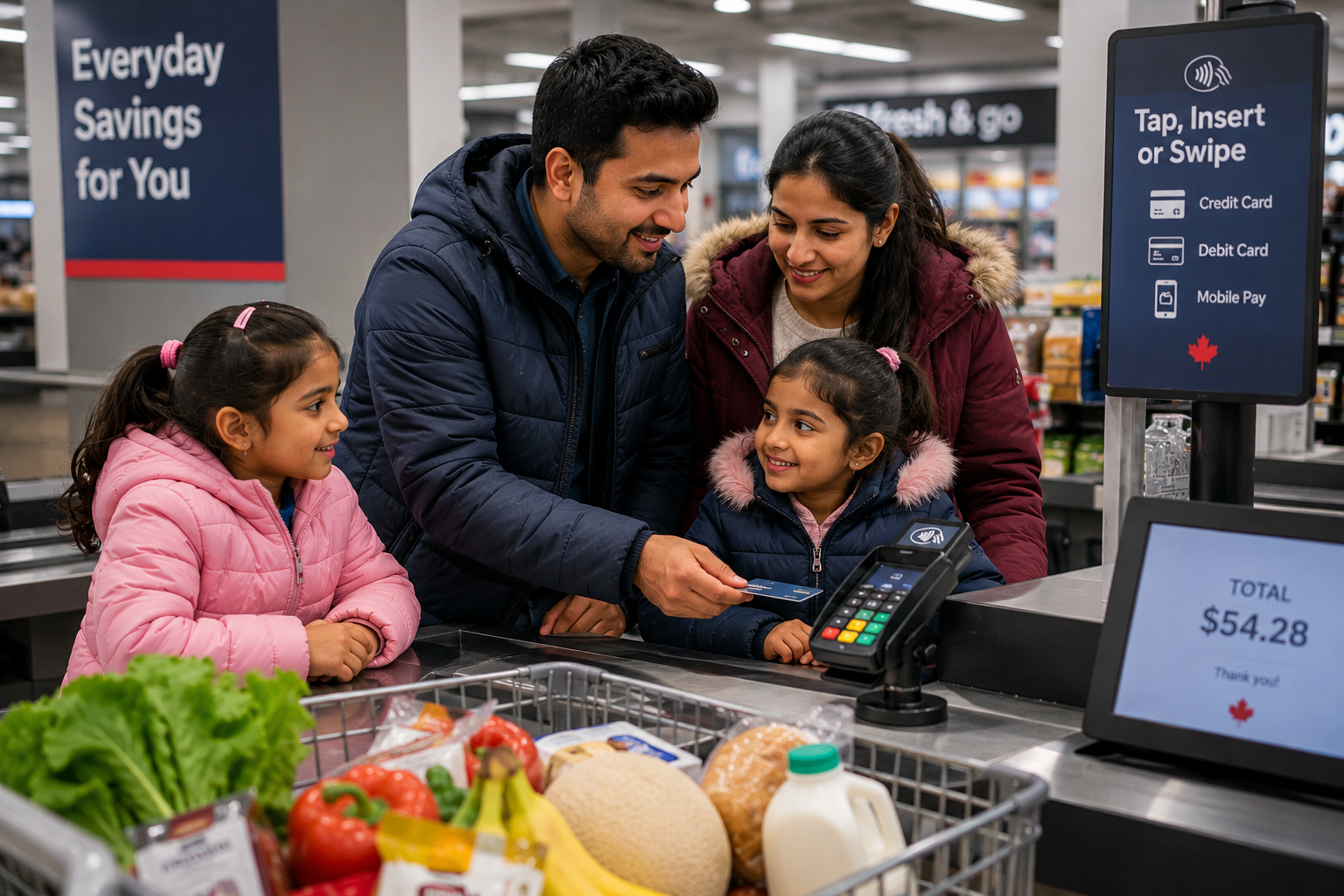
Canada is a very card-friendly country. Many people go days or even weeks without using cash.
Most purchases are made using:
Debit cards
Credit cards
Mobile payment apps
You will notice people tapping their cards or phones to make purchases in grocery stores, coffee shops, restaurants, and even small local businesses.
For many newcomers, this level of electronic payment feels new at first. Very quickly, however, it becomes part of daily life.
📱 Digital Payments
As you settle into Canada, you will discover that many financial transactions happen online.
People pay bills through banking apps, send money electronically, and receive payments directly into their accounts. Even splitting a restaurant bill with friends often happens through an electronic transfer instead of exchanging cash.
Because of this, having a bank account and online banking access becomes important very early in your settlement journey.
💰 Learning to Budget Differently
One of the biggest adjustments for many newcomers is understanding the cost of living.
Housing, transportation, groceries, childcare, and utilities may be very different from what you experienced before. During the first few months, it helps to pay attention to where your money goes.
Most newcomers need some time before they fully understand what things should cost in Canada. That learning process is normal and happens gradually.
The goal is not to be perfect. The goal is simply to become comfortable managing your finances in a new environment.
🏦 Understanding Credit and Debit
Another thing newcomers often learn quickly is the difference between debit cards and credit cards.
A debit card uses money directly from your bank account. A credit card allows you to borrow money temporarily and pay it back later.
Many newcomers are initially cautious about credit cards, which is understandable. However, in Canada, responsible use of a credit card helps build your credit history, which can be important later for renting homes, obtaining loans, or accessing certain financial services.
Like many things in Canada, it is something you learn step by step.
🌎 Sending and Receiving Money
Many newcomers continue supporting family members back home or receive financial help while they settle.
Today, moving money internationally is easier than ever. Banks and money transfer services offer different options, each with different fees and exchange rates.
Over time, you will learn which options work best for your family's situation.
🌱 Reflection: More Than Just Money
Learning a new currency is about more than recognizing coins and bills.
It is part of learning how life works in a new country.
At first, every purchase requires a little extra thought. You compare prices, calculate exchange rates, and wonder if you are making the right decisions.
Then something interesting happens.
One day, without realizing it, you stop converting everything back into your old currency. You understand what groceries should cost. You know how much gas costs. You recognize whether something is expensive or affordable.
That is the moment when Canadian money stops feeling foreign.
It is a small sign that you are no longer just visiting.
You are beginning to feel at home.