2026/09/29

When “I” Cannot Say “I”

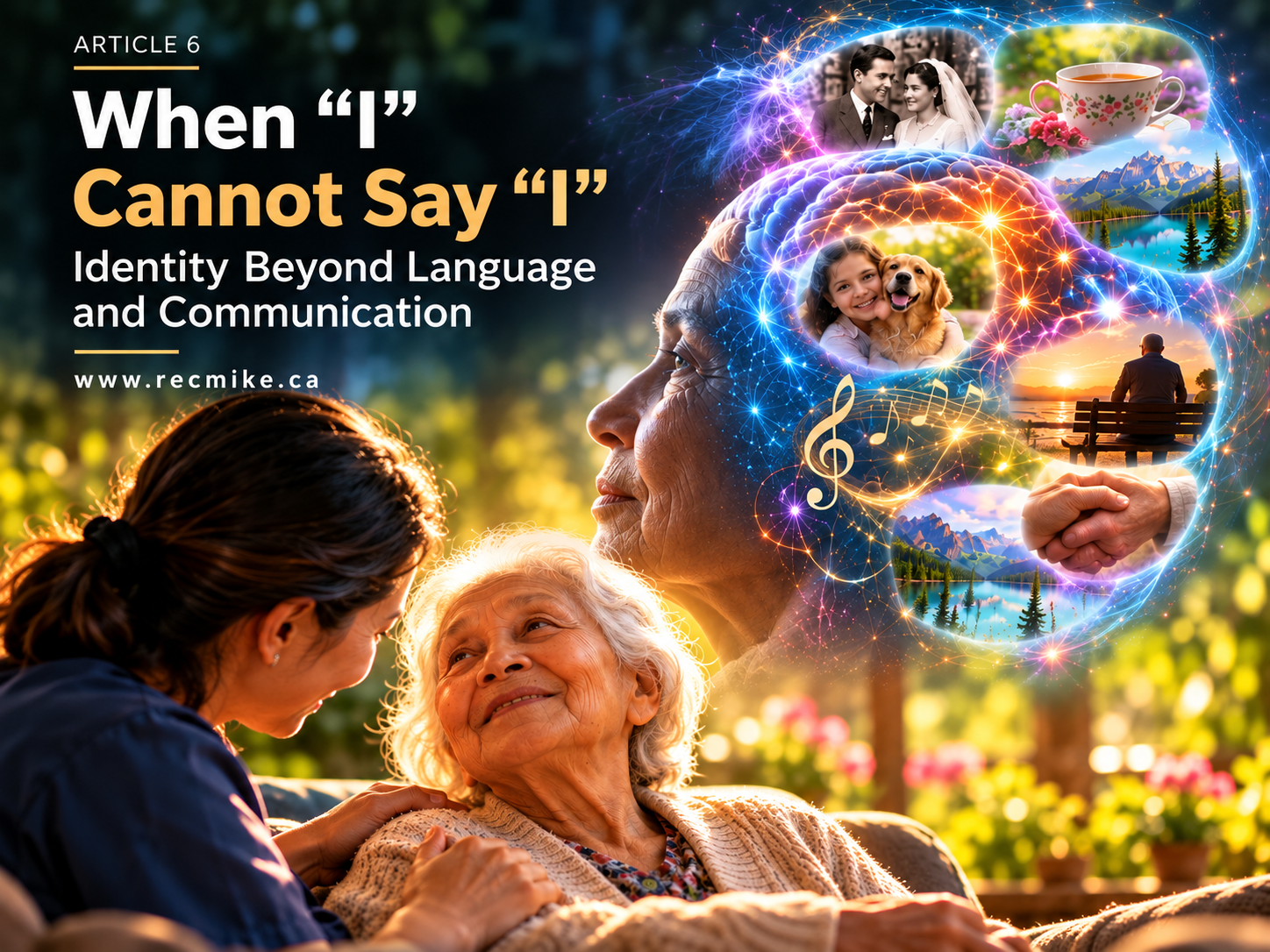
Part 6: When “I” Cannot Say “I”

Identity Beyond Language and Communication

In the previous article, we explored what can remain when autobiographical memories begin to fade. We saw that a person may lose access to parts of their life story while still responding to music, familiar routines, emotions, touch, and the presence of another person.

But dementia can eventually affect something else that we often use to understand a person's inner world: language.

When someone can no longer find the right words, answer a question, or tell us what they are feeling, it is easy to assume that their thoughts and awareness have also disappeared. But language and awareness are not the same thing.

When Words Become Difficult

Language is a complex brain function. Understanding and producing speech involves several connected brain regions and networks working together. These systems allow us to find words, understand meaning, organize sentences, recognize sounds, and communicate our thoughts.

In dementia and other neurological conditions, some of these abilities can become impaired. A person may know what they want to say but be unable to find the word. They may understand more than they can express. Sometimes they may communicate through gestures, facial expressions, movement, or changes in behaviour instead.

This creates an important distinction:

Not being able to say something does not necessarily mean not having something to say.

A Different Kind of Conversation

In my work with people living with dementia, I have learned that communication does not always look like a normal conversation.

Sometimes a person may not answer a question, but their face changes when someone they recognize enters the room. They may reach toward something they want, turn away when they are uncomfortable, smile when they hear a familiar voice, or become more relaxed when a familiar activity begins.

These are forms of communication too.

They may not give us a complete explanation of what is happening inside the person's mind, but they give us information about how the person is responding to the world around them.

The Brain Has More Than One Way to Communicate

Our understanding of another person often depends heavily on words because words are convenient. We can ask, “Are you comfortable?” and expect an answer.

But the brain communicates through many channels. Facial expression, body movement, tone of voice, posture, attention, and emotional responses can all provide information.

Some of these processes can continue even when language becomes significantly impaired.

This is particularly important in dementia care because the loss of speech can sometimes lead others to speak about a person as though they are no longer present.

That conclusion can be much too simple.

What About Recognition?

Recognition can also become complicated.

A person may not be able to say your name, yet your presence may still feel familiar. They may not be able to explain who you are, but they may respond differently when you enter the room.

We should not automatically interpret every positive response as proof that the person consciously remembers a specific relationship. The brain is too complex for that kind of certainty.

But neither should we assume that the absence of a verbal answer means the absence of connection.

Sometimes the safest approach is simply to notice the response without demanding an explanation.

Why Questions Can Become Difficult

Imagine being asked several questions when your brain is struggling to process language, attention, and memory at the same time.

“What's your name?”

“Do you remember me?”

“What did you do this morning?”

“Where are you?”

For someone with dementia, these may feel less like simple questions and more like a series of difficult tests.

If the person cannot answer, we may conclude that they do not understand or do not remember. But the problem may involve several different processes, including language, attention, memory retrieval, or the ability to organize a response.

This is why communication in dementia often works better when we reduce pressure and give the person time.

Connection Does Not Always Need Words

A familiar song can create connection. Sitting quietly beside someone can create connection. Helping with a familiar activity can create connection. A calm voice, a familiar routine, or a reassuring presence can also create connection.

None of these requires a person to explain their experience in words.

This does not mean that every person with dementia remains fully aware or understands everything happening around them. Awareness can also change as neurological disease progresses. The important point is that we cannot determine the whole of someone's inner experience simply from their ability to speak.

When “I” Becomes Quiet

Earlier in this series, we asked what happens when the Story Self begins to lose pieces of its history. Now we are asking what happens when the person can no longer easily communicate that story.

Perhaps the most important lesson is that the word “I” does not depend entirely on speech.

A person does not become less human because they cannot find a word. They do not stop having a history because they cannot tell the story. And silence does not automatically mean that nothing is happening inside.

The way a person experiences the world may be changing. Their ability to communicate that experience may be changing too.

But we should be careful not to confuse the loss of communication with the loss of the person.

The Question Gets Deeper

So far, our journey has taken us from “I,” to the brain systems involved in self, to memory, identity, dementia, and communication.

But there is another layer we have not fully explored.

If the brain can create a sense of self, build memories, connect those memories into a personal story, and allow us to experience the world from a first-person perspective, then we have to ask:

What exactly is consciousness?

Is consciousness the same thing as the self?

Is it the same thing as memory?

And when the brain changes profoundly, what happens to the experience of being here at all?

These questions take us into the next stage of the journey.

Next: Part 7

What Is Consciousness?

The Brain, Awareness, and the Experience of Being Here

In the next article, we move beyond memory and language and explore one of the deepest questions in neuroscience: how does brain activity become the experience of being aware?


Welcome to Canada- Part 22

Surviving Your First Winter

❄️ Learning to Live With the Seasons

In the previous article, we explored transportation in Canada, from public transit and driving to cycling, walking, and road safety. As you become more comfortable getting around, you will quickly discover another important part of Canadian life: the weather.

For many newcomers, the first Canadian winter can be one of the biggest adjustments. Cold temperatures, snow, ice, shorter days, and changing weather can make everyday activities feel very different from what you were used to. But Canada is not only about winter. Each season brings its own challenges, activities, and opportunities to enjoy the outdoors.

The key is learning how to prepare rather than simply trying to endure the weather.

🧥 What to Wear in Each Season

Canadian weather changes considerably throughout the year, so having the right clothing makes a big difference. Spring and fall can bring cool mornings, warmer afternoons, rain, and sudden temperature changes, so layers are often useful. Summer usually calls for lighter clothing, comfortable footwear, sun protection, and protection from rain when needed.

Winter requires more preparation. A warm winter coat, insulated boots, gloves or mittens, a hat, and clothing that protects you from wind and cold can make outdoor activities much more comfortable. Dressing in layers can also help you adjust when moving between the cold outdoors and heated buildings.

🧤 Winter Gear Essentials

If you are experiencing your first Canadian winter, do not wait for the coldest day to buy winter gear. Prepare before temperatures drop significantly. Good-quality winter boots with suitable traction can help when walking on snow or ice, while warm gloves, a hat, and a scarf or neck warmer can protect exposed areas from the cold.

For children, winter clothing becomes especially important because they may spend time outside at school or during recreation. Having extra gloves, socks, and suitable outdoor clothing can make winter much easier for the whole family.

🏠 Heating Your Home Efficiently

Keeping your home warm during winter can increase your energy costs, so learning how your heating system works is important. Understanding your thermostat, keeping doors and windows properly closed, and avoiding unnecessary heat loss can help make your home more comfortable and energy-efficient.

If you rent, learn what heating costs are included in your rent and what you are responsible for paying. This connects directly with the earlier article about utilities and household budgeting. Planning for higher winter energy use can help prevent an unexpected bill from putting pressure on your monthly budget.

☀️ Summer Activities in Canada

After months of cold weather, summer can feel like a celebration. Canadians often take advantage of the warmer months to explore parks, lakes, trails, campgrounds, and outdoor recreation areas. Families may go hiking, cycling, camping, swimming, have picnics, or simply spend more time outdoors.

Summer is also a wonderful opportunity for newcomers to explore their new community. You do not need to travel far or spend a lot of money. A local park, walking trail, community event, or family picnic can become part of your new Canadian memories.

⚠️ Seasonal Safety Tips

Every season brings different safety considerations. In winter, snow and ice can make sidewalks and roads slippery, while extreme cold can create risks for people spending too much time outdoors. In summer, heat, sun exposure, dehydration, wildfire smoke, and changing weather can become concerns.

Take a few minutes to check the conditions before heading outside, especially when travelling with children or planning outdoor activities. Wear appropriate clothing, carry water when needed, and adjust your plans when conditions become unsafe.

📱 Understanding Weather Alerts

Weather can change quickly in Canada, and learning to understand weather alerts is an important part of staying safe. You may hear warnings about extreme cold, heavy snowfall, freezing rain, thunderstorms, high winds, heat, wildfires, or other severe conditions.

Pay attention to official weather information and understand what an alert means for your area. A weather warning is not simply another notification on your phone. It is information that may help you decide whether to change your travel plans, stay indoors, or take additional precautions.

🌲 Enjoying Nature Year-Round

One of the wonderful things about living in Canada is that nature does not disappear when the weather changes. The same park or trail can look completely different in spring, summer, fall, and winter.

You may discover spring flowers, enjoy summer lakes, walk through colourful autumn forests, or experience a quiet snowy landscape in winter. With appropriate preparation, outdoor activities can become part of your family's lifestyle throughout the year.

As we discussed in the previous article, walking and physical activity can also support your health and wellbeing. Spending time outdoors can become both a way to explore Canada and a way to stay connected with your community.

🌱 Reflection: From Surviving to Enjoying

Your first Canadian winter may feel difficult. You may miss the warmth of your home country, wonder why people voluntarily live through so much snow, and spend more time checking the weather than you ever expected.

Eventually, something changes. You learn what to wear, how to prepare your home, how to drive or walk safely, and when it is better to stay inside. Then you begin discovering the enjoyable side of each season.

Winter becomes more manageable. Spring brings new energy. Summer opens the door to outdoor adventures, and fall brings its own beauty.

Canada's seasons are not simply something you have to survive. With preparation, awareness, and a little curiosity, they can become another part of the experience of making Canada your home.

Sri Lanka's Unsung Heroes- Part 18

Part 18: A Fair Wage at Every Stage: Rethinking the Nursing Salary Structure

In the previous parts of this series, we have looked at nursing education, professional regulation, continuing professional development, working conditions, burnout, and the financial pressures facing Sri Lankan nurses. All of these issues eventually lead to one practical question: how should nurses be paid for the work they do and the responsibilities they carry?

Discussing nurse salaries in Sri Lanka requires more than quoting a single figure. Nurses at different stages of their careers carry different levels of responsibility, experience, clinical knowledge, and leadership. A meaningful salary reform therefore needs to recognise these differences and create a clear, transparent, and consistent structure that rewards professional growth.

A Note About the Salary Figures

Before discussing specific figures, I want to make one important point clear. I am currently not living in Sri Lanka, so I do not have access to the most recent government salary scales and allowances. Therefore, some of the salary figures included in this article may have changed in recent years.

These figures should be viewed as a proposed framework rather than current official salary information. I would welcome updated information from nurses and others working within the Sri Lankan healthcare system so that these figures can be refined.

Moving Beyond Short-Term Salary Negotiations

There is also a broader issue that needs to be considered when discussing nursing salaries.

Salary increases and conditions of service in Sri Lanka's nursing sector are typically pursued through multiple politically affiliated trade unions. This can sometimes lead to fragmentation, competing demands, and negotiations focused on immediate gains rather than a long-term professional strategy.

A stronger long-term approach would be to develop a unified professional nursing body representing Registered Nurses regardless of political affiliation. Such a body could advocate for nurses based on workforce data, patient safety evidence, professional standards, and international comparisons.

The goal should not be to remove the voice of nurses. Quite the opposite. It should be to create a stronger and more unified professional voice that can negotiate for sustainable improvements based on evidence and the actual needs of the profession.

Starting the Career on a Stronger Foundation

Newly graduated nurses face one of the steepest learning curves of their careers. They are taking the knowledge and clinical theory learned during training and applying it for the first time in complex real-world environments.

They are learning to manage shift work, unfamiliar situations, difficult patients, emergencies, and the emotional demands of nursing while simultaneously developing professional confidence.

At this stage, a proposed base salary of approximately LKR 90,000 to 100,000 per month would provide greater financial stability. It could help new nurses meet basic living costs, transportation and meal expenses while allowing them to focus on developing their clinical skills.

When new nurses are paid too little to meet basic expenses, they may feel pressured to take additional shifts and overtime simply to survive financially. That creates another problem because excessive work can contribute to the burnout and early-career departure we discussed in previous parts of this series.

Three to Five Years: Growing Responsibility

After three to five years, nurses begin taking on significantly greater responsibility. They are able to manage complex patients more independently, support junior colleagues, and handle higher-acuity workloads with less supervision.

At this stage, a proposed salary range of approximately LKR 100,000 to 120,000 per month would recognise that professional development and provide greater financial stability.

These years are particularly important for the future of the nursing workforce. It is often during this period that experienced nurses begin seriously considering whether to remain in Sri Lanka or seek better-paid opportunities overseas.

A salary structure that recognises their growing experience could therefore be one part of a broader strategy to retain nurses within the country.

Five to Ten Years: The Backbone of the Ward

Nurses with five to ten years of experience often become an informal backbone of hospital wards.

They are the nurses who can respond calmly during emergencies, guide junior colleagues, recognise changes in a patient's condition, and maintain professional standards even when the ward is under significant pressure.

Much of this knowledge is developed through years of clinical experience. It cannot simply be replaced by hiring someone new.

For this group, a proposed salary range of approximately LKR 120,000 to 130,000 per month would better recognise their accumulated clinical knowledge, responsibility, and contribution to the wider nursing team.

It could also help reduce one of the financial incentives that encourages experienced nurses to consider migration.

Senior Nurses and Nursing Leadership

At the senior level, nurses take on responsibilities that extend far beyond direct patient care.

Ward sisters, charge nurses, and nurse managers may be responsible for entire units, staffing decisions, documentation standards, conflict resolution, quality of care, and the safety of both patients and junior staff.

These positions require clinical expertise, leadership ability, communication skills, systems thinking, and considerable emotional resilience.

For these roles, compensation in the range of LKR 130,000 to 160,000 or more, depending on the size of the unit, area of specialization, and level of responsibility, would better reflect the demands of the position.

Leadership should come with both responsibility and appropriate recognition.

Salary Should Not Depend on Endless Overtime

When Sri Lanka is compared with countries of similar economic size and inflation, nurses elsewhere may earn approximately US$300 to US$430 per month or more, depending on the country and career stage.

A proposed Sri Lankan salary structure ranging from approximately LKR 100,000 to 160,000 would place nursing income within a more comparable range while recognising nurses as skilled healthcare professionals.

There is one important distinction here.

These figures should represent base salary earned through normal working hours. They should not require nurses to work constant overtime, accumulate night-shift allowances, or take additional shifts simply to reach a reasonable monthly income.

A salary that looks adequate only after excessive overtime is not truly an adequate salary.

Giving Young Nurses a Reason to Stay

A clear salary ladder also sends an important message to young people considering nursing as a career.

It tells them that nursing can provide a genuine professional future. They can enter the profession, develop their skills, take on greater responsibility, move into leadership, pursue further education, and see their financial position improve along with their professional experience.

That matters.

If young people see nursing as a career with progression, recognition, stability, and professional respect, the profession becomes more attractive. A stronger recruitment pipeline means more potential nurses entering the system, while better career progression can also help retain experienced nurses.

Paying for the Future of Nursing

The salary question therefore goes beyond simply asking, "How much should a nurse earn?"

It is really about what kind of nursing profession Sri Lanka wants to build.

If Sri Lanka wants highly educated nurses, continuous professional development, stronger regulation, better patient safety, effective leadership, and a workforce capable of meeting the healthcare needs of the future, the salary structure needs to support those goals.

The nurses of today are carrying an enormous responsibility. A fair and transparent salary structure would not solve every problem discussed in this series, but it could become an important part of building a nursing profession where experience is recognised, professional growth is rewarded, and talented nurses have a genuine reason to build their careers in Sri Lanka.

2026/09/23

Let Boss Have a Chance

I have always felt that there is something special about seeing wildlife where it belongs, in the wild. Over the years, my experiences in nature have shown me how important it is to protect that connection.

That is why the story of Boss has stayed with me.

I understand that living alongside wildlife is not always easy. There are times when difficult decisions have to be made, especially when human safety is involved. But before a decision is made to kill a wild animal, I believe we should ask a simple question: Have we truly explored every reasonable non-lethal option?

Boss is not just a name or a story on social media. To me, he represents something much bigger. He represents the wild places we still have in Canada and the responsibility we have to protect them.

I am asking Parks Canada to consider every safe and practical alternative before moving toward a lethal solution.

If you care about wildlife and believe coexistence should be given a genuine chance, please take a moment to learn about Boss's situation and sign the petition asking for his life to be spared.

👉 Please sign and share the petition:
Stop the Killing of The Boss, Canada's Iconic Grizzly
https://www.change.org/p/stop-the-killing-of-the-boss-canada-s-iconic-grizzly

I am sharing this because I believe our voices matter. Not because I have all the answers, but because I believe wildlife deserves thoughtful consideration before we make an irreversible decision.

Let’s give Boss a chance. 🐻🇨🇦


A recent CTV News report has brought renewed attention to the future of Bear 122, known as “The Boss,” one of Banff’s best-known grizzlies. The report says Parks Canada has discussed the possibility of lethal removal, but also states that this is considered an extraordinarily rare management option and that other measures would be exhausted first. The report also highlights concerns about The Boss’s age, habituation to humans, and the growing number of visitors trying to get close to him.

You can read the full report here:
https://www.ctvnews.ca/calgary/article/could-the-boss-be-euthanized-parks-canada-addresses-plans-for-bear-122/

2026/09/21

ගින්දරයි, ආගමයි, එක තිතයි

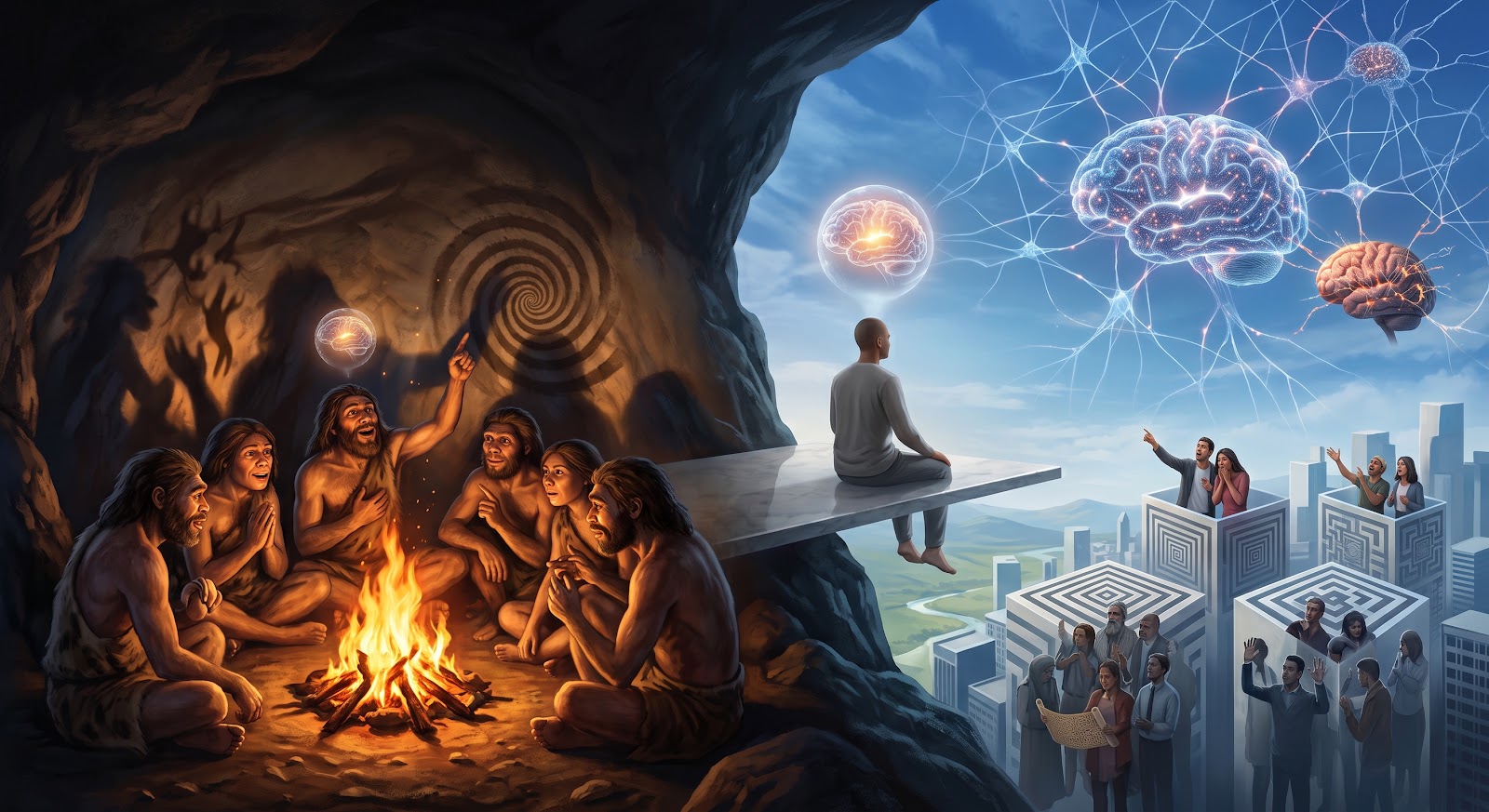
ගහෙන් ගහට පැන පැන ගිය වඳුරො ටිකක්, ගස් කොළං ටික නියඟයට අහුවෙලා විනාශ වෙලා ගිය වෙලාවේ, ජීවිතේ පවත්වා ගන්නට ගහෙන් බැහැල බිම දිගේ ඇවිදින්න “දියුණූ” වුනත්, මීට අවුරුදු 400,000කට විතර එහා කාළෙදි, එතෙක් දැකපු ගින්දර, තමන්ටම හදාගන්න පුළුවන් කියල අත්දැකීම් ලබන්නට “දියුණූ” වුනු, ඒ ගින්දර නිසා , වෙනද කළුවර වෙත්දි පණ බයේ නින්දට ගිය කණ්ඩායම, ගින්දර කියල අළුත් දේ වටා එක්වෙමින් , රැයේ කාළයක් ගෙවා දමත්දි, කතන්දර කියත්දි, ගින්දරෙන් පිසූ මස් පහසුවෙන් දිරවන නිසා, ඉතිරි කරගන්නට පුළුවන් වන කැලරි ටිකත් මොලේ පාවිච්චියට ගන්නට පුළුවන් වීම නිසා, සිංදු කියන්නට, රඟන්නට හැකියාවන් ලැබෙත්දි, පරිසරේ සිදුවන තමන්ට තේරුම් ගත නොහැකි දේ ගැන “හිතන්නට” , මරණය ගැන වෙනස් හැඩයකින් දකින්නට පටන් ගත්ත, “දියුණුව” ඔස්සේ ඇවිත්, එදා කාළයේ සමාජීය වෙනසක් කළ, වෙනස් විදියකට හිතූ පුද්ගලයෙකු මුල් කරගෙන, “ආගම” නම්, කණ්ඩායම් සංස්කෘතිය ඔස්සේ එන “දියුණූ මිනිසා” නම් පුද්ගලයා, උපන් දා සිට නොමිලේ ලැබෙන පුරුදු කිරීම්, කතන්දර ඇසීම් සමඟ යම් සීමා සහිත සහ තමන්ට අවශ්‍ය සීමාව ගැන පමණක් විමසා ලබා ගත් “තමන් අදහන ආගමේ” නාමයෙන්, එයම පමණක් “පරම සත්‍යය” ලෙස පණ සළකමින්, අන් මතය නොඉවසමින්, අන් අදහස් තුල ඇති “සත්‍යයයක්” දැක්කත් නොදැක්කා සේ, මනැස වසා හැසිරෙන, නියුරෝන බිලියන අනූවක් විතර ඇති නමුත්, බිලියන විස්සක් නියුරෝන ඇත්තවුන් මෙන් පැන පැන කළබල කරන අතරේ, ඊළඟ “ආත්මයක, හෝ උපතක” ලැබිය හැකි ජයක් වෙනුවෙන් ලැබූ ජීවිතය විඳවන හෝමෝ සේපියන්ස්ලා පිරිසකගේ කතා අසා බලා සිටිමින්, නොඇලීමේ සතුට විඳිමි.

2026/09/19

Sri Lanka's Unsung Heroes- Part 17

Part 17: Learning That Never Stops: The Case for Mandatory Professional Development

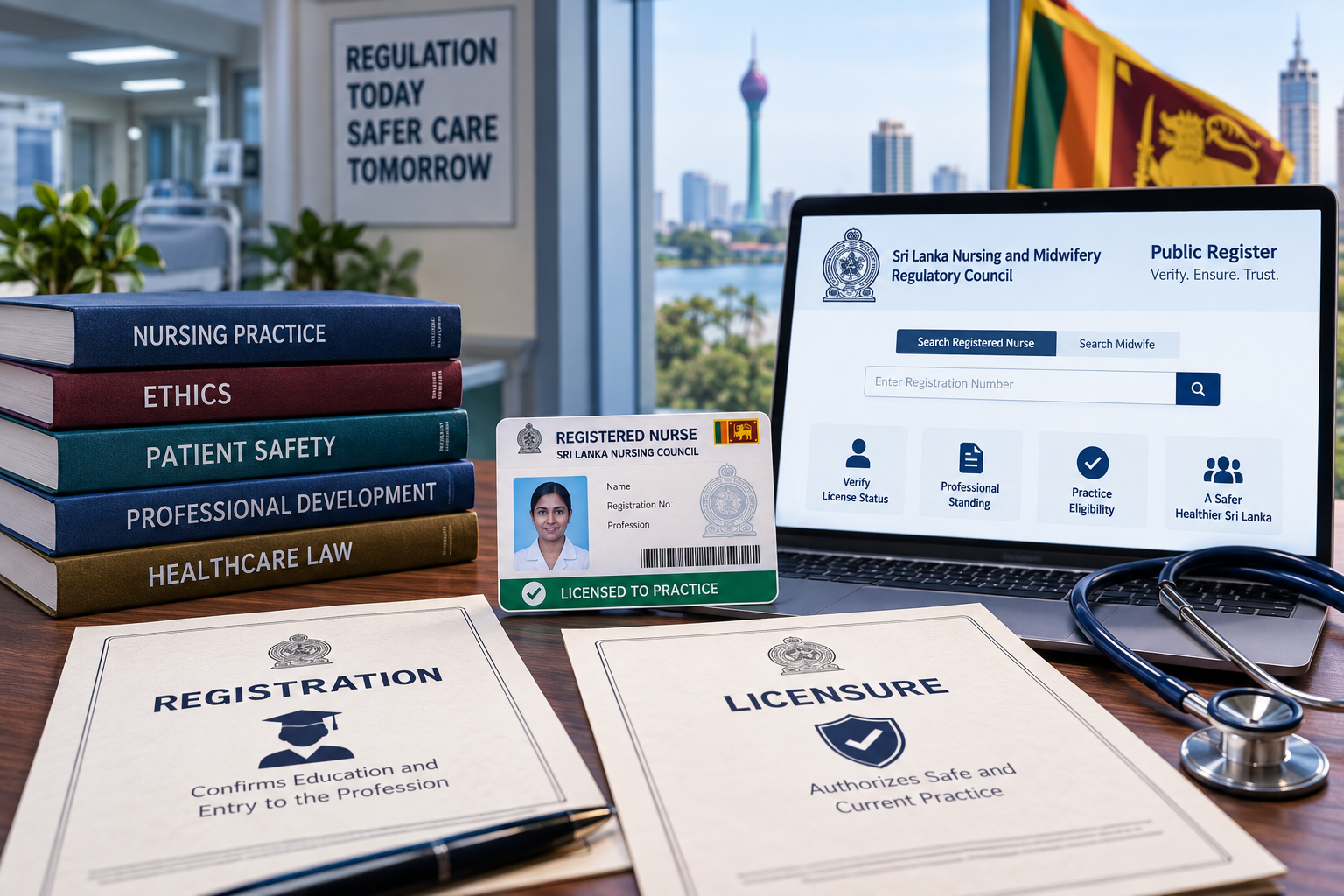
In the previous part, we looked at why stronger professional regulation and proper licensure could help strengthen Sri Lanka's nursing profession. But regulation alone is not enough. If a nurse is expected to maintain a professional license throughout a career, there also needs to be a clear pathway for that nurse to keep learning, updating skills, and demonstrating continued competence.

When I was a practicing nurse in Sri Lanka, continuing education was something that happened informally, if it happened at all. We learned from experience, absorbed knowledge from senior colleagues, and read when we had the time, which was rarely. What we did not have was a structured, mandatory professional development system that required nurses to regularly update their knowledge and demonstrate that their practice remained current and evidence-based.

This is not just a personal observation. It reflects a systemic gap that can have real consequences for the quality and safety of nursing care.

Learning Should Not End With Graduation

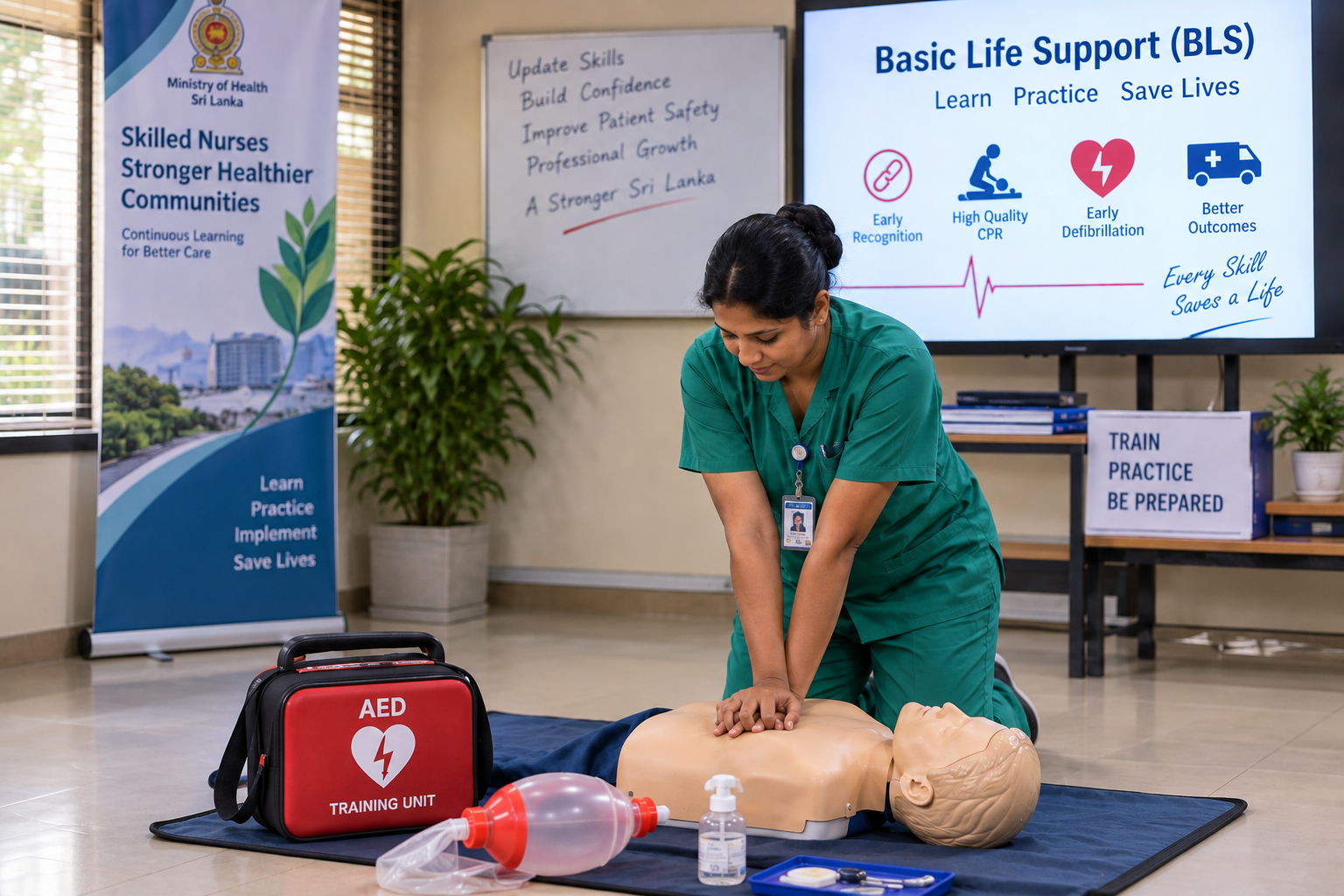
Consider Basic Life Support. During nursing school, we learned CPR and first aid, including some practical training. After qualification, however, there was no accredited refresher system, mandatory recertification, or requirement to demonstrate BLS competence every one or two years, as is standard in many other countries.

Some nurses working in intensive care or emergency settings may have had access to additional training, but there was no national requirement or systematic approach.

The same gap existed in other important areas. We cared for patients who had experienced trauma or were living with mental health challenges without necessarily receiving structured training in trauma-informed care after nursing school. We managed aggressive or distressed patients without formal training in nonviolent crisis intervention.

We learned to manage these situations through experience and instinct. That is a testament to the adaptability of Sri Lankan nurses, but experience alone should not be considered a substitute for structured professional training in a modern healthcare system.

The Role of Continuing Professional Development

Mandatory Continuing Professional Development, commonly known as CPD, is one established way of addressing this gap. In many healthcare systems, professional development is not something nurses undertake only when they have spare time. It is built into the expectations of maintaining professional practice.

The concern that Sri Lanka may not be able to afford such a system is understandable. However, CPD does not necessarily have to be expensive or difficult to access. Countries with significantly fewer resources than Sri Lanka have implemented effective and affordable CPD frameworks. Bangladesh provides one example.

CPD can be delivered through online learning modules, workplace workshops, practical skills sessions, and peer-learning groups. The important part is that the learning is structured, recorded, verified, and connected to professional requirements.

What Should Sri Lankan Nurses Be Learning?

A good CPD framework for Sri Lankan nurses could cover a broad range of areas. These could include evidence-based practice updates, clinical skills refreshers, ethical and legal knowledge, quality improvement methods, basic digital and health technology literacy, communication and teamwork, and specialty-specific education.

The system should also recognise that nurses working in different areas have different learning needs. A nurse working in an intensive care unit will require some specialised education that may not be relevant to a nurse working in community health, oncology, mental health, or maternal care.

This is where a well-designed CPD system could become more than a requirement. It could become a practical professional development pathway.

Connecting Learning With Licensure

This also connects directly with the licensure reform discussed in Part 16.

If Sri Lanka moves toward periodic license renewal, completion of a defined number of CPD hours could become one of the requirements for renewal. Nurses would have a clear expectation to maintain their knowledge and skills, while the regulatory system would have a mechanism to verify that continuing development is actually taking place.

The two systems would therefore reinforce each other. Licensure would confirm that a nurse remains authorised to practise, while CPD would provide a structured pathway for maintaining and developing professional competence.

The Benefits Go Beyond the Nurse

The benefits of continuing education extend far beyond individual nurses.

When nurses remain current in their knowledge and clinical skills, patient safety can improve. When CPD is structured and verified, it can strengthen public confidence in the profession. And when lifelong learning becomes part of nursing culture, it can change how nurses see themselves and how the wider healthcare system sees them.

Nursing then becomes more than a job that someone qualifies for once and continues performing for decades. It becomes a profession that expects, supports, and rewards ongoing learning.

That shift matters for recruitment, professional development, retention, and ultimately the quality of care that Sri Lankan patients receive.

The nurses of previous generations built the foundation. The responsibility of the next generation is not simply to continue what they inherited, but to keep learning and make the profession stronger than they found it.

What Remains When the Story Fades?

Part 5: What Remains When the Story Fades?

Identity Beyond Memory

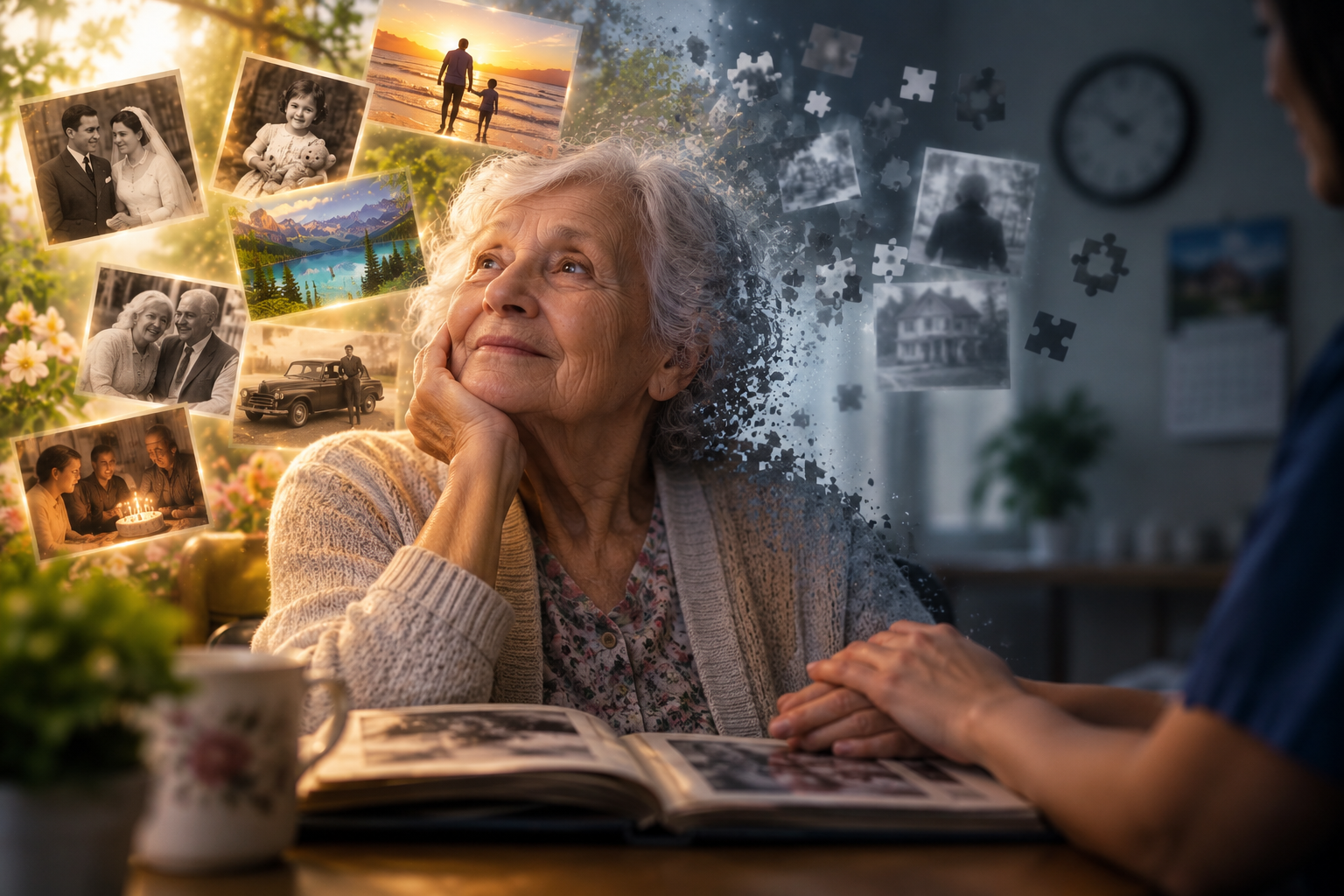
In the previous articles, we followed memory from its biological beginnings to its connection with identity. We also explored what can happen when dementia makes personal memories increasingly difficult to access. This brings us to a difficult question: if parts of my story disappear, what remains of me?

In dementia care, this question is not only scientific. It is deeply human. Families may watch someone who once remembered every detail of their life struggle to remember names, recent conversations, familiar places, or even people they have known for decades. It can feel as though the person they knew is slowly disappearing. But the brain is more complicated than that.

Memory Is Not the Whole Person

We often use memory as a shortcut for identity. We recognize someone because they know our name, remember shared experiences, and can tell us stories about their life. When those abilities change, it is understandable to feel that the person has changed completely. But memory is only one part of brain function.

A person can have significant difficulty recalling an event while still experiencing comfort, discomfort, affection, fear, pleasure, music, touch, movement, and the presence of another person. The ability to remember something and the ability to experience something are not exactly the same.

The Body Still Communicates

Even when words become difficult, the body continues to communicate. A familiar voice may bring calm. Gentle touch may feel reassuring. A favourite piece of music may encourage someone to smile or move with the rhythm. A familiar routine may feel comfortable even when the person cannot explain why.

These responses involve brain systems that are not identical to those involved in consciously recalling personal events. This is one reason dementia care cannot depend only on asking questions or testing memory. Sometimes the most meaningful communication happens without words.

A Lesson From My Work

In my work with people living with dementia, I have learned that a meaningful interaction is not always one where the person remembers who I am or what we did previously. Sometimes it is simply noticing a change in their expression, seeing them become more relaxed, or watching them engage with an activity they once enjoyed.

There may be no detailed conversation about the past and no clear memory to retrieve, yet there can still be connection. These moments have changed the way I think about the question, “Is the person still there?” Perhaps sometimes we are asking the wrong question. Instead of asking only, “What do they remember?” we can also ask, “What are they experiencing right now?”

Remembering and Knowing How Are Different

Another fascinating part of the brain is that knowing how to do something is different from consciously remembering when or where we learned it. A person may have difficulty explaining how to perform a familiar activity but still carry out parts of it through well-practised patterns of movement.

These abilities involve different neural systems from those used for consciously recalling personal events. This is why someone may struggle to describe an activity from their past but still respond naturally when given the opportunity to perform a familiar task. The brain does not lose every ability at the same time.

What About Emotions?

Emotional responses can also remain meaningful when explicit memories become difficult to retrieve. A person may not be able to explain why a particular song feels familiar, but the music may still produce an emotional response. A familiar person may not be recognized by name, yet their presence may still feel comforting.

We should be careful not to assume that every emotional response proves that a specific memory is still consciously stored. The science is more complicated than that. However, it does remind us that a person's experience cannot be measured only by the memories they can verbally report.

The Story May Change Without Everything Disappearing

This brings us back to the Story Self we introduced earlier. The personal story can become fragmented. Names may disappear, events may become confused, and the timeline of a person's life may become increasingly difficult to describe. But the story is only one part of human experience.

There is still a living body responding to the environment. There may still be sensations, emotions, habits, preferences, and moments of connection. The person may experience the world differently, but that does not mean there is simply nothing left.

This is why saying “the person is gone” can be misleading when someone is living with advanced dementia. The person has changed. Their abilities have changed. The way they communicate may have changed. But those changes are not the same as proving that the person has disappeared.

A Different Way of Seeing Dementia

Perhaps dementia asks us to rethink what we mean by identity. When memory is strong, we often define ourselves through our stories. We know our name, our history, our relationships, our achievements, and our plans. When memory becomes impaired, those explanations may become harder to access.

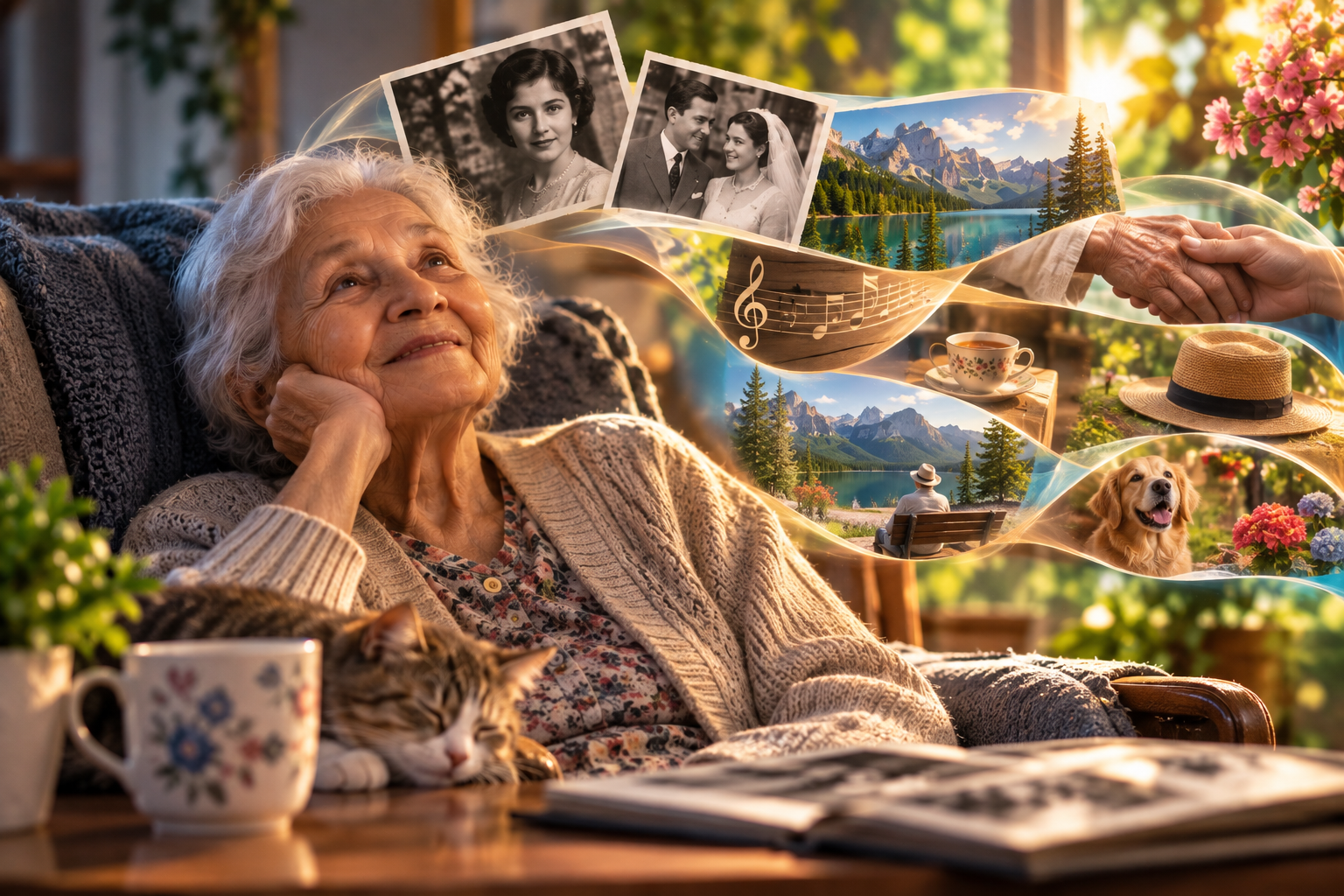
What remains can be quieter: a familiar melody, a smile, a hand reaching for another hand, a movement learned many years ago, a feeling of safety, or a moment of connection. These things may not tell us the whole story of a person, but they remind us that a human being is more than the story they can tell about themselves.

And now we are ready for the next question. If memory can fade while other forms of experience remain, what happens when even language and conscious communication become severely affected? Can a person still experience connection when they can no longer tell us what they are experiencing?

Next: Part 6

When “I” Cannot Say “I”

Identity Beyond Language and Communication

In the next article, we will explore what happens when dementia affects language, recognition, and communication, and why silence or an inability to answer does not necessarily mean the absence of awareness or human connection.

Welcome to Canada- Part 21

🚗 Finding Your Way Around

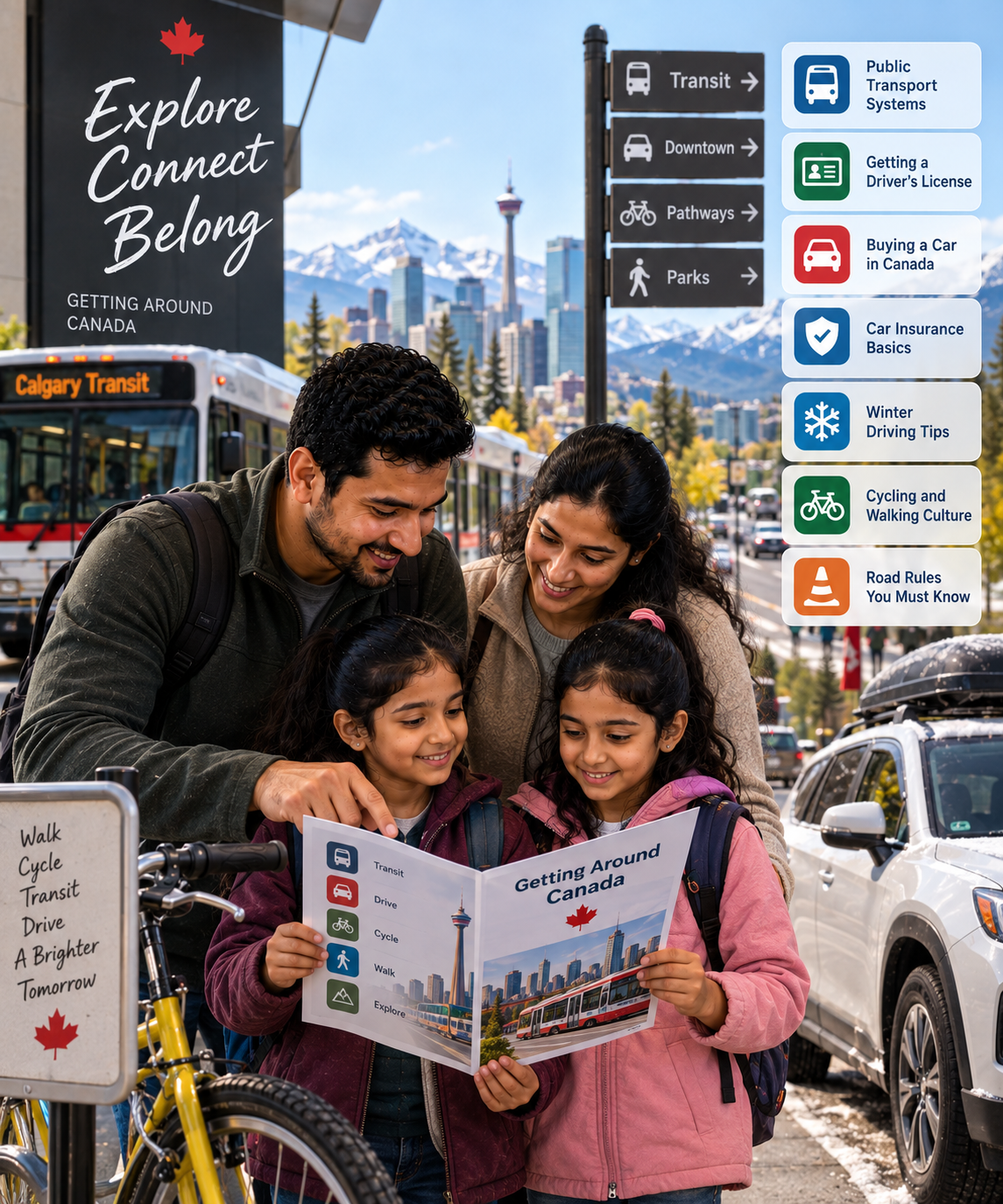
In the previous article, we looked at how to navigate Canada's healthcare system and build healthy routines. As your life becomes more settled, another practical part of everyday life is learning how to get around your community. Canada is a large country, and transportation can look very different depending on where you live.

In larger cities, public transportation may be enough for work, school, shopping, and appointments. In smaller communities or suburban areas, having a car may make everyday life easier. Understanding your options can help you choose what works best for your family.

🚌 Public Transportation

Canadian cities have different public transportation systems, including buses, trains, light rail, and rapid transit. Most systems use transit passes, cards, or mobile payment options, and many have apps that help you plan your journey.

Learning how to use public transportation can be especially useful when you first arrive because it allows you to explore your community without immediately needing to buy a vehicle.

🪪 Getting a Driver's Licence

If you decide to drive, you will need a valid driver's licence. Each province and territory manages its own licensing system, so the requirements can vary depending on where you live.

Newcomers with a driver's licence from another country may be able to receive credit for some of their previous driving experience, depending on the province and the country where the licence was issued. You may still need to complete knowledge or road tests.

Before driving, make sure you understand the licensing requirements where you live. Driving without the appropriate licence is not worth the risk.

🚘 Buying Your First Car

Buying a car can be a major financial decision for a newcomer. The purchase price is only one part of the cost. You also need to consider insurance, fuel, maintenance, registration, parking, seasonal tires, and unexpected repairs.

Before buying a vehicle, think about how often your family actually needs one. Sometimes a reliable used vehicle may meet your needs, while in other situations public transportation, walking, cycling, or car-sharing may be enough.

Avoid making a large vehicle purchase simply because owning a car feels like an important part of settling into Canada. Choose something that fits your transportation needs and your budget.

🛡️ Understanding Car Insurance

If you drive a vehicle in Canada, you generally need the required automobile insurance for your province or territory. Insurance costs can vary based on factors such as your driving history, location, vehicle, and coverage.

Newcomers may sometimes find that their previous driving experience is not fully recognized by an insurer. Ask what documentation may help demonstrate your previous driving history and compare available insurance options before making a decision.

Understanding your coverage is just as important as knowing the price. Make sure you understand what your policy covers and what you may have to pay yourself after an accident.

❄️ Winter Driving Is Different

For newcomers from warmer countries, Canadian winter driving can be one of the biggest transportation adjustments. Snow, ice, freezing temperatures, and reduced visibility can make roads more challenging.

Driving safely in winter means slowing down, leaving more space between vehicles, checking weather and road conditions, and making sure your vehicle is properly prepared. Winter tires are also an important consideration in many parts of Canada, particularly where snow and ice are common.

If you are new to winter driving, give yourself time to learn. Your first experience driving on a snowy road does not need to happen during a major storm.

🚲 Walking and Cycling

Not every journey needs a car. Walking and cycling are important parts of transportation in many Canadian communities, and they can also be affordable ways to stay active.

As we discussed in the previous healthcare article, regular physical activity can support your overall wellbeing. Walking or cycling to a nearby store, park, transit stop, or community centre can combine transportation with exercise.

Always use designated paths and crossings where available, wear appropriate safety equipment, and learn the rules that apply to cyclists and pedestrians in your community.

🚦 Road Rules You Must Know

Canadian road rules may be different from what you learned in your home country. Drivers are expected to follow posted speed limits, traffic signals, lane markings, and rules about intersections, pedestrians, school zones, and emergency vehicles.

Rules can vary between provinces and territories, so take time to learn the requirements where you live. Never assume that a rule is the same simply because the road looks familiar.

Understanding the rules is not only about avoiding tickets. It is about protecting yourself, your passengers, pedestrians, cyclists, and everyone else sharing the road.

🌱 Reflection: Finding Your Own Way

When you first arrive in Canada, transportation may simply be about getting from one place to another. Over time, it becomes part of how you experience your new community.

You learn which bus takes you to work, which path is safe for cycling, where to find a grocery store, how to drive through your first Canadian winter, and eventually which routes feel like second nature.

Whether you walk, cycle, take public transportation, drive, or use a combination of all of them, learning how to move around your community is another small but important step toward feeling at home in Canada.

2026/09/16

The Country We Chose

A country's healthcare system can be a window into that country, not through the modernity of its hospitals or the amount of funds funnelled into the latest technology and equipment, but through what you see when you work with patients and families, listening to what makes them tick when life hasn't turned out the way they expected. After decades of doing that, you begin to see the country for what it is in ways that have nothing to do with its brochures.

I have been working in the healthcare system for nearly thirty years and in three countries. Today, working in a community in a beautiful province in Canada, I see houseless people, people struggling with addictions, refugee claimants, international students who have no idea what the future holds, and people labelled terrorists in their home countries for reasons that had little to do with who they were.

None of these people are what the intake form asks for. A person's immigration status, diagnosis, home address, or occupation tells me something about their circumstances, but not about who they are.

I try to see the person first.

And the way I see people is also the way I see the communities they form. I notice not only their backgrounds, but the ways they contribute to the neighbourhoods they're part of and the ways their daily lives impact the places in which they live.

One Neighbourhood, Two Feelings

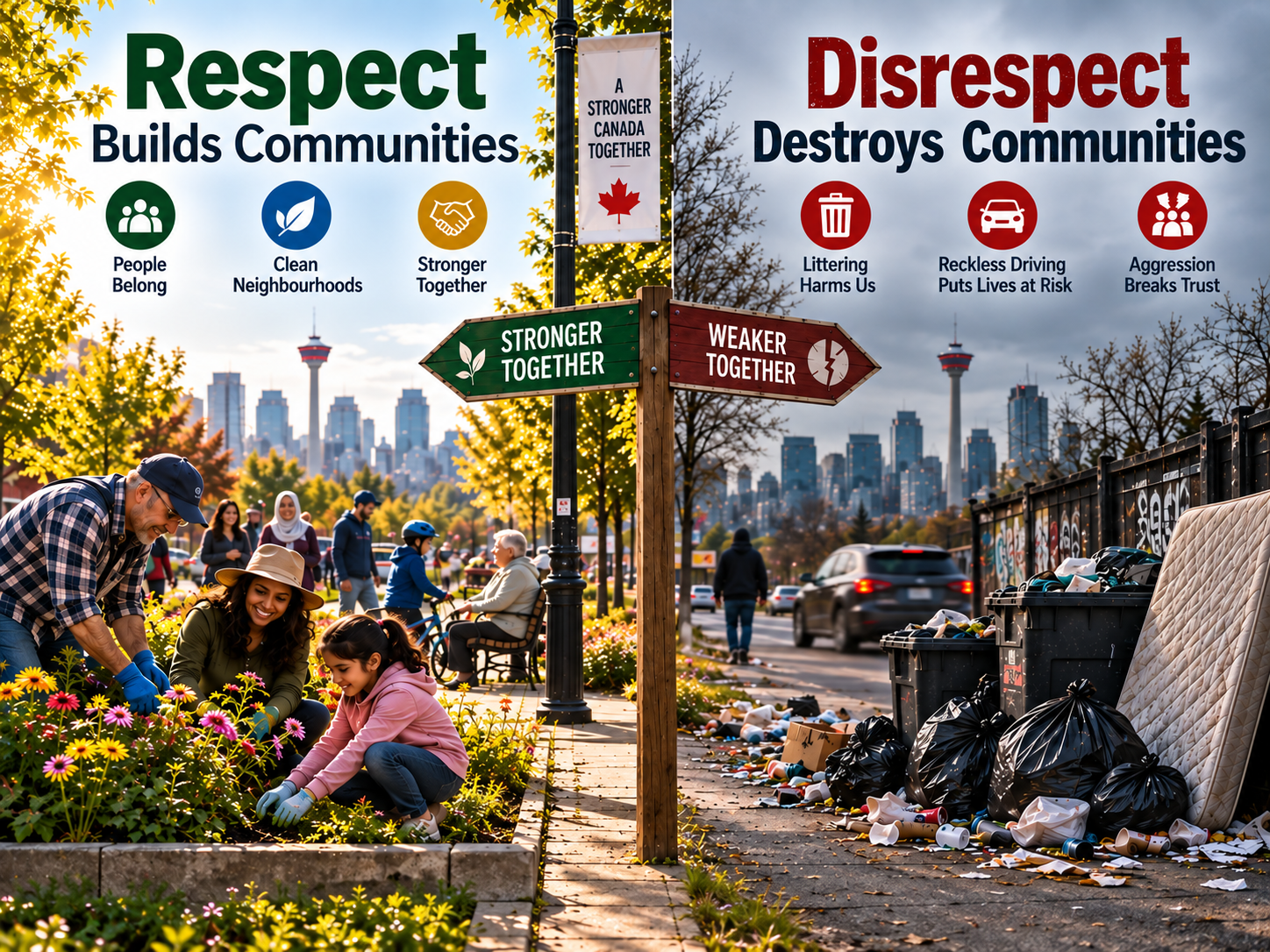
A few months ago, I was sitting on a porch on the east side of Calgary, waiting for a client to finish a phone call. Kids were riding bikes down the street. Somewhere nearby, someone was cooking with cumin and curry leaves, and for a moment, I forgot I was in Canada.

Then a car flew down the street, swerving around a child on a bike with no attempt to slow, and a few houses up, someone had dumped an old mattress beside the recycling bins as if it was no longer their problem.

I sat with two feelings at once: proud of this community and a little uneasy about some of what I saw.

Both were true.

The Good and the Uneasy

Immigration has changed Canadian neighbourhoods in ways I welcome. Empty storefronts have become small businesses. New families have brought life to once sleepy streets. I hear languages I can't identify and eat food from places I've never been.

That's a good thing, clearly.

But I've also seen garbage dumped instead of in the bins, lines cut, late-night arguments spilling into the street, and drivers treating stop signs as suggestions.

And when this happens in my own community, I find myself asking an uncomfortable question:

Did we move to Canada, or did we bring our old habits with us and put snow on them?

I'm asking this question because I think it's one Canada needs to ask itself.

The Welcome and the Unease

The polling reflects some of that tension. In 2024, the Environics Institute found that 58 percent of Canadians felt that Canada was accepting too many immigrants. A separate study on multiculturalism in 2026 found that 66 percent of Canadians believed that multiculturalism had benefited Canadian identity.

These numbers are not contradictory.

One person could feel that immigration has enriched the country, but still feel uneasy about the speed of it, housing, hospital waiting lists, and the settlement of new arrivals.

The welcome mat and the feeling of unease can live in the same person, often at the same time.

The federal government has responded by adjusting the numbers. Under the 2026-2028 Immigration Levels Plan, temporary resident arrivals will peak at 385,000 and then 370,000 for the following two years, while permanent resident admissions will hold at approximately 380,000 a year.

These numbers are each a matter of debate, but the fact that the government is adjusting them is telling.

Immigration Is More Than Arrival

There is one discussion that gets less attention because it's more complicated than the simple issue of numbers, but is equally important.

Immigration is not just a matter of arrival. It is a matter of what follows.

Some newcomers bring habits with them that reflect their home country but do not always fit their new surroundings: how they drive, treat public space, behave in a line, talk loudly in shared places, and make assumptions about the boundaries of other people.

Small things, mostly, but a country is made up of a million small expectations.

We expect people to wait their turn, stop at red lights, argue politely, extend basic respect to strangers despite differences, and so on. None of it was written down. It's just understood.

When people refuse to go along with it, the fallout doesn't affect only them. It lands on neighbours, coworkers, and very often people who share their language or background, who had nothing to do with the reason for the suspicion.

Adapt Without Losing Yourself

I'm not saying that immigration is the problem. I think the issue is much more nuanced than that.

To me, the discussion is more personal:

When you choose to build a life in a new country, are you willing to learn, adapt, and participate without losing the parts of yourself that matter to you?

You can keep your language, your food, your music, your faith, your family stories, and your connection to the country you came from. All of it can be a part of who you are.

But Canadian laws, and the tacit expectations that bind a community together, cannot be made optional simply because they are unfamiliar.

Integration was never a matter of erasing who you are. It is a matter of learning how to participate, responsibly and respectfully, in a new society.

What Does It Mean to Be Canadian?

But if we ask people to adapt, another question naturally follows:

What are we adapting to? What does it mean to be Canadian?

I don't buy into the idea that Canada has no culture of its own or that it is simply a confluence of other cultures living side by side.

Canadian culture may be quieter and less obvious than elsewhere, but it is present.

It takes the form of apologizing when you bump into someone, even if you are right, and the expectation that a junior worker will challenge a senior manager without fear. It is having an ingrained sense of the rights of strangers, even when they look or pray or speak differently than you.

It includes patience, fairness, and a kind of understated decency that doesn't trumpet itself.

These are things worth learning. Integration can be a process of discovering what is worth keeping and adopting as your own.

Keeping Where You Came From

None of it means erasing who you are. The opposite, in fact.

Keep your language. Cook your food. Tell your children stories about your homeland and your grandparents' lives. Celebrate the festivals you grew up with.

You can be proudly Sri Lankan, Ukrainian, Somali, Indian, Filipino, Chinese, Iranian, or from anywhere else on earth and proudly Canadian at the same time.

All of these things can exist side by side.

Culture Is Never an Excuse for Harm

What I won't accept is culture as an excuse for hurting someone.

Canadian law protects people's safety and equal treatment. Forced marriage, honour-based violence, female genital mutilation, and spousal abuse are not acceptable traditions, and none are a reason to ignore Canadian law.

Respecting where someone comes from does not mean looking away when someone is being hurt.

Don't Live Inside the Bubble

There is one message I would give newcomers because I am one, and in a lot of ways still think of myself that way.

Watch out for the bubble.

Your community is incredibly important when you first arrive, and it can provide you with the support to find an apartment, a job, a family doctor who understands what it was like for you to start from nothing.

That kind of support is invaluable and important.

However, if every friend, every show you watch, and every event you attend comes from the country you left, you can feel like you've joined a country without actually joining it.

You don't have to give up that community, but build a second one beside it.

Talk to your neighbour. Attend a local event. Volunteer somewhere. Get to know people who grew up completely differently than you.

That's where the feeling of belonging starts.

Integration Is Not a One-Way Street

Integration is not a one-way street, however.

Canada owes newcomers something too.

Credential recognition can take years. Housing has become extremely expensive in most Canadian cities. Discrimination hasn't disappeared, sometimes loudly, more often in quiet ways.

"Canadian experience" creates a catch-22: how can you get it if no one will give you the chance to earn it?

Learning to work within a system doesn't mean staying silent when it fails you.

You can respect this country and still expect it to treat you fairly.

You can love it and still ask it to do better.

What Are We Asking of Newcomers?

So, stripping away the political noise, what is it that is being asked of newcomers?

I think it boils down to something simple.

Learn the laws. Learn how your workplace works. Be aware of what your new community expects.

And be honest with yourself about which habits from home still serve you and which tend to cause friction.

If you're unsure, ask.

There is no harm in asking:

"Back home we did it this way. How do you do it here?"

That question can head off a lot of unnecessary problems.

Respect, Participation, and Responsibility

I never expected Canada to be perfect when I arrived, and I don't think most immigrants do.

We know we are entering a new system with new complications and that we'll need to work through the process of starting over.

We came here because most of us wanted to build something better.

That doesn't mean Canada gets blind loyalty.

But respecting this country, showing up, and taking responsibility for the place we chose to build our lives in all matter.

A country isn't built on one big idea. It's built on millions of small actions by everyday people.

Waiting your turn at the checkout. Putting your garbage where it belongs. Slowing the car down when a child crosses. Checking in on a struggling neighbour. Treating a coworker well. Following the rules when no one is watching.

None of it makes the headlines. None of it is the law.

But all of it is what holds a place together.

Immigration Doesn't End When You Arrive

We spend a lot of energy discussing how to get into Canada: the paperwork, the application for permanent residency, the job search, the points system.

We spend much less time discussing what it means to become somebody's neighbour, somebody's coworker, somebody whose absence will be noticed.

Immigration doesn't end the day you land. That's usually when the real work starts.

Learning the country. Adapting without disappearing. Contributing without forgetting where you came from. Building a life that is both yours and belongs to the place you've chosen.

That's what it means to belong.

The Question I Keep Coming Back To

I'm not sure what the answer is, even after years of seeing neighbourhoods change and people try to navigate the process.

I keep coming back to the question of how to belong to the country we chose without losing who we were that brought us here.

Maybe that's the conversation we should be having.

Not just about numbers, but about belonging.

2026/09/12

When AI Brings the 1980s Back: Nostalgia, Recreation and Mental Health

When AI Brings the 1980s Back: Nostalgia, Recreation and Mental Health

The 1980s are suddenly everywhere again. AI tools can transform today's photographs into colourful retro portraits with big hair, denim jackets, neon lights, dramatic makeup, and vintage studio backgrounds. For those who remember the decade, the experience can be funny and surprisingly nostalgic. For younger generations, it offers a playful way to explore a time they never experienced.

But as someone interested in recreation, mental health, wellbeing, and new technology, I think there is more to this trend than simply creating a cool picture.

More Than Just a Picture

Nostalgia can have positive psychological effects. Remembering meaningful people, places, and experiences can strengthen our sense of identity, connection, and continuity. An AI-generated image can become a simple doorway into those memories.

From a recreation therapy perspective, that makes the trend interesting. A retro portrait could encourage storytelling, creativity, social interaction, and reminiscence. An older adult might start talking about their first job, favourite music, childhood friends, or the fashion they actually wore.

The AI image itself is not the therapy. The meaningful human interaction around the activity is what matters.

Enjoy AI, But Protect Your Self-Image

There is also a mental health side we should consider. AI can easily make us look younger, smoother, slimmer, or more conventionally attractive, creating versions of ourselves that never actually existed.

One image may simply be fun, but constantly comparing our real appearance with digitally perfected versions can contribute to unrealistic expectations about how we should look.

A healthier approach is to treat these images as creative play, not personal comparison. Enjoy the transformation without allowing it to become a judgment of your real appearance.

And Then There Is Privacy

Before uploading your face to an AI application, take a moment to ask what happens to the photograph afterward. Check whether the company stores images, uses them to improve its systems, shares information with others, and provides a way to request deletion.

Be particularly careful with photographs containing children, family members, clients, patients, identification documents, or workplace information. Having someone's photograph does not automatically mean we should upload it to an AI system.

In healthcare, community support, and recreation settings, privacy, consent, confidentiality, and organizational policies should always come before convenience.

Use Technology to Create Connection

I am excited about what AI can bring to recreation and wellbeing. It can create new opportunities for creativity, reminiscence, storytelling, and intergenerational connection.

The best use of these trends may be surprisingly simple: create the picture, share a laugh, ask someone what they remember, and listen to their story. Then put the phone down and continue the conversation.

AI can recreate our appearance and even place us in another decade. It cannot recreate the real experiences, relationships, and memories that made those years meaningful.

And perhaps that is exactly what we should protect most.

When Memory Begins to Fade

What Happens to “Me” When the Story Becomes Harder to Remember?

One of the hardest parts of working with people living with dementia is watching a person's familiar world slowly change. A person may remember something from many years ago but struggle to remember what happened earlier that same day. They may recognize a familiar face one moment and seem uncertain the next. For families, these changes can be especially difficult because memory is so closely connected with the person they have known for years.

But memory does not disappear all at once.

Forgetting Is Not the Same as Losing Everything

Memory is not one single system. Different kinds of memory depend on different brain networks, and dementia can affect these systems differently. In many forms of dementia, including Alzheimer's disease, the brain systems involved in forming and retrieving new memories can become affected early.

This can make recent information particularly difficult to retain. A person may have a conversation, forget it shortly afterward, and then ask the same question again. At the same time, older memories, familiar skills, emotional responses, or well-practised routines may remain accessible for much longer.

This is why dementia is more complicated than simply saying, “The person is losing their memory.”

When the Recent Past Becomes Difficult

One of the confusing features of dementia is that someone may appear to remember parts of their distant past while struggling with something that happened only minutes ago. A person might talk about their childhood home but not remember that their daughter visited earlier that morning.

This can seem contradictory, but memories are not all formed, organized, and retrieved in exactly the same way. Different memories involve different brain systems and connections, so they can be affected differently as neurological disease progresses.

This also gives us an important clue about identity.

Does Forgetting Change Who I Am?

If memories help us understand our own lives, what happens when those memories become harder to access? If someone forgets their occupation, their address, important events, or the names of people they love, it can look as though pieces of their identity are disappearing.

But we need to be careful with that conclusion. The ability to remember a person is not necessarily the same as the ability to care about that person. Someone may not remember your name but still respond positively to your voice. They may not remember a recent visit but still appear comfortable when you sit beside them.

The memory may be difficult to retrieve while something connected with the experience may still influence how the person responds.

Something My Work Has Taught Me

In my work with people living with dementia, I have learned that some of the most meaningful moments are not necessarily the ones where someone remembers a name or answers a question correctly. They can be much simpler. A smile when a familiar person enters the room, a change in expression when a favourite song begins, or becoming more relaxed when someone speaks in a familiar and reassuring voice can all be meaningful forms of response.

These experiences have made me think carefully about how we judge memory. A person's ability to demonstrate what they remember is not necessarily a complete measure of what they are experiencing.

Instead of always asking, “Do you remember?”, sometimes a more meaningful question is, “How can I connect with you right now?”

The Story Can Fade Unevenly

As dementia progresses, a person's personal story may become increasingly fragmented. Names can disappear, dates can become confused, and events may no longer appear in the correct order. Eventually, a person may have difficulty explaining important parts of their own history.

However, this does not mean every ability disappears at the same time. Different cognitive and memory functions depend on partly different neural systems, so some abilities may remain accessible after others have become significantly impaired.

This is why a person with substantial cognitive impairment may still enjoy music, respond to rhythm, perform familiar movements, show affection, become uncomfortable in unfamiliar surroundings, or relax when someone they trust is nearby.

The story may be changing, but the person is more than the story.

What Does This Mean for “Me”?

This brings us to one of the most difficult questions in our journey. If I gradually lose access to my memories, my words, and parts of my personal history, how much of “me” remains?

Science does not provide a simple answer. But neuroscience gives us an important reason to avoid measuring a person's identity only by what they can remember or tell us.

Memory is an important part of the architecture of self, but it is not the entire structure.

And perhaps this is one of the most important lessons dementia can teach us: when someone's story becomes harder to hear, we should not assume that there is no person left to hear.

Next: Part 5

What Remains When the Story Fades?

Identity Beyond Memory

In the next article, we will explore what may remain when autobiographical memory becomes severely impaired, including emotional responses, familiar routines, learned skills, sensory experiences, and the ability to connect with other people.

හැඩකාර අසූවේ රැල්ල ගැන මගේ සත දෙක

මං හැත්තෑවේ මුල් කාලේ උපන්නේ. ඒ නිසා අසූව කියන්නේ මගේ ජීවිතේ ලස්සනම කාලය. මුල් යොවුන් විය, විවිධ සමාජයීය වෙනස්වීම්, කලාව, සංගීතය වගේ දේවල් තුළත් හැරවුම් සිද්ධ වුණු, ඒ වගේම අවදානම් සහ අභාග්ය එකතු වුණු අත්දැකීම්ද ජීවිතේට එකතු වුණු "අපූරු" කාලයක්.

මේ ලියන්නේ ඒ කාලේ "මං" ගැන නෙවෙයි. මේ ලිපිය ලියවෙන්නේ, මේ දවස්වල සමාජ මාධ්ය තුළ රැල්ලක් වගේ හැදෙන අසූවේ කාලේ පින්තූර ජවනිකාව ගැන. නමුත් මං මේ කරුණු එකතු කරන්නේ ඒ රැල්ලට විරෝධීව නෙවෙයි. අසූවේ AI පින්තූරයක් හදාගන්න ඒ තරම් හිතක් නොදුන්නත්, මාත් ෆේස්බුක් එක පුරා මතුවෙන අසූවේ පින්තූරවලින් සතුටක්, රසයක් ලබනවා. ඒ වගේම මගේ අතීත මතකයන්වලින් සමහරක් නැවත ස්මරණය කරගන්නටත් අවස්ථාවක් ලැබෙනවා.

මේ රැල්ල ගැන මේ ලිපිය ලියන්නේ, AI ඇතුළු නවීන තාක්ෂණය සමඟ එකට යන, ඒ පහසුකම් උදව් කරගන්නා, කායික/මානසික සෞඛ්යය සහ නව තාක්ෂණය තුළ ආරක්ෂාව ගැන ටිකක් වැඩිපුර හිතන, අසූවට පෙර ඉපදුණු වැඩිහිටියෙක් විදියට. ඒ නිසා, ඔබ මේ රැල්ලට රිසි කෙනෙක් වුණත්, නොරිසි කෙනෙක් වුණත්, මේ ලිපියෙන් යමක් ගන්නට වගේම ඔබේ අදහසත් එකතු කරන්නට අවස්ථාවක් ලැබේවි.

ඇයි මේ අසූවේ රැල්ලක්?

යම් AI ඇප් එකක් ලබාදුන් ප්රොම්ප්ට් එකක් ඔස්සේ, අසූවේ පින්තූර සකසාගැනීමේ ආකෘතිය ලැබුණාට පස්සේ, මේ රැල්ල හැදෙන්නට හේතුව "විනෝදය" විතරක්ම නෙවෙයි. ඒ තුළ නොස්ටැල්ජික් රසයක් තිබෙනවා කියලත් මට හිතෙනවා. විශේෂයෙන්ම අසූවේ කාලය අත්දැක්ක අයෙක්ට නම්, නොස්ටැල්ජියාව කියන්නේ හුදෙක් පහුගිය අතීතයේ රසය විතරක් නෙවෙයි. ඒ හැඟීම, තමන් ගැන, තමන් ආ ගමන ගැන, තමන්ගේ බැඳීම් ගැන මතක් කරදීමක් කරනවා.

අලුත් එකයි පරණ ක්රමෙයි

ඉස්සර වගේම අද දවසේත්, පරණ පින්තූර ඇල්බමයක් බලලා, ඉස්සර වෙළඳ ප්රචාරයක ගිය සිංදුවක් අහලා විඳින රසය, දැන් මේ AI නිර්මාණයන් නිසා නවීන, පහසු ක්රමයකින් ලබාගන්නට පුළුවන් වෙනවා කියල මට හිතෙනවා. ඒත් මේ අවස්ථා දෙක අතරේ වෙනස්කම් තිබෙනවා.

අර පරණ පින්තූර ඇල්බමයේ ඉරුණු, වර්ණ හේදිගිය ඡායාරූපය, මේ AI පින්තූරයට වඩා කාලය සමඟ බැඳුණු ලොකු, "ඇත්තම" කතාවක් කියනවා. ඒ කතාව නියම ආත්මයට බැඳුණු හැඟීමක්, රසයක්. ඒත් අලුත් ක්රමයට හදාගත් පින්තූරය තුළ මුහුණ තවත් හැඩගැන්විලා, සම මුදු සුමුදු කරලා මතුවෙද්දි, ඒ තුළත් වෙනස් සතුටක් තියෙනවා. සමහර විට පරණ මතකයන් ගැන අලුත් මතකයන් ගේනවත් වෙන්නත් පුළුවන්.

ඒ නිසා, ඔබත් අසූවේ අත්දැකීම් ලැබූ කෙනෙක් නම්, හුදෙක් තමන්ගේ ෆේස්බුක් ප්රොෆයිල් එකට පින්තූරය අප්ලෝඩ් කරලා නිකං ඉන්නවාට වඩා, ඒ අත්දැකීම් ලැබූ තවත් කෙනෙක් සමඟ ඒ අතීත සත්ය අත්දැකීම් බෙදාහදාගන්න, මතක් කරගන්න, ඒ ඔස්සේ අතීතය සමරලා සතුටක් විඳින්න පුළුවන් නම්, එතන ලැබෙන්නේ සරළ විනෝදයකට වඩා මානසික සෞඛ්යයමය වාසියක්.

රැල්ලේ සැර

කෙසේ වුණත්, මේ රැල්ල තුළ මා දකින "විය හැකි" අවදානම් කිහිපයක් තිබෙනවා.

එකක්, මේ AI පින්තූර තුළ නිර්මාණය වන මුදු සුමුදු, හැඩකාර මුහුණ, දඟකාර කෙහෙරැල්ල, ඇත්ත පුද්ගලයා සමඟ සසඳමින්, තමන්ගේ වයස සමඟ සිද්ධවන ස්වභාවික වෙනස්කම් ගැන කාටවත් නොකියා සැඟවී විඳින මානසික පීඩාවකට යම් කෙනෙක් ලක්වෙනවා නම්, එතන මානසික සෞඛ්යයමය අවදානමක් තිබෙනවා. ඒ වගේම, ඒ අසූවේ පසුබිම තුළ ජීවත් වුණු කෙනෙක් මුහුණදුන් සැබෑ මානසික පීඩාවන්, වේදනාවන් රැල්ල තුළ නැවත මතුවී රැඳුණොත්, එතනත් අවදානමක් තිබෙනවා. ඒ නිසා තමයි, Reminiscence Therapy නම් චිකිත්සක ක්රමය ලබාදෙන්නට විශේෂිත පුහුණුවක් සහිත Recreation Therapist වරු සිටින්නේ.

අනෙක් අවදානම, තමන්ගේ පෞද්ගලිකත්වය සහ biometrics, ඒ කිව්වේ තමන්ගේම දේහ හැඩරුව, මුහුණේ ප්රමාණය වගේ තමන්ට "සුවිශේෂ" වූ තොරතුරු, බාහිර පුද්ගලයන් අතට, තාක්ෂණයන් තුළට පත්වීම. පාස්වර්ඩ් එකක් ඉක්මණින් වෙනස් කරගන්න පුළුවන් වුණත්, මුහුණේ හැඩය, ඇස් අතර පරතරය වගේ biometrics එහෙම හදිසියේ වෙනස් කරගන්න බැහැ. මේ ගැන වඩාත් සංකීර්ණ කතාබහක්, AI තාක්ෂණයේ අනාගතය ගැන කතා කරද්දි වෙනම ලිපියකින් කරමු.

මේ මට මතක් වුණු අවදානම් දෙක විතරයි. නමුත් මේ අවදානම් තියෙන නිසා අසූවේ රැල්ල වැරදියි, එය නොකළ යුතුයි කියලා මම කියන්නේ නැහැ. එය රසවිඳින්න, සෞඛ්යයමත්ව, අඩු අවදානමකින්.

Burnout (දැවීම): අප්පුහාමිගේ කතා වස්තුව

ලැබුණු විවේකයේ මානසික සෞඛ්‍යය යහපත්ව පවත්වා ගැනීම වෙනුවෙන් හිතන්නට ඕන, නමුත් සමහර වෙලාවට අපට හිතන්නට නොදැනෙන මාතෘකාවක් ගැන කෙටියෙන් සාකච්ඡා කරන්නට හිතුවා. ඒ Burnout ගැන. සිංහල පරිවර්තනය නම් එන්නේ "දැවීම" කියලා. ඔව් එක්තරා විදියක දැවීමක්. මේ කියන්නට හදන පියවර ඔස්සේ ඔබ කායිකව, මානසිකව එක්තරා දැවීමකට, බිඳීමකට පත් වෙනවා. එය සමහර අවස්ථා වල Burnout Syndrome කියන නමින් හඳුන්වන්නට තරම් සංකීරණ, ගැටළු මිශ්‍රණයක්.

ඇයි අද Burnout ගැන කතා කරන්නේ?

ඇයි දැන් මේක ගැනම අද කතා කරන්නේ? එකක් වෘත්තිය වශයෙන් මම මැදිහත් වන සේවා ලබා දීම් වලින් සියයට හැටක් හැත්තෑවක් විතර මේ Burnout තත්ත්වය නිසා සිදුවන ගැටළු වෙනුවෙන්. ඉතින් මේ මාතෘකාව එක දවසක් තුල වාර ගණනක් කතා කරන, මතක් කරන දෙයක්. ඉතින් ඒක අර ගලේ කෙටුව වගේ ඔළුවේ රැදිලා තියෙන නිසා මේ වෙලාවේ "වෙනම මහන්සියක් වෙලා ලියන්න ඕන නැහැ".

දෙක, මේ ගැටළුව ලංකාව තුල ඒතරම්ම සාකච්ඡාවට භාජනය වෙනවාදැයි සැකයක් මගේ අත්දැකීම් තුල තිබෙනවා. ලංකාව තුල සෞඛ්‍යය සේවය තුලවත්, අනෙක් වෘත්තික සාමාජිකයා burnout තත්ත්වට පත්වේද කියල හොයල බලන්නවත් දැනුවත් කරන්නවත් කටයුතු කරනවා නම් එය සතුටක්.

අප්පුහාමිගේ කතා වස්තුව ආරම්භය

හරි අපි මේක අප්පුහාමිගේ කතාවෙන් තේරුම් ගන්න බලමු. කවුද මේ අප්පුහාමි...?

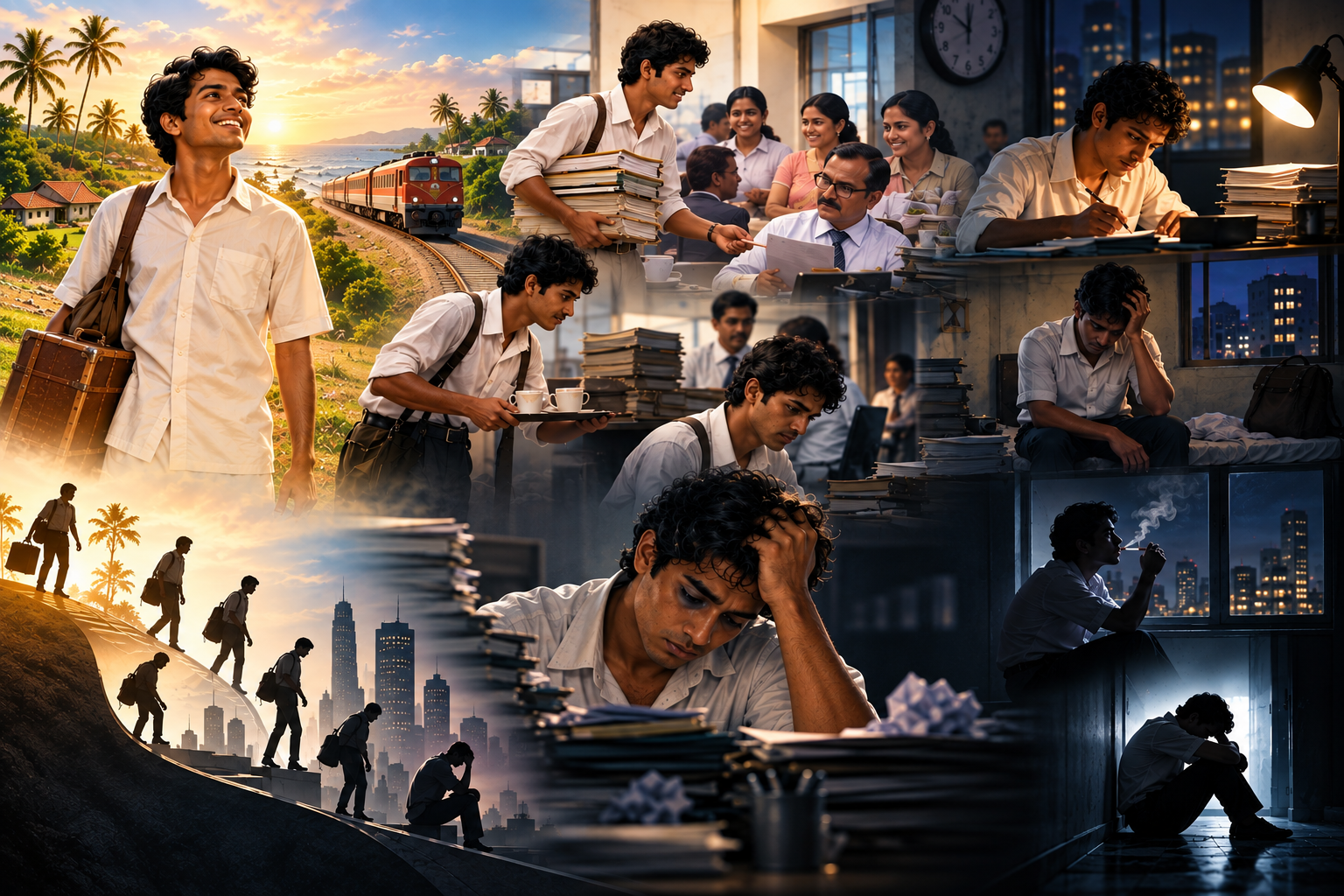
අප්පුහාමි කියන්නේ හොඳට ඉගෙනකියා ගත්තු, ගමේ පොඩි රස්සාවක් කරගෙන හවස් වරුවේ යාළුවොත් එක්ක සෙල්ලං කරන, කරදඩු උස් වෙච්ච කොළු ගැටයෙක්. ගමේ හැමවැඩටම එකතු වෙන, මරණෙට මඟුලට නැතිවම බැරි තරුණයෙක්.

මේ තරුණයගේ තියෙන ජවය, උගත්කම සහ ගම වෙනුවෙන් කරන කැපවීම දැකමට, ගමේ මැම්බර් මහත්තයා, අප්පුහාමිට කොළඹ ලොකු කන්තෝරුවට පියුං රස්සාවක් අරන් දෙනවා. කොල්ලට හරි සතුටුයි, ඒ වගේම දුකයි යාළුවො, ගම හීං එතනවා දාල යන්ට. ඒත් ලොක්කෙක් වෙන්න නම් කොළොම්පුරේට යන්ටම ඕන කියලා මැම්බර් මහත්තය කීව දේ දෝංකාර දෙනව වගේ ඇහෙත්දි අප්පුහාමි හිත හදා ගත්තා.

හීතල පින්න එක්ක මූදු හුළඟ සැරට තිබුණ දවසක ට්‍රන්ක පෙට්ටියට සරංකඩමාළු දෙක තුනකුයි, මැම්බර් මහත්තය දුන්නු සරං කෝට් බෑයකුයි අහුරගත්ත අප්පුහාමි රුහුණුකුමාරියෙන් කොළොම්පුරේට එන්න කියල අහංගම ස්ටේසොමෙන් ටිකට් කෑල්ලක් ගත්තා. ජැන්ඩිපහට ඇඳල හිටිය අප්පුහාමි දැකපු ස්ටේසන් මාස්ටර් "බෑරක් යන්ට වගේ" ඇහුවත්, අප්පුහාමි කීවේ නෑ කොහෙද යන්නේ කියල පුංචි හිනාවක් දැම්ම. "කට ඉස්සර කොරගන්න නරකයි මේ වගේ ගමනකදි" අප්පොච්චි කීපු දේ මතක් වුනා.

වැඩට කැපවුණු අප්පුහාමි

කොළඹ ආපු අප්පුහාමි ලොකු කන්තොරුවේ වැඩ පටන් ගත්තා. ගමේ වගේ නෙවි, හරි රස්නෙයි, දුමයි. ඒ වුනාට කන්තෝරුකාමරේ හරි පුසුඹයි. ලස්සන නෝනල මහත්තුරු සුවඳ ගාගෙන එහෙ මෙහෙ යත්දි අප්පුහාමිට හිමීට ලංවෙලා සුවඳ බලන්න නොහිතුනා නොවෙයි.

"මේ අප්පුහාමි හරිම දක්ෂයනේ, ආපු දවසේ ඉඳලා හරි හරියට මහන්සි වෙනවා" කන්තෝරු කාමරේ ඉස්සරහට තනි කළුවර මේසේ ඉන්න ලොකු මහත්තය හැමදාම කියනවා. අප්පුහාමිත්, ලියුං අරන් එහේ මෙහේ යනවා, තේ හදනවා, කැඩිච්චි මේස පුටු හදනවා, හිටපු ගමන් කච්චේරියෙට ගිහින් කරදහි කොළ අරං එනවා. පස්ස කැඩිච්ච කඩියා වගේ වැඩ.

රස්සාව නම් කන්තෝරු කාමරේ ඇතුලේ ලියුං එහාමෙහා අරං යන එක වුනාම, රස්සාව ඇඟට අරගෙන කරන අප්පුහාමි, තවත් වැඩත් බදාගෙන කරනවා. "ඇස්වහක් කටහවහක් නෑ, කොල්ලට ඕන වැඩක් කොරන්න පුළුවන්" කන්තෝරු කාමරේ ලොකු නෝනල කසුකුසු ගානව ඇහෙන අප්පුහාමි තවත් වැඩ එකතු කරගෙන වැඩ කරනවා.

විවේකය අමතක වූ විට

කොයිතරම් වැඩද කිව්වොත් තේකක් බොන්න, බොඩිංකාමරේ අත්තම්ම උයන බැඳල දෙන බත් ගෙඩියවත් කටට දාගන්න වෙලාවක් නෑ. පැය අටට, දහයක් විතර වැඩ කරල දුම් බැදිච්ච කෝච්චි පෙට්ටියේ නැගල බෝඩිංකාමරේට යන්දි රෑට කන්නත් බෑ වගේ, ඒ තරං මහන්සියි.

ඒ විතර ද ගෙදර ගියත්, "හෙට අර පුටු කෑලි ටික ගබඩ කාමරේට දාල, මෙන්න මෙහෙම ලස්සනට හදන්න ඕන, ආ අර ලොකු මහත්තයගේ කාමරේ උඩ මකුණූ දැල් තිබුණ නේද, හෙට උදේම ගියාම අස්කරල දෙන්න ඕන, ලොකු මහත්තය සතුටු වේවි" බූරු ඇද උඩ, උඩ බලාගෙන මෝඩ උළු රටා දිහා බලාගෙන අප්පුහාමි කල්පනා කළා.

කාළය මෙහෙම යනවා, අප්පුහාමිට කව්‍රුත් ආදරෙයි, අප්පුහාමිත් කඩිය වගේ වැඩ. කෑමක් බීමක් මතක් වෙන්නේම නෑ. ගමේ යන්න හිතෙන්නෙත් නෑ, ඒ තරං කන්තෝරුවට බැඳිලා.

වැඩ වැඩි වෙද්දී...

ආ කියන්න අමතක වුනානේ, අප්පුහාමි එතනට එන්න ඉස්සර හිටපු පියුං උන්නැහේ, නම නම් පිංහාමි. "හැබැයි කිසිම පිංපාටක් නෑ" අප්පුහාමිට හිතෙනවා. "කිසි වැඩක් කරන්නේ නෑ ඔහේ කොළ ටික එහෙ මෙහෙ අරං යනවා විතරයි" දැන් අප්පුහාමි කන්තෝරුවේ අස්සක් මුල්ලක් නෑර දන්නවා.

කොයි වෙලෙත් වැඩම කරන මේ කොලුවට කන්තෝරුවේ නෝනල හරිම ආදරෙයි. මොකද නෝනලගෙ ගෙදරටම ගිහින් කෑම එක වුනත් ගෙනත් දෙන්න මේ කොළුව පහුබට වෙන්නේ නෑ. ඒ තරං කැපවීමක්.

"අප්පුහාමී"

"ලොකු මහත්තයා"

"මේ ලියුං ටික නොතාරිස්ට දාන්න කියල කිව්වට තාම කෙරිලා නෑනේ. ඉක්මණට මේ ටික ගිහින් දෙන්න" ලොකු මහත්තයා ටිකක් නොරිස්සුම් ස්වරෙයන් කීව.

"අනේ මහත්තයා, මට මේ වැඩ එක්ක ඒක අමතක වුනා, මං මේං ගෙනියනවා" අප්පුහාමි ලියුං ටික අතට ගත්තත්, ලොකු මහත්තයානේ නොරිස්සුම් කතාව ඇල්ලුවේ නෑ.

"කොහොද මම මේ ඔක්කොම කරනවා, අර පිංහාමි පිං බතා වගේ ලැගල ඉන්නවානේ." අප්පුහාමි තමන්ටම කියා ගත්තා.

පිංහාමි විතරක් නෙවි, තව ඉන්නව පිංහාමිලා හරියට වැඩ නොකරන "කියන්න ඕන ලොකු මහත්තයට වෙලාවක, ඇයි මම විතරක් නැහෙන්නේ" එදා රෑවෙලා ගෙදර යන ගන් කොච්චි පෙට්ටියේ මුල්ලක වාඩි වෙලා හිටි අප්පුහාමිට හිතුනා.

තමන්ව අමතක කරගෙන

මාසයක් ගත වුනා, කන්තෝරු කාමරේ සරප් නෝන, කොල කෑල්ලකට අස්සං අරන් අප්පුහාමිට පඩි දුන්නා. කාමරේ මුල්ලක මේසය තියාගෙන, සල්ලි කොළ ටිකයි, කාසි ටිකයි දෙතුන් වතාවක් ගණං කර අප්පුහාමි හවස් වරුවේ බෝඩිමට ගියේ දාහක් හීන මවාගෙන.

හැබැයි ඒ ගමේ යන්න එහෙම නොවෙයි. "හෙට සෙනසුරාදනේ, යන්නෝන ටවුම පැත්තේ, ලොකු මහත්තයගේ මේසෙට තියන්න ලස්සන පොඩි මල් පෝච්චියක් ගන්නෝන." කන්තෝරු කාමරේට ඕන කරන අඩුමකුඩුම බෑග් මල්ලක දාගත්ත අප්පුහාමි කොළුව, ආයේ බස්සෙකක එල්ලුනේ ගමේ යන්න එහෙම නෙවි.

"ගමේ යන්න බැරියැ පස්සේ, කොයිතරම් වැඩ මට මෙහේ කරන්න තියෙනවද", එල්ලා යන ගමන් කොළුව හිතුවා.

වෙනස් වීම පටන් ගන්නවා

කාළෙ ගියා, දැන් අප්පුහාමි කන්තෝරුවේ ලොක්ක වගේ, වැඩ වැඩ වැඩ. හැබැයි වෙනද වගේ නෙවි ටිකක් තරහ යනවා. පිං හාමිට පවා කෑගහනවා ඇහුන ළඟදි දවසක. "මහන්සියට වෙන්ටැති" කන්තෝරුවේ නෝනල හිතුවා.

දවසෙම මහන්සි වෙලා බෝඩිමට එන අප්පුහාමිටත් හරි මහන්සියි, වෙනදට වඩා මහන්සියි. කෑම එක උඩිනං පල්ලෙං කාල දාන කොළුව, කන්තෝරුවේ සියදෝරිස් ලියන මහත්තය ගෙනත් දුන්නු ගෝඩා දාපු යාපනේ සුරුට්ටුව උරල සුදු පාට බෝල දුං ගුලි වහලට යැව්ව. ඒ දුං ගුලි අස්සෙත් අප්පුහාමි දකින්නේ කන්තෝරු කාමරේමයි.

ගමත්, ජීවිතයත් ඈත් වෙද්දී

තුන් මාසයක් ගියා, තාමත් ගමේ නොගිය අප්පුහාමි පුංචි ලියුං කරදහි කෑල්ලක් විතරක් තැපැලට දැම්මා.

"අම්මා, මට වැඩ වැඩියි. අඩුවුනාම එන්නං, අම්මටයි අප්පොච්චිටයි තෙරුවන් සරණයි"

එච්චරයි ලියුම. අප්පුහාමිට ලියුමවත් දිගට ලියන්න හිතුනේ නෑ, ලියන්න දේවල් බෝමයි..ඒත්.. එකවෙලාවකට මේ සේරම එපා වෙනවා..වැඩ වැඩ වැඩ ඉවරයක් නෑ, අනෙක හොඳකුත් නෑනේ කොච්චර කළත්, මමම නැහෙනවා. මොකක්ද මේ ජීවිතේ?

"යාපනේ දුංකොළ වලින් එන සැර සුදුපාට දුං ගුලියක් කිසිම හැඩයක් නැතිව අහසට මුදාහරින ගමන් අප්පුහාමි හිතුවා.

අප්පුහාමි වෙනස් වෙමින්...

තවත් ටික දවසක් ගියා, "දැන් අප්පුහාමි ඉස්සර වගේ නෙවි, බලාගත්ත අත බලාගෙන ඉන්නවා, වැඩත් වරද්දනවා, දවසක් මං අමරෙට ලියපු ලියුමං මේක ලොකුමහත්තයට ගිහින් දීලනේ වැරදිලා, තව ඩිංගිත්තෙන් ගිණිවිජ්ජුම්බරයයි." අප්පුහාමිගේ බංකුව කිට්ටුවම ඉන්න සිරියාවතී නෝන, එයා මේසේ නෝනට කුසුකුසුගාල කියනව අප්පුහාමිට නොඇහුනා නොවේ.

ඒත් ඒක වගකටවත් ගත්තේ අප්පුහාමි නෙවි. මොකද, ඕවට කතා කරන්න තරං පණක් නෑ, ඇඟ රිදෙනවා, ඔළුව කකියනවා, ඒ අස්සේ අර ලියුං මේ ලියුං අරන් යන්නෝන, අනෙකමේ කළුවර කාමරේ වගේ කන්තෝරුව අස්සේ ඉඳල ඇති වෙලා මට" කාටවත් නොඇහෙන්න අප්පුහාමි එයාටම කියාගත්ත.

අප්පුහාමිගේ කතා වස්තුවේ අවසානය

හරි දැන් දන්නවනේ කවුද මේ අප්පුහාමි කියලා. දැන් අපි බලමු මොකක්ද මේ අප්පුහාමිට වුනේ කියලා.

ම්... නෑ, මෙහෙම කරමු. මම කියන්නම් Burnout එහෙම නැත්නම් මානසිකව, කායිකව "දැවීමකට" ලක්වීමේ පියවර, එහෙම නැත්නම් අවස්ථා ටික. ඒ ටික අරගෙන අර අප්පුහාමි ගේ කතාවට දාල, ඔබ කොතැනද කියල බලන්න.

එහෙම නම් මෙන්න පිළිගන්න...

The Twelve Stages Of Burnout

1) Excessive drive/ambition
වැඩට ඇති කැමැත්ත වැඩිත් එක්ක පෙන්වීම

2) Pushing yourself to work harder and harder
වැඩ වැඩ වැඩ වලටම හිත යොමුවීම

3) Neglecting your own needs
තමන්ගේ අවශ්‍යතා පවා අමතක කිරීමට පෙළඹීම

4) Displacement of Conflicts
අතපහසුවීම්, ගැටීම, වැරදීම් අනුන් නිසා, වැඩ වැඩිකම නිසා සිදුවන බව සිතීම.

5) No Leisure time
තමන්ගේ නිදහස්, සතුට විනෝදාංශ වෙනුවෙන් කාලයක් නොමැතිවීම

6) Denial
මිතුරන්ගෙන්, සමාජයෙන් වෙන්වීම, හිතට එන බව රස්සාවේ වැඩ වැඩිකම නිසාම වන නිසා යැයි පිළිගැනීම

7) Withdrawal
මේ වැඩ වැඩිකම නිසා වෙලාව නැතිනිසා, තනිවෙන්නට උත්සාහ කිරීම, ඇබ්බැහි වලට ලක්වීම

8) Behavioural changes
වෙනත් අය හඳුනාගන්නා චර්‍යාම වෙනස්කම් ඇති වීම

9) Depersonalization
තමන් කිසිම වටිනාකමක් නැති, කළකිරීමක් ඇතිවීම

10) Inner Emptiness
තමාගේ අනාගතය ගැන අවිනිශ්චිතබව, බිඳ වැටීම, හිස් බවක් දැනීම

11) Depression
ජීවිතය ගැන කළකිරීමක්, එපා වීමක්, වෙහෙසකර පාළුවක්, අරමුණක් නැති බවක් දැනීම

12) Burnout Syndrome
හේතුවක් කියාගන්නට බැරි ඇඟපතේ අමාරු, ඔළුවේ කැක්කුම්, දවසේ කටයුතු කරගන්න බැරි තරම් නිදිමත, කෑම බීම ගැන කැමැත්තක් නැතිවීම, සන්ධිවල වේදනාව, වැනි විවිධාකාර ලක්ෂණ මිශ්‍රණයක් මතුවීම.

මේ අවස්ථාවට එන තුරු නොසිටිය යුතු අතර යම් හේතුවක් නිසා මෙම අවස්ථාවේ නම් ඉක්මණ් වෛද්‍ය ප්‍රතිකාර, සහායක උපකාර ලබා ගත යුතු වේ.

අප්පුහාමි ගැන කතාව ඉවරයි, ඔබ ගැන හිතන්න කාළයයි

Welcome to Canada- Part 20

Understanding Healthcare in Canada

🏥 Finding Your Way Around the System

In the earlier articles, we talked about finding a home, getting a job, managing money, and building a new life in Canada. Another important part of settling in is learning how the Canadian healthcare system works.

Healthcare can feel confusing when you first arrive because the system may be quite different from what you were used to in your home country. You may wonder where to go when you are sick, how to find a family doctor, whether medication is covered, or what to do when you need help with your mental health.

The good news is that you do not need to understand everything at once. As with many other parts of settling in Canada, you can learn the system gradually.

👨‍⚕️ Finding a Family Doctor

A family doctor, sometimes called a primary care provider, can become an important part of your healthcare journey. They can help with routine health concerns, preventive care, ongoing conditions, referrals, and general health advice.

Finding a family doctor can take time, especially in communities where there are not enough primary care providers. Newcomers can look for doctors accepting new patients through provincial healthcare resources, community organizations, and other local services.

Until you find a regular healthcare provider, you may need to use other services depending on your situation.

🚶 Walk-In Clinics or Emergency Rooms?

One of the most important things to understand is that a walk-in clinic and an emergency department are not the same thing.

A walk-in clinic or other primary care service may be appropriate for a health concern that needs medical attention but is not an emergency. An emergency department is intended for serious or potentially life-threatening situations that require urgent assessment and treatment.

Going to an emergency department for a minor health problem can mean a long wait and may also take resources away from people experiencing serious emergencies. When you are unsure where to go, healthcare advice lines and local health resources can help you decide what type of care may be appropriate.

🧠 Mental Health Support Matters Too

Moving to a new country can be exciting, but it can also bring loneliness, financial pressure, language challenges, homesickness, workplace stress, and uncertainty about the future.

Mental health is part of overall health. You do not have to wait until a problem becomes overwhelming before looking for support. Community organizations, primary care providers, counselling services, and other mental health resources may be available depending on where you live and your circumstances.

If you or someone you know is in immediate danger or experiencing a mental health crisis, Canada also has the 988 Suicide Crisis Helpline, available by calling or texting 988.

Asking for help is not a sign that you are failing to adjust. Sometimes it is simply part of taking care of yourself.

💳 Understanding Health Insurance

Canada's healthcare system is publicly funded, but that does not mean every healthcare-related expense is automatically covered.

Provincial or territorial health insurance generally covers many medically necessary physician and hospital services for eligible residents. However, services such as prescription medications, dental care, vision care, physiotherapy, counselling, and other services may have different coverage depending on your province, age, income, employment benefits, or private insurance.

If you receive health benefits through your employer, take some time to understand what your plan covers. Knowing your coverage before you need it can prevent an unpleasant surprise when you receive a bill.

💊 Prescription Medications

If a doctor or other authorized healthcare provider prescribes medication, you will normally take the prescription to a pharmacy. Pharmacists can also answer questions about how to take your medication, possible side effects, and other concerns.

Prescription medication is not automatically free for everyone in Canada. Coverage depends on your province or territory, your circumstances, and whether you have private or employer-sponsored insurance.

If medication is expensive, ask the pharmacist or healthcare provider whether there are applicable public programs, lower-cost alternatives, or other assistance options.

🦷 Do Not Forget Your Teeth

Dental care is another area that surprises some newcomers. Routine dental services are generally not covered in the same way as medically necessary physician and hospital services under provincial health insurance.

You may need private dental insurance, employer benefits, or personal savings to pay for dental services. Some public programs may provide dental coverage for people who meet specific eligibility requirements.

Regular dental care is not simply about having a good smile. Oral health is an important part of overall health, so try to include dental care in your family's healthcare planning.

🚴 Physical Activity and Lifestyle

Healthcare is not only about visiting doctors when something goes wrong. The everyday choices you make can also influence your health and wellbeing.

Canada offers many opportunities to stay active, from walking and cycling to swimming, community recreation programs, fitness centres, and outdoor activities. You do not need an expensive gym membership to become more active. A regular walk around your neighbourhood can be a simple place to start.

As a newcomer, exploring your community through physical activity can also help you meet people and become more familiar with your new surroundings.

❄️ Seasonal Changes and Your Mental Wellbeing

Canadian winters can be a major adjustment, particularly for newcomers arriving from warmer climates. Shorter daylight hours, cold temperatures, snow, and spending more time indoors can affect mood and motivation for some people.

If you notice ongoing changes in your mood, sleep, energy, or interest in everyday activities during the darker months, do not simply assume that you have to "get used to it." Consider speaking with a healthcare professional, particularly if the changes are persistent or affecting your daily life.

Getting outside during daylight, staying physically active, maintaining social connections, and keeping a regular daily schedule can be helpful ways to support your wellbeing during the winter months.

🌱 Building Healthy Routines

Your health journey in Canada does not need to begin with major lifestyle changes. Small, consistent habits can make a meaningful difference.

Try to develop routines around sleep, nutritious food, physical activity, social connection, preventive healthcare, and time for relaxation. Keep track of important appointments, medications, and health information so that you can communicate effectively with healthcare providers when needed.

As you become more familiar with Canada's healthcare system, it will gradually feel less complicated. You will learn where to go, who to call, what your insurance covers, and when you need urgent help.

Just like finding your first home, your first job, and your financial footing, learning how to look after your health is another important step in making Canada feel like home.

Sri Lanka's Unsung Heroes- Part 16

Part 16: Regulation That Protects: The Case for Proper Licensure

In the previous articles, we have looked at the pressures facing Sri Lankan nurses, from staffing shortages and demanding working hours to limited resources, financial pressures, burnout, public perception, and the need to strengthen nursing education. But there is another part of building a stronger profession that is easy to overlook: regulation.

Education prepares someone to become a nurse. Regulation helps ensure that the person continues to meet the standards expected of a professional throughout their career.

Registration Is Not the Same as Licensure

Becoming a Registered Nurse in Sri Lanka currently involves completing a diploma or bachelor's degree and submitting the qualification to the Sri Lanka Nursing Council for registration. Once that registration is granted, it is valid for life. There is no requirement to renew it, no regular assessment of ongoing competence, and no mechanism to verify that a nurse has remained clinically active or professionally current. Unless a nurse retires or leaves the profession voluntarily, the registration stands unchanged.

At first glance, this model may appear simple and convenient. There is less paperwork, fewer renewal requirements, and no need for nurses to repeatedly demonstrate their professional status. But from a broader professional perspective, it represents a significant weakness in the regulatory framework of Sri Lankan nursing. It affects accountability, patient safety, and potentially the international recognition of Sri Lankan nursing qualifications.

Two Different Ideas

A stronger regulatory system would clearly distinguish between registration and licensure.

Registration confirms that a nurse has successfully completed an approved nursing education program and met the basic requirements to enter the profession. It would remain a permanent record of that achievement.

Licensure is different. A license represents the legal authorization to practise nursing and would need to be renewed periodically. This distinction allows a regulatory body to confirm not only that someone qualified as a nurse at some point in the past, but also that they continue to meet the requirements to practise safely today.

Keeping Skills Current

Under an annual licensing model, nurses would be expected to demonstrate continuing professional development and ongoing competence. This could include a minimum number of practice hours, completion of approved continuing education, evidence of competency, and valid professional liability insurance.

A public online registry could also allow anyone to search a nurse's registration number and confirm whether that nurse holds a current and valid license to practise.

Some may see this as unnecessary bureaucracy. I see it differently.

A transparent licensing system is not designed to punish nurses. It is designed to protect patients while also strengthening the professional identity of nurses themselves. In healthcare systems that take professional accountability seriously, maintaining current credentials is part of being a regulated healthcare professional.

What Happens When Accountability Is Invisible?

Currently, Sri Lanka has no mandatory licensure enforcement in public healthcare settings. There is no routine credential verification and no structured system for transparently managing professional conduct.

This gap has consequences.

It can limit the professional standing of Sri Lankan nurses in international markets. It can reduce public confidence when patients have no visible way of confirming professional status. And perhaps just as importantly, it leaves nurses themselves without the clear professional framework and identity that a robust regulatory system can provide.

A strong regulatory system should not be something nurses fear. It should be something they can point to with pride.

An Independent Regulatory Body

One possible solution would be the establishment of an independent Sri Lanka Nursing and Midwifery Regulatory Council, with clear legal authority, strong representation from the nursing profession, and complete operational separation from hospital service providers.

Such a body could maintain a public register of licensed nurses and clearly defined scopes of practice. It could develop national competency standards aligned with international frameworks, manage background and character checks, require professional liability insurance, and oversee complaints and disciplinary processes in a fair and transparent manner.

Independence would be particularly important. The organisation responsible for regulating the profession should be able to make decisions based on professional standards and patient safety without being directly controlled by the institutions that employ the nurses it regulates.

Building a Profession for the Future

Sri Lanka has already taken important steps in developing nursing education and professional training. The next step is to strengthen the regulatory structure that supports those professionals throughout their careers.

Proper regulation is not about creating obstacles for nurses. It is about creating confidence: confidence for patients, confidence for employers, confidence for international healthcare systems, and confidence for nurses themselves.

If Sri Lanka wants its nursing profession to compete confidently on the international stage, regulation needs to evolve alongside education.

Building an independent, transparent, and accountable regulatory system could become one of the defining steps in transforming nursing from a profession that is educated and trained into one that is also continuously regulated, protected, and recognized at the highest professional standard.

2026/09/06

From Sri Lanka’s Internet Cafés to Canada’s Fibre Networks

From Sri Lanka’s Internet Cafés to Canada’s Fibre Networks

(If Telecom Giants Can Protect Our Homes, Why Can’t They Protect Their Own Cables?)

#mythoughts #TELUS #mylifestory

For nearly three weeks, my home was without “high-speed” internet. Yes, not “just” my home, but our whole community. No Wi-Fi. No high-speed fibre. No simply connecting a device and getting on with whatever I needed to do. Instead, I was relying heavily on mobile hotspot data just to stay connected.

The reason was not some mysterious technical failure. A cable had been cut and stolen. I know the situation and the repair were probably much more complicated than those few words suggest. But from where I was sitting, that was what it came down to: a cable was cut, and our internet was gone for nearly three weeks.

Though this situation is inconvenient, I found myself thinking less about the inconvenience and more about how strange the whole situation was. We are living in 2026. We talk about artificial intelligence, smart homes, connected cars, smart cities and technology that can do things that would have sounded like science fiction when I was younger. But cut a cable, and suddenly we are back to square one.

🕰️ I Remember When Getting Online Was an Event

My relationship with the internet goes back to the late 1980s and early 1990s. Back then, getting online was nothing like it is today. You did not just pick up your phone and open a browser. You usually had to physically go somewhere. For me, that often meant an Internet Café.

You paid by the hour, sat in front of a computer and waited for the internet to do its thing. Web pages appeared slowly, sometimes line by line. We had plenty of time to make a cup of tea while we waited. But we didn't really think of it as a problem. The internet itself was still fascinating. Being able to find information and communicate with people online felt like something special.

Then came mobile internet. By the mid-to-late 1990s, I remember trying an early GPRS connection on a Sony Ericsson phone. Compared with today's internet, it was painfully slow. But at the time, I thought it was incredible. The best part was that the internet was no longer tied to a computer in an internet café. It was beginning to follow us around.

By the early 2000s, I was using the internet much more regularly. I started with dial-up through the main telephone line. Using dial-up phone cable and a Telecom internet card, I heard the digital handshake sound and waited, watching dots one by one until it magically said, “connected.” Eventually, we got a second telephone line dedicated to the internet.

At the time, I was living in Sri Lanka, a developing country, but the internet infrastructure was reasonably good for the time. Internet access was also relatively affordable, so even though the connection was not particularly fast, it was accessible to many people. Internet speeds were modest, connections could be intermittent, and the infrastructure was still developing across the country. It wasn't perfect, but we adapted. We were used to waiting.

🌐 But the most important part was that, since I first started using the internet, I had never experienced an outage lasting more than a few hours. Maybe part of the reason is that we live in an area where many healthcare facilities are located.

✈️ Then We Moved to Canada

Over the years, internet access became faster and much more reliable. Eventually, my household moved to a fibre connection through Telus. It was the kind of internet connection you stop thinking about because you simply expect it to work. And that is probably where I became too comfortable.

✂️ Then the Cable Was Cut

When our internet first went down, I assumed it would be fixed quickly. Maybe there was a technical issue. Maybe some equipment had failed. Maybe it was routine maintenance. Then we found out what had happened.

The cable had been cut and stolen. Thieves targeted copper infrastructure, damaging the network and disrupting service in our area. We had to rely on Bell mobile data to stay connected. That worked, but only temporarily. Trying to use mobile hotspot data as a replacement for your normal home internet for days, and then weeks, gets old very quickly.

And that's when I started asking myself a question.

❓ How is it that we can use technology to protect almost every corner of our homes, but the infrastructure connecting those homes can still be so vulnerable? ❓

💡 The Part That Doesn't Quite Make Sense to Me

Think about what telecom companies sell us. Smart security cameras. Motion detectors. Doorbell cameras. Automated alerts. 24/7 monitoring. All of these technologies are designed to help protect our homes from unwanted activity.

But outside the house, some of the infrastructure carrying our internet is still exposed in trenches, on poles, inside utility boxes and along other accessible routes.

I'm not saying telecom companies don't take security seriously. I'm sure there are many things happening behind the scenes that customers never see. But as a customer, I cannot help wondering whether more could be done.

Because that cable is not “just” a cable anymore. It carries our work. Our communication. Our entertainment. Our banking. Our family connections. For many people, it is also part of their home security. When that cable is cut, a lot more than Netflix stops working.

🛡️ Could the Infrastructure Be Smarter?

I started looking into some of the technologies that could potentially help.

One example is Distributed Acoustic Sensing, or DAS. The basic idea is pretty interesting. Fibre-optic infrastructure can potentially be used to detect vibrations and physical disturbances around the cable. Activities such as digging or cutting could potentially trigger an alert. Imagine if the network could tell someone, “something unusual is happening here,” before the cable is completely destroyed.

Another possibility is making utility cabinets and access points smarter. We already have sensors on our doors and windows at home. Why couldn't important telecom cabinets have tamper sensors, location tracking or silent alarms? If somebody opens a cabinet at 2 a.m. who shouldn't be opening it, maybe somebody should know about it.

There is also the longer-term question of copper itself. The more telecommunications networks move toward fibre, the less valuable infrastructure there is for copper thieves to target. Fibre does not have the same scrap-metal value. Where copper still has to remain, better identification and tracing systems could potentially make stolen cable more difficult to sell.

Then there is AI. We are putting AI into just about everything these days, so why not use some of it to protect critical infrastructure? High-risk areas could potentially use AI-powered cameras, sensors or even drones. Instead of having people watch camera feeds all night, the system could identify unusual activity and alert someone when something actually needs attention.

I'm sure there are technical, legal and financial challenges involved. But the technology is certainly worth discussing.

✂️ And What If Someone Still Cuts the Cable?

There is another part of this that interests me. Even with better security, cables will still get damaged. Construction crews make mistakes. Equipment fails. Weather causes problems. And unfortunately, people will continue to steal things. So maybe the answer is not just better security.

Maybe the network itself needs to be better prepared for failure. Could there be alternative routes for the data to travel? Could traffic automatically move through another part of the network when one connection is cut?

In simple terms, could the network keep us connected while technicians are fixing the physical problem? We have become used to technology recovering from failures almost instantly. Perhaps our internet infrastructure should be designed with the same philosophy.

🖥️ Looking Back, It Is Kind of Funny

When I think about my internet journey, the contrast is pretty incredible. I started by paying for internet access by the hour at an internet café. Then I experienced GPRS on a Sony Ericsson.

Then came dial-up, where someone picking up the home phone could disconnect me from the internet. Now I have fibre internet at home. And yet, after all those technological advances, I ended up spending nearly three weeks relying on a mobile hotspot because somebody stole a copper cable.

There is a certain irony in that.

It also reminded me how much we have come to depend on being connected. We don't think about the internet when it works. We just expect it to be there. We work online. We study online. We communicate with family overseas. We run businesses online. We manage appointments, banking, entertainment and so many other parts of our lives through that connection.

Then suddenly the Wi-Fi disappears, and you realize how much of everyday life is sitting on the other side of that little icon.

💡 Maybe We Need to Think Differently

I don't expect telecom companies to build a completely theft-proof network. That probably isn't realistic. But perhaps we need to put more thought into protecting the physical infrastructure that has become so important to our everyday lives.

If we can put smart cameras and motion sensors around our homes, surely we can explore similar ideas for critical telecom infrastructure. If technology can detect someone approaching my front door, perhaps it can also detect someone digging beside an important cable.

If a security system can tell me that someone has opened a door, perhaps a telecom cabinet can tell an operator that someone has opened it without authorization. And if a cable is cut, perhaps the network should already have another route available.

After nearly three weeks without proper home internet, I came away with a much greater appreciation for something I normally don't even notice.

That little Wi-Fi symbol. It looks simple. But behind it is an enormous amount of infrastructure, technology, investment and physical cable stretching through our communities.

We have come a very long way from internet cafés and dial-up. Maybe the way we protect the infrastructure behind our internet needs to make the same journey.

🛰️ And Yes, I Know Someone Will Ask About Satellite Internet

I can already imagine someone asking me, “Why don’t you just switch to satellite internet? It’s more reliable.”

Yes, I understand that point, and I know satellite internet can be a good option, especially in areas where traditional connections are unreliable. But for me, there is another consideration. I still try to spend my Canadian dollars, or at least most of them, here in Canada whenever I can.

I am not getting into politics here, so I will leave that part of the conversation for another day.

For now, I think I have said enough about my internet adventure.


Disclaimer

I just want to say that I am not an expert in this area. I am simply a customer sharing my personal experience and thoughts. My views are based mainly on what I experienced during this outage, along with a little bit of research I did while writing this article.

I have no intention of harming, criticizing, or promoting any particular business or company. I am simply expressing my thoughts and frustration as a customer who experienced a prolonged internet disruption and started wondering whether things could be done differently. 😊