
When AI Brings the 1980s Back: Nostalgia, Recreation and Mental Health
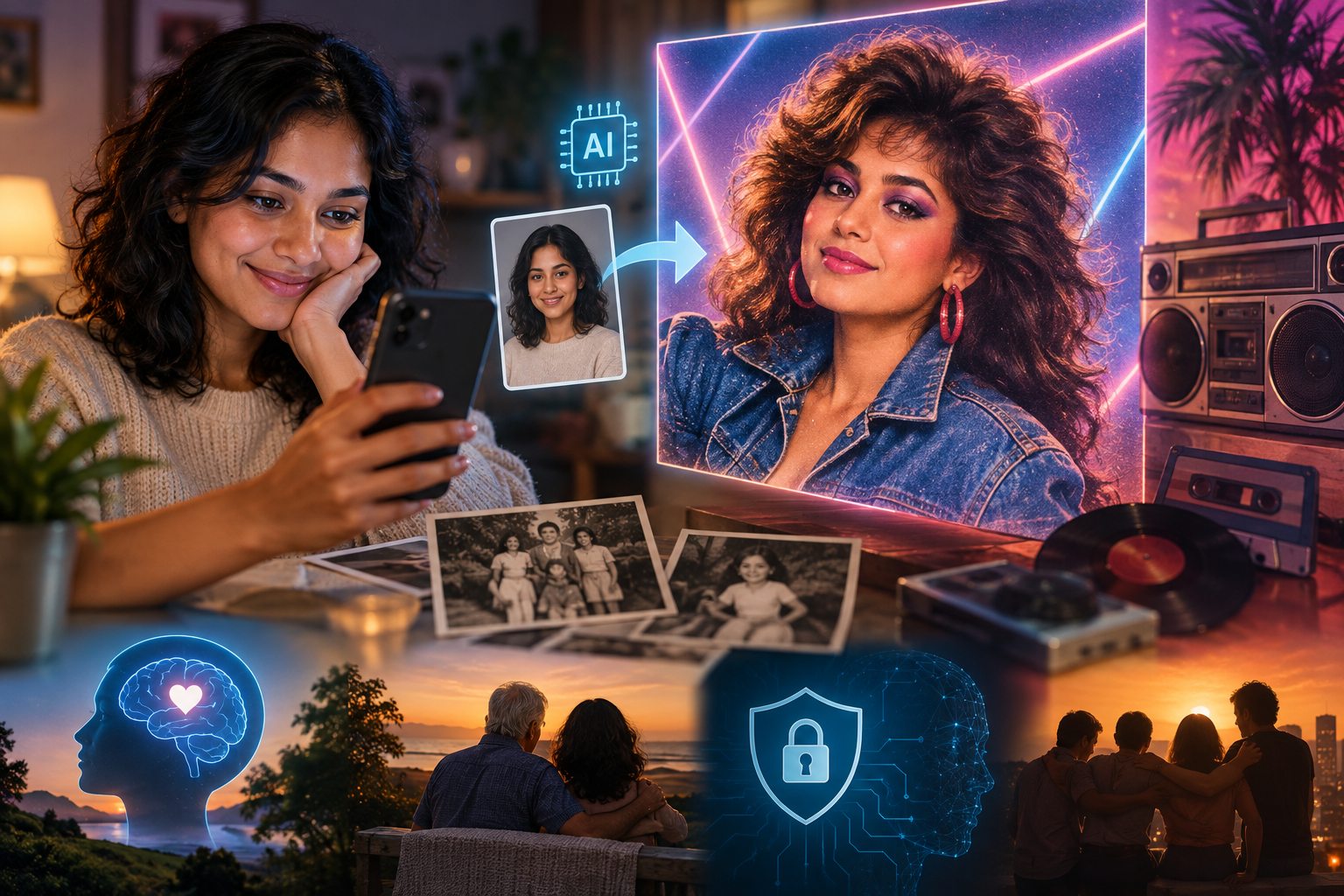
The 1980s are suddenly everywhere again. AI tools can transform today's photographs into colourful retro portraits with big hair, denim jackets, neon lights, dramatic makeup, and vintage studio backgrounds. For those who remember the decade, the experience can be funny and surprisingly nostalgic. For younger generations, it offers a playful way to explore a time they never experienced.
But as someone interested in recreation, mental health, wellbeing, and new technology, I think there is more to this trend than simply creating a cool picture.
More Than Just a Picture
Nostalgia can have positive psychological effects. Remembering meaningful people, places, and experiences can strengthen our sense of identity, connection, and continuity. An AI-generated image can become a simple doorway into those memories.
From a recreation therapy perspective, that makes the trend interesting. A retro portrait could encourage storytelling, creativity, social interaction, and reminiscence. An older adult might start talking about their first job, favourite music, childhood friends, or the fashion they actually wore.
The AI image itself is not the therapy. The meaningful human interaction around the activity is what matters.
Enjoy AI, But Protect Your Self-Image
There is also a mental health side we should consider. AI can easily make us look younger, smoother, slimmer, or more conventionally attractive, creating versions of ourselves that never actually existed.
One image may simply be fun, but constantly comparing our real appearance with digitally perfected versions can contribute to unrealistic expectations about how we should look.
A healthier approach is to treat these images as creative play, not personal comparison. Enjoy the transformation without allowing it to become a judgment of your real appearance.
And Then There Is Privacy
Before uploading your face to an AI application, take a moment to ask what happens to the photograph afterward. Check whether the company stores images, uses them to improve its systems, shares information with others, and provides a way to request deletion.
Be particularly careful with photographs containing children, family members, clients, patients, identification documents, or workplace information. Having someone's photograph does not automatically mean we should upload it to an AI system.
In healthcare, community support, and recreation settings, privacy, consent, confidentiality, and organizational policies should always come before convenience.
Use Technology to Create Connection
I am excited about what AI can bring to recreation and wellbeing. It can create new opportunities for creativity, reminiscence, storytelling, and intergenerational connection.
The best use of these trends may be surprisingly simple: create the picture, share a laugh, ask someone what they remember, and listen to their story. Then put the phone down and continue the conversation.
AI can recreate our appearance and even place us in another decade. It cannot recreate the real experiences, relationships, and memories that made those years meaningful.
And perhaps that is exactly what we should protect most.