
Part 16: Regulation That Protects: The Case for Proper Licensure
In the previous articles, we have looked at the pressures facing Sri Lankan nurses, from staffing shortages and demanding working hours to limited resources, financial pressures, burnout, public perception, and the need to strengthen nursing education. But there is another part of building a stronger profession that is easy to overlook: regulation.
Education prepares someone to become a nurse. Regulation helps ensure that the person continues to meet the standards expected of a professional throughout their career.
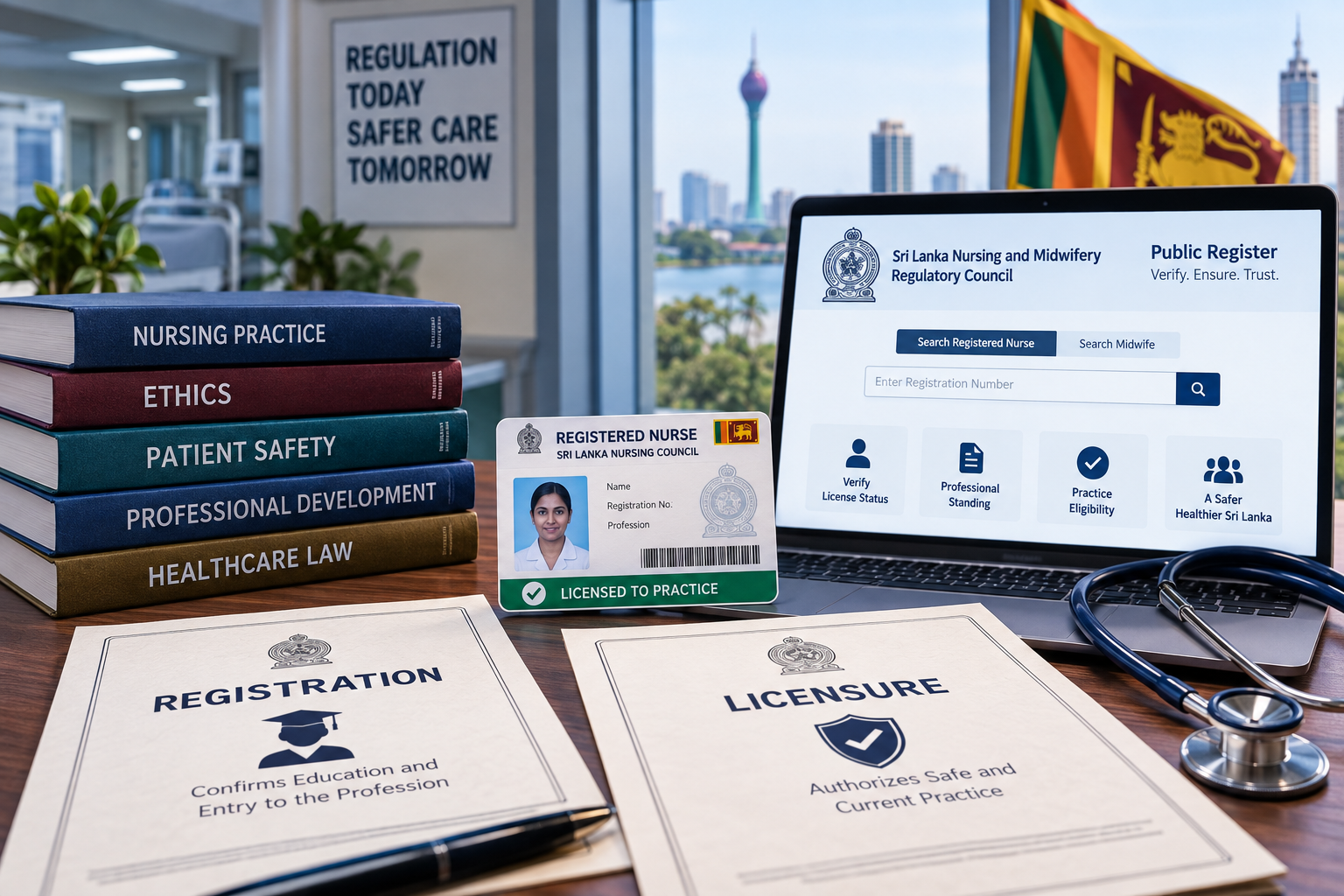
Registration Is Not the Same as Licensure
Becoming a Registered Nurse in Sri Lanka currently involves completing a diploma or bachelor's degree and submitting the qualification to the Sri Lanka Nursing Council for registration. Once that registration is granted, it is valid for life. There is no requirement to renew it, no regular assessment of ongoing competence, and no mechanism to verify that a nurse has remained clinically active or professionally current. Unless a nurse retires or leaves the profession voluntarily, the registration stands unchanged.
At first glance, this model may appear simple and convenient. There is less paperwork, fewer renewal requirements, and no need for nurses to repeatedly demonstrate their professional status. But from a broader professional perspective, it represents a significant weakness in the regulatory framework of Sri Lankan nursing. It affects accountability, patient safety, and potentially the international recognition of Sri Lankan nursing qualifications.
Two Different Ideas
A stronger regulatory system would clearly distinguish between registration and licensure.
Registration confirms that a nurse has successfully completed an approved nursing education program and met the basic requirements to enter the profession. It would remain a permanent record of that achievement.
Licensure is different. A license represents the legal authorization to practise nursing and would need to be renewed periodically. This distinction allows a regulatory body to confirm not only that someone qualified as a nurse at some point in the past, but also that they continue to meet the requirements to practise safely today.
Keeping Skills Current
Under an annual licensing model, nurses would be expected to demonstrate continuing professional development and ongoing competence. This could include a minimum number of practice hours, completion of approved continuing education, evidence of competency, and valid professional liability insurance.
A public online registry could also allow anyone to search a nurse's registration number and confirm whether that nurse holds a current and valid license to practise.
Some may see this as unnecessary bureaucracy. I see it differently.
A transparent licensing system is not designed to punish nurses. It is designed to protect patients while also strengthening the professional identity of nurses themselves. In healthcare systems that take professional accountability seriously, maintaining current credentials is part of being a regulated healthcare professional.
What Happens When Accountability Is Invisible?
Currently, Sri Lanka has no mandatory licensure enforcement in public healthcare settings. There is no routine credential verification and no structured system for transparently managing professional conduct.
This gap has consequences.
It can limit the professional standing of Sri Lankan nurses in international markets. It can reduce public confidence when patients have no visible way of confirming professional status. And perhaps just as importantly, it leaves nurses themselves without the clear professional framework and identity that a robust regulatory system can provide.
A strong regulatory system should not be something nurses fear. It should be something they can point to with pride.
An Independent Regulatory Body
One possible solution would be the establishment of an independent Sri Lanka Nursing and Midwifery Regulatory Council, with clear legal authority, strong representation from the nursing profession, and complete operational separation from hospital service providers.
Such a body could maintain a public register of licensed nurses and clearly defined scopes of practice. It could develop national competency standards aligned with international frameworks, manage background and character checks, require professional liability insurance, and oversee complaints and disciplinary processes in a fair and transparent manner.
Independence would be particularly important. The organisation responsible for regulating the profession should be able to make decisions based on professional standards and patient safety without being directly controlled by the institutions that employ the nurses it regulates.
Building a Profession for the Future
Sri Lanka has already taken important steps in developing nursing education and professional training. The next step is to strengthen the regulatory structure that supports those professionals throughout their careers.
Proper regulation is not about creating obstacles for nurses. It is about creating confidence: confidence for patients, confidence for employers, confidence for international healthcare systems, and confidence for nurses themselves.
If Sri Lanka wants its nursing profession to compete confidently on the international stage, regulation needs to evolve alongside education.
Building an independent, transparent, and accountable regulatory system could become one of the defining steps in transforming nursing from a profession that is educated and trained into one that is also continuously regulated, protected, and recognized at the highest professional standard.