
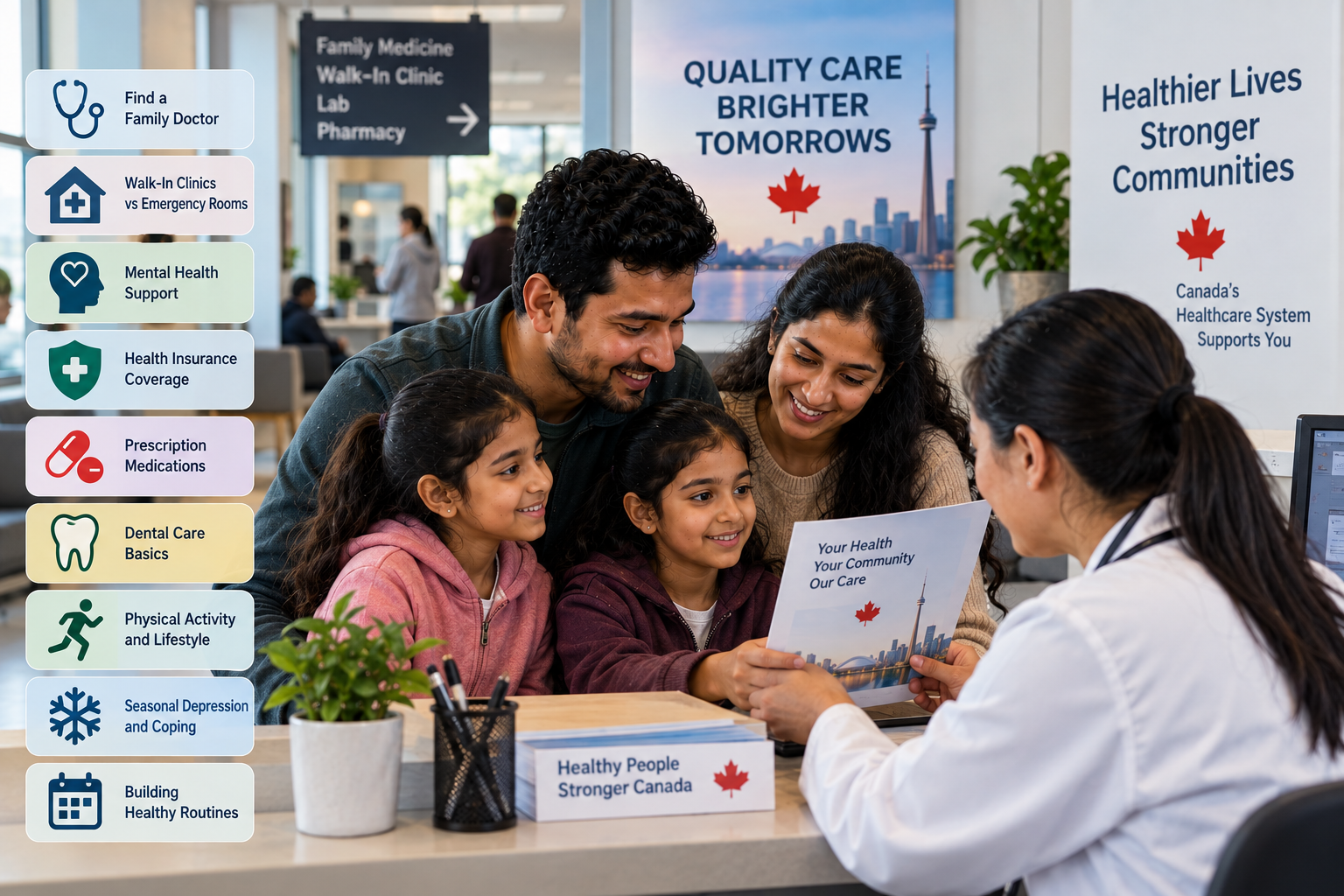
Understanding Healthcare in Canada
🏥 Finding Your Way Around the System
In the earlier articles, we talked about finding a home, getting a job, managing money, and building a new life in Canada. Another important part of settling in is learning how the Canadian healthcare system works.
Healthcare can feel confusing when you first arrive because the system may be quite different from what you were used to in your home country. You may wonder where to go when you are sick, how to find a family doctor, whether medication is covered, or what to do when you need help with your mental health.
The good news is that you do not need to understand everything at once. As with many other parts of settling in Canada, you can learn the system gradually.
👨⚕️ Finding a Family Doctor
A family doctor, sometimes called a primary care provider, can become an important part of your healthcare journey. They can help with routine health concerns, preventive care, ongoing conditions, referrals, and general health advice.
Finding a family doctor can take time, especially in communities where there are not enough primary care providers. Newcomers can look for doctors accepting new patients through provincial healthcare resources, community organizations, and other local services.
Until you find a regular healthcare provider, you may need to use other services depending on your situation.
🚶 Walk-In Clinics or Emergency Rooms?
One of the most important things to understand is that a walk-in clinic and an emergency department are not the same thing.
A walk-in clinic or other primary care service may be appropriate for a health concern that needs medical attention but is not an emergency. An emergency department is intended for serious or potentially life-threatening situations that require urgent assessment and treatment.
Going to an emergency department for a minor health problem can mean a long wait and may also take resources away from people experiencing serious emergencies. When you are unsure where to go, healthcare advice lines and local health resources can help you decide what type of care may be appropriate.
🧠 Mental Health Support Matters Too
Moving to a new country can be exciting, but it can also bring loneliness, financial pressure, language challenges, homesickness, workplace stress, and uncertainty about the future.
Mental health is part of overall health. You do not have to wait until a problem becomes overwhelming before looking for support. Community organizations, primary care providers, counselling services, and other mental health resources may be available depending on where you live and your circumstances.
If you or someone you know is in immediate danger or experiencing a mental health crisis, Canada also has the 988 Suicide Crisis Helpline, available by calling or texting 988.
Asking for help is not a sign that you are failing to adjust. Sometimes it is simply part of taking care of yourself.
💳 Understanding Health Insurance
Canada's healthcare system is publicly funded, but that does not mean every healthcare-related expense is automatically covered.
Provincial or territorial health insurance generally covers many medically necessary physician and hospital services for eligible residents. However, services such as prescription medications, dental care, vision care, physiotherapy, counselling, and other services may have different coverage depending on your province, age, income, employment benefits, or private insurance.
If you receive health benefits through your employer, take some time to understand what your plan covers. Knowing your coverage before you need it can prevent an unpleasant surprise when you receive a bill.
💊 Prescription Medications
If a doctor or other authorized healthcare provider prescribes medication, you will normally take the prescription to a pharmacy. Pharmacists can also answer questions about how to take your medication, possible side effects, and other concerns.
Prescription medication is not automatically free for everyone in Canada. Coverage depends on your province or territory, your circumstances, and whether you have private or employer-sponsored insurance.
If medication is expensive, ask the pharmacist or healthcare provider whether there are applicable public programs, lower-cost alternatives, or other assistance options.
🦷 Do Not Forget Your Teeth
Dental care is another area that surprises some newcomers. Routine dental services are generally not covered in the same way as medically necessary physician and hospital services under provincial health insurance.
You may need private dental insurance, employer benefits, or personal savings to pay for dental services. Some public programs may provide dental coverage for people who meet specific eligibility requirements.
Regular dental care is not simply about having a good smile. Oral health is an important part of overall health, so try to include dental care in your family's healthcare planning.
🚴 Physical Activity and Lifestyle
Healthcare is not only about visiting doctors when something goes wrong. The everyday choices you make can also influence your health and wellbeing.
Canada offers many opportunities to stay active, from walking and cycling to swimming, community recreation programs, fitness centres, and outdoor activities. You do not need an expensive gym membership to become more active. A regular walk around your neighbourhood can be a simple place to start.
As a newcomer, exploring your community through physical activity can also help you meet people and become more familiar with your new surroundings.
❄️ Seasonal Changes and Your Mental Wellbeing
Canadian winters can be a major adjustment, particularly for newcomers arriving from warmer climates. Shorter daylight hours, cold temperatures, snow, and spending more time indoors can affect mood and motivation for some people.
If you notice ongoing changes in your mood, sleep, energy, or interest in everyday activities during the darker months, do not simply assume that you have to "get used to it." Consider speaking with a healthcare professional, particularly if the changes are persistent or affecting your daily life.
Getting outside during daylight, staying physically active, maintaining social connections, and keeping a regular daily schedule can be helpful ways to support your wellbeing during the winter months.
🌱 Building Healthy Routines
Your health journey in Canada does not need to begin with major lifestyle changes. Small, consistent habits can make a meaningful difference.
Try to develop routines around sleep, nutritious food, physical activity, social connection, preventive healthcare, and time for relaxation. Keep track of important appointments, medications, and health information so that you can communicate effectively with healthcare providers when needed.
As you become more familiar with Canada's healthcare system, it will gradually feel less complicated. You will learn where to go, who to call, what your insurance covers, and when you need urgent help.
Just like finding your first home, your first job, and your financial footing, learning how to look after your health is another important step in making Canada feel like home.