
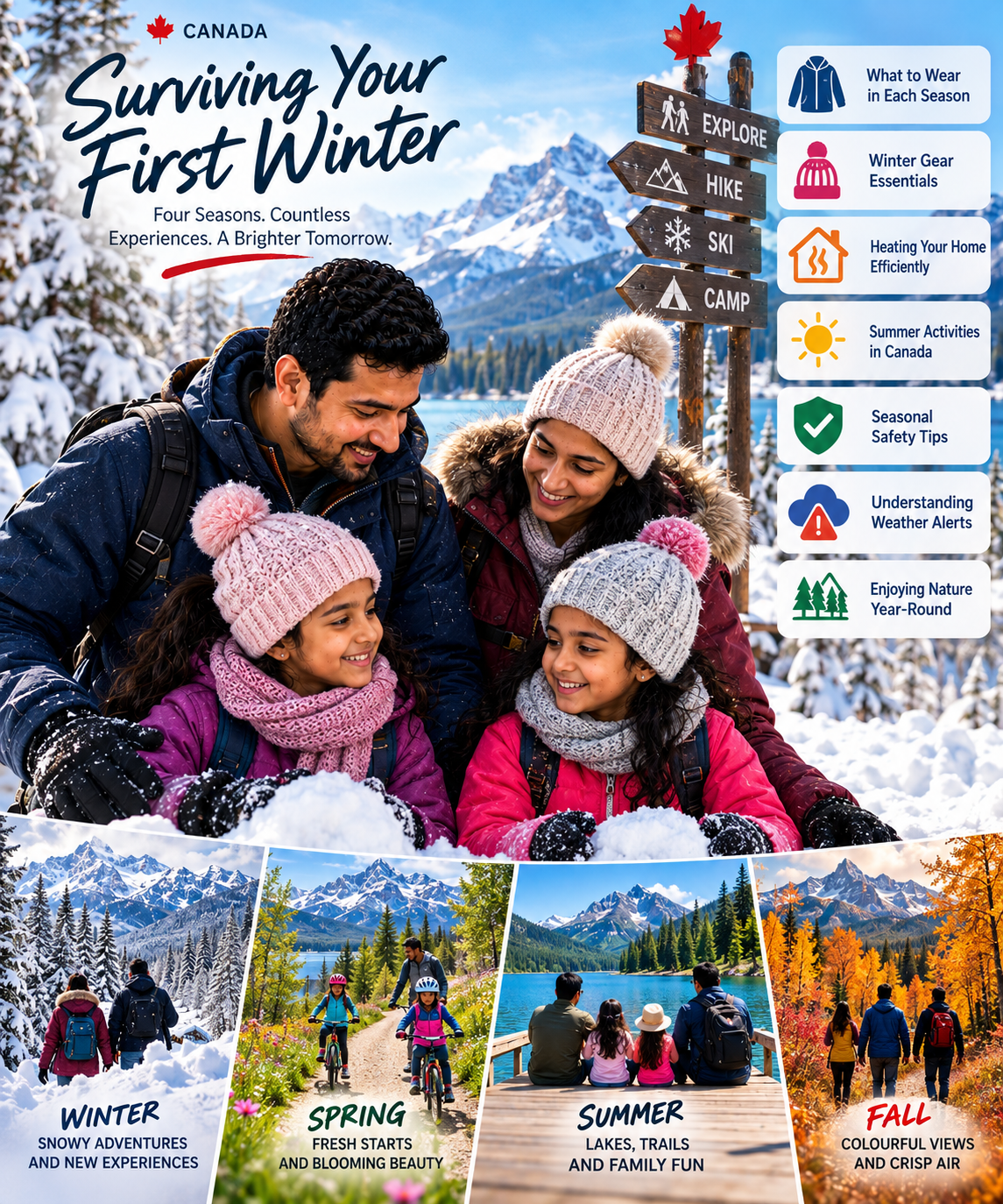
Surviving Your First Winter
❄️ Learning to Live With the Seasons
In the previous article, we explored transportation in Canada, from public transit and driving to cycling, walking, and road safety. As you become more comfortable getting around, you will quickly discover another important part of Canadian life: the weather.
For many newcomers, the first Canadian winter can be one of the biggest adjustments. Cold temperatures, snow, ice, shorter days, and changing weather can make everyday activities feel very different from what you were used to. But Canada is not only about winter. Each season brings its own challenges, activities, and opportunities to enjoy the outdoors.
The key is learning how to prepare rather than simply trying to endure the weather.
🧥 What to Wear in Each Season
Canadian weather changes considerably throughout the year, so having the right clothing makes a big difference. Spring and fall can bring cool mornings, warmer afternoons, rain, and sudden temperature changes, so layers are often useful. Summer usually calls for lighter clothing, comfortable footwear, sun protection, and protection from rain when needed.
Winter requires more preparation. A warm winter coat, insulated boots, gloves or mittens, a hat, and clothing that protects you from wind and cold can make outdoor activities much more comfortable. Dressing in layers can also help you adjust when moving between the cold outdoors and heated buildings.
🧤 Winter Gear Essentials
If you are experiencing your first Canadian winter, do not wait for the coldest day to buy winter gear. Prepare before temperatures drop significantly. Good-quality winter boots with suitable traction can help when walking on snow or ice, while warm gloves, a hat, and a scarf or neck warmer can protect exposed areas from the cold.
For children, winter clothing becomes especially important because they may spend time outside at school or during recreation. Having extra gloves, socks, and suitable outdoor clothing can make winter much easier for the whole family.
🏠 Heating Your Home Efficiently
Keeping your home warm during winter can increase your energy costs, so learning how your heating system works is important. Understanding your thermostat, keeping doors and windows properly closed, and avoiding unnecessary heat loss can help make your home more comfortable and energy-efficient.
If you rent, learn what heating costs are included in your rent and what you are responsible for paying. This connects directly with the earlier article about utilities and household budgeting. Planning for higher winter energy use can help prevent an unexpected bill from putting pressure on your monthly budget.
☀️ Summer Activities in Canada
After months of cold weather, summer can feel like a celebration. Canadians often take advantage of the warmer months to explore parks, lakes, trails, campgrounds, and outdoor recreation areas. Families may go hiking, cycling, camping, swimming, have picnics, or simply spend more time outdoors.
Summer is also a wonderful opportunity for newcomers to explore their new community. You do not need to travel far or spend a lot of money. A local park, walking trail, community event, or family picnic can become part of your new Canadian memories.
⚠️ Seasonal Safety Tips
Every season brings different safety considerations. In winter, snow and ice can make sidewalks and roads slippery, while extreme cold can create risks for people spending too much time outdoors. In summer, heat, sun exposure, dehydration, wildfire smoke, and changing weather can become concerns.
Take a few minutes to check the conditions before heading outside, especially when travelling with children or planning outdoor activities. Wear appropriate clothing, carry water when needed, and adjust your plans when conditions become unsafe.
📱 Understanding Weather Alerts
Weather can change quickly in Canada, and learning to understand weather alerts is an important part of staying safe. You may hear warnings about extreme cold, heavy snowfall, freezing rain, thunderstorms, high winds, heat, wildfires, or other severe conditions.
Pay attention to official weather information and understand what an alert means for your area. A weather warning is not simply another notification on your phone. It is information that may help you decide whether to change your travel plans, stay indoors, or take additional precautions.
🌲 Enjoying Nature Year-Round
One of the wonderful things about living in Canada is that nature does not disappear when the weather changes. The same park or trail can look completely different in spring, summer, fall, and winter.
You may discover spring flowers, enjoy summer lakes, walk through colourful autumn forests, or experience a quiet snowy landscape in winter. With appropriate preparation, outdoor activities can become part of your family's lifestyle throughout the year.
As we discussed in the previous article, walking and physical activity can also support your health and wellbeing. Spending time outdoors can become both a way to explore Canada and a way to stay connected with your community.
🌱 Reflection: From Surviving to Enjoying
Your first Canadian winter may feel difficult. You may miss the warmth of your home country, wonder why people voluntarily live through so much snow, and spend more time checking the weather than you ever expected.
Eventually, something changes. You learn what to wear, how to prepare your home, how to drive or walk safely, and when it is better to stay inside. Then you begin discovering the enjoyable side of each season.
Winter becomes more manageable. Spring brings new energy. Summer opens the door to outdoor adventures, and fall brings its own beauty.
Canada's seasons are not simply something you have to survive. With preparation, awareness, and a little curiosity, they can become another part of the experience of making Canada your home.