
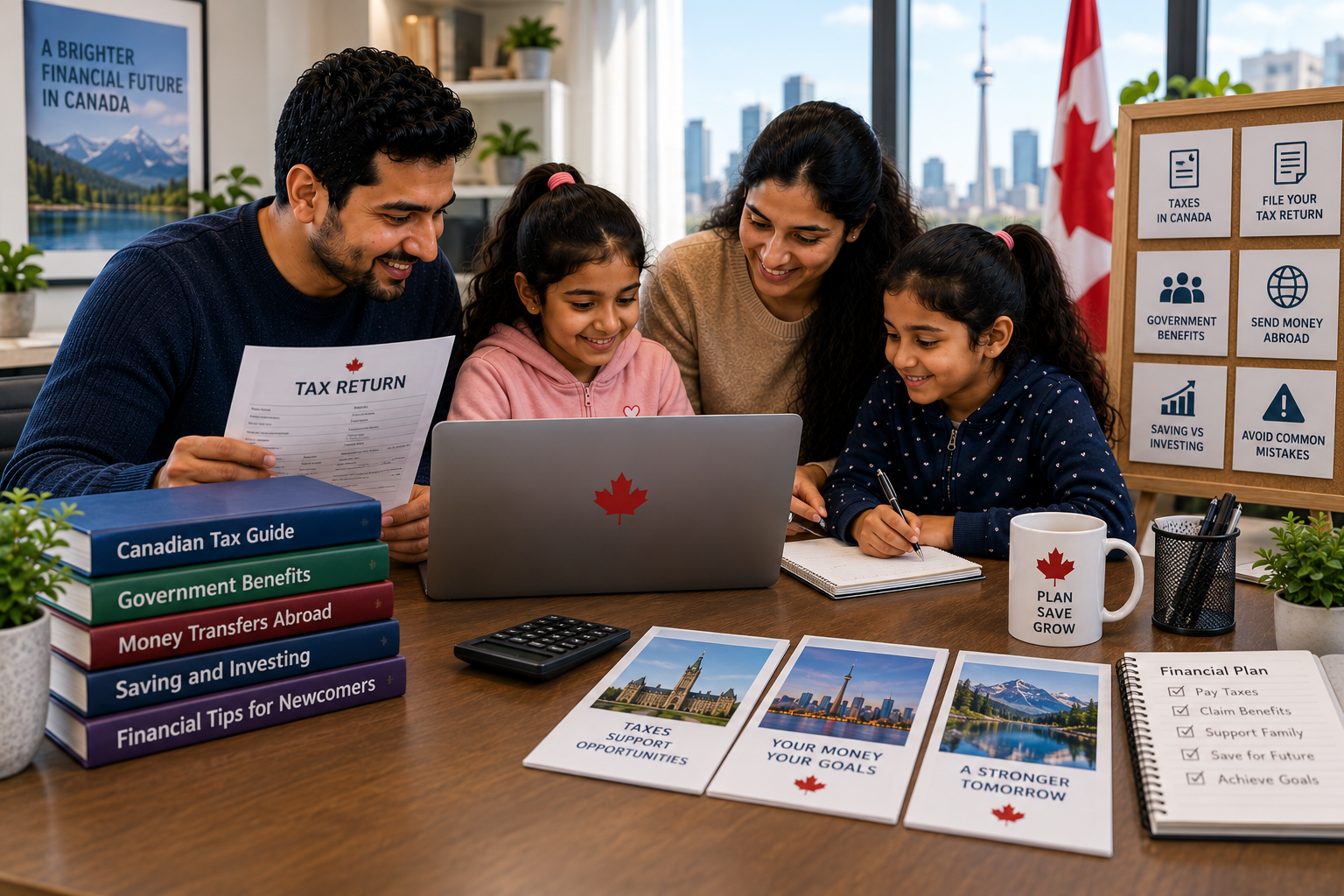
Understanding Money and Taxes
💰 Learning the Canadian System
In the previous article, we explored budgeting, credit scores, and building a financial foundation in Canada. Once you begin earning income, another important part of your financial journey begins: understanding taxes and the different ways you can manage and protect your money.
For many newcomers, Canada's tax system can initially feel complicated. There are forms, deadlines, deductions, benefits, and unfamiliar terms. However, you do not need to understand everything at once. Learning the basics can help you make better financial decisions and avoid unnecessary problems.
🧾 Taxes in Canada: A Simple Guide
In Canada, taxes help fund public services such as healthcare, education, transportation, and other government programs. Income tax is collected by the federal government and, depending on where you live, by your provincial or territorial government as well.
If you earn income in Canada, your employer will usually deduct income tax and other required amounts from your paycheque. When you file your tax return, the government calculates whether you have paid the correct amount based on your income and circumstances.
Taxes can also apply to other types of income, including self-employment income, investment income, and certain benefits. Understanding what income you need to report is an important part of becoming financially comfortable in Canada.
📄 Filing Your First Tax Return
Your first tax return may feel intimidating, but it is simply a way of telling the government about your income and certain financial circumstances for the year. You generally report your income and provide information that may allow you to claim eligible deductions, credits, or benefits.
Keep important documents such as employment income slips, receipts, and other tax-related records organized. You can file your return yourself using approved tax software or seek assistance from a qualified tax professional or community tax program if you need help.
Do not wait until the last moment to think about your taxes. Learning the process early can make future tax seasons much easier.
🏦 Government Benefits and Support
Taxes are not only about paying money to the government. Filing a tax return can also help determine whether you qualify for certain government benefits and credits.
Depending on your circumstances, income, family situation, and eligibility, you may qualify for programs designed to provide financial support to individuals and families. Some benefits are connected to information reported through your tax return, so failing to file when required or expected could affect your access to certain support.
As a newcomer, it is worth learning what federal, provincial, and territorial programs may be available to you rather than assuming you are not eligible.
🌎 Sending Money Abroad
Many newcomers continue supporting parents, relatives, or other loved ones in their home countries. Sending money internationally has become relatively easy, but it is important to understand the total cost of a transfer.
Do not look only at the advertised transfer fee. Check the exchange rate and the amount your recipient will actually receive. Different services can have significantly different costs.
Keep records of international transfers as part of your financial records, especially when you are sending significant amounts of money. Most importantly, use reputable and legitimate money-transfer services and be cautious about anyone asking you to transfer money on behalf of a stranger.
🌱 Saving vs. Investing
Once your basic expenses are covered, you may begin thinking about saving and investing. Although the two are connected, they serve different purposes.
Saving is generally about keeping money available for shorter-term needs and unexpected expenses. An emergency fund, for example, can help you manage an unexpected repair, temporary loss of income, or other financial challenge without immediately relying on credit.
Investing is generally focused on growing money over a longer period. Investments can provide opportunities for growth, but they also involve risk. As a newcomer, there is no need to rush into investments simply because someone tells you that you are missing an opportunity. First understand what you are buying, how much risk is involved, and whether it fits your financial goals.
🚨 Avoiding Common Financial Mistakes
One of the most common financial mistakes newcomers make is trying to establish their new lifestyle too quickly. Buying expensive items on credit, taking on unnecessary debt, or trying to maintain the same lifestyle they had after arriving can put pressure on a household budget.
Another mistake is ignoring bills, taxes, or financial paperwork because they seem complicated. Problems rarely become easier when they are ignored. If you do not understand something, ask questions and get help before making a decision.
Be particularly careful with financial offers that sound too good to be true. Scammers often target newcomers by promising guaranteed investments, quick loans, immigration-related financial opportunities, or easy ways to make money.
🌱 Reflection: Taking Control of Your Financial Journey
Building a financial life in Canada is a gradual process. First, you learn how to manage your everyday expenses. Then you begin understanding credit, taxes, government benefits, saving, and investing. Each step gives you a little more confidence and control.
You do not need to become a financial expert when you first arrive. What matters is developing good habits, asking questions, keeping your records organized, and making financial decisions carefully.
Your financial journey is not about becoming wealthy overnight. It is about creating stability, protecting your family, and gradually building the freedom to make choices about the future you want to create in Canada.