
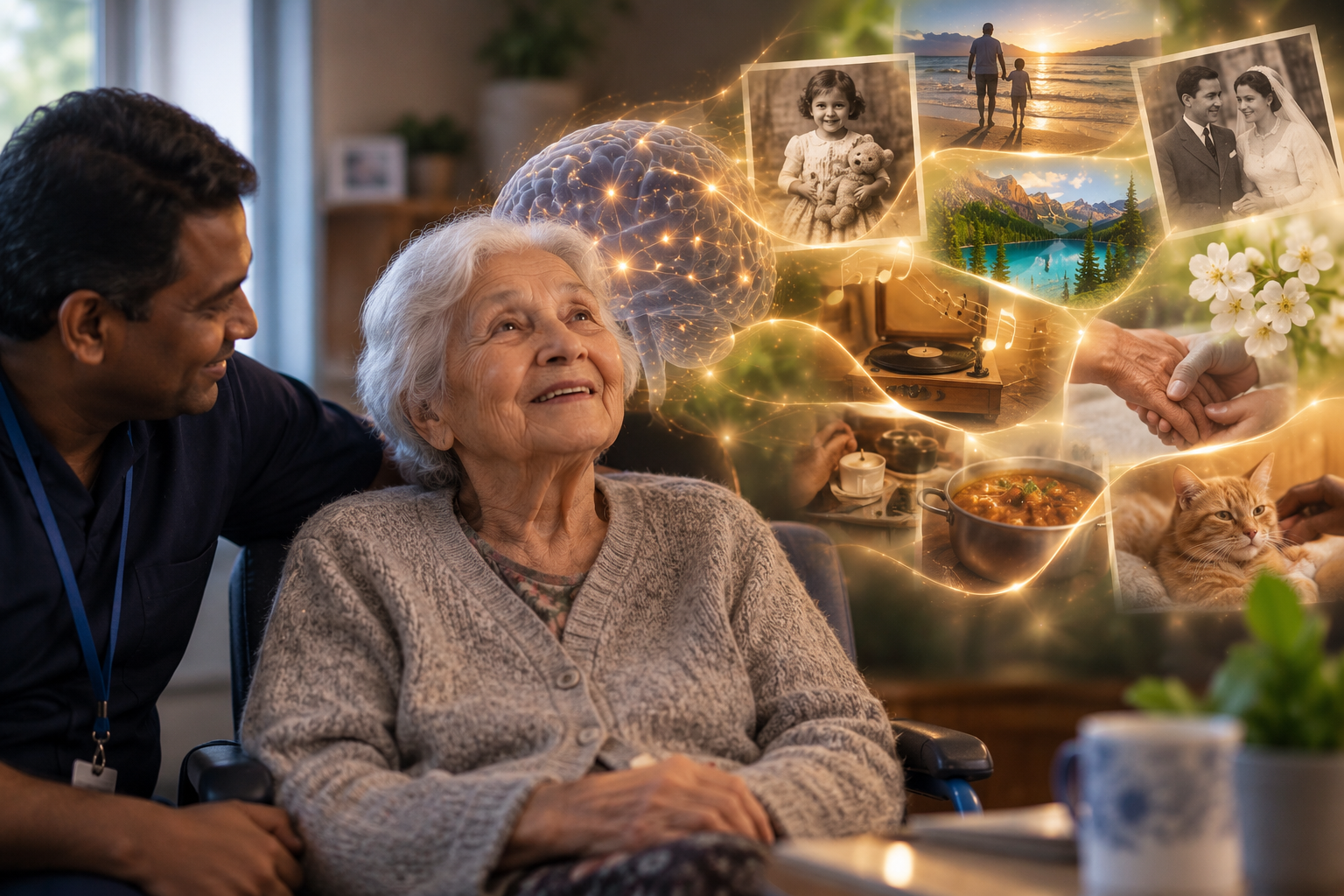
Why Some Memories Become Part of Who We Are
A memory can tell us that something happened, but some memories do something much deeper. They give us the feeling that something happened to me. Think about a childhood home you have not seen for many years. You may remember the rooms, the people who lived there, or even the sound of the front door. For a moment, you are not simply recalling information. You are reconnecting with a person who existed at that time. That is where memory begins to become closely connected with identity.
Not All Memories Feel the Same
We remember many facts that have little connection to our personal identity. We may know the name of a country, remember a medical term, or know how to calculate something. This is different from remembering your first day at school, a family celebration, or a difficult moment in your life. These episodic memories carry something more personal. They include not only what happened, but the feeling that you were there.
A Moment From My Dementia Care Experience
One experience from my work with people living with dementia has stayed with me. I was speaking with a client who had difficulty recalling recent events and could not always follow a conversation for very long. During the session, something familiar from the person's past came up. Their expression changed, and they became noticeably more engaged. The details of the memory were not necessarily available as a complete story, but the emotional response was still there.
Experiences like this have taught me to be careful about equating memory loss with the loss of self. A person may lose access to parts of their personal story while still responding to familiar sounds, emotions, routines, relationships, and experiences. The story may become harder to tell without the person becoming less human.
When Memory Becomes Part of Your Story
As we move through life, some experiences become connected with other memories, emotions, relationships, and beliefs. A single event can therefore become part of a much larger understanding of who we are. A difficult experience might become, “I got through that.” An achievement might become, “That changed my life.” A relationship might become, “That person helped make me who I am.”
The memory is no longer simply an event from the past. It has gained personal meaning. This is one reason autobiographical memory is so closely connected with our sense of identity.
Why Can a Smell Bring Back a Whole Life?
Perhaps you have experienced this yourself. A particular smell suddenly reminds you of someone you love. An old song takes you back to your teenage years. A photograph brings back not only the people in it, but feelings and details you had not consciously thought about for years.
There is biology behind these experiences. Memories are formed through connections between different kinds of information. Sensory details, emotions, places, people, and experiences can become associated with one another. When one part of this network is activated, it can sometimes help bring other connected memories into awareness.
A smell may be only a smell, but to your brain, it can become a doorway to another time.
The Feeling of “I Was There”
One of the fascinating qualities of autobiographical memory is self-reference. When you remember something from your own life, your brain is not simply retrieving information about an event. It is relating that event to you.
That helps explain why remembering your own experience can feel so different from hearing someone else's story. You do not simply think, “That happened.” You experience something closer to, “That happened to me.”
That small difference may be one of the places where memory and identity meet.
But What If the Memories Begin to Disappear?
This brings us closer to some of the difficult questions surrounding dementia. If our memories help us understand who we are, what happens when those memories become difficult to access? If someone forgets their career, their home, important events, or even the names of people they love, does a piece of their identity disappear with each memory?
Or is “me” bigger than the memories I can consciously retrieve?
These questions become especially important when we understand that memory is not one single system. Different types of memory depend on different brain networks, and they do not necessarily disappear at the same rate.
That leads us to the next part of our journey: what happens when the personal story itself begins to fade?
Next: Part 4C
When Memory Begins to Fade
What Happens to “Me” When the Story Becomes Harder to Remember?
In the next article, we will explore memory changes in dementia and ask a difficult but important question: if a person's memories are disappearing, does that mean the person is disappearing too?