"Do you know who this is?" Ron pointed to a face in an old black and white photograph.
His wife had early onset dementia. Her speech was still clear, she could carry on a conversation, and she managed most of her daily routines at home without much trouble. But her memory was slipping fast, faster than everything else about her.
One of my favorite tools during my years working in the dementia field was reminiscence therapy. Sitting down with someone and going through old photographs, listening to old songs, and talking about stories from their life. I loved it because I could watch a person’s eyes light up when they talked about their school days, a first date, or a family gathering. And then, in the same session, that same person sometimes could not recognize themselves in the very photograph they were looking at.
Ron's wife studied the picture for a moment and said, "No honey, I know that lady, she looks very familiar, but I don't remember who she was. But I know this is my uncle Greg."
The woman in the photo was her, at eighteen years old, at a family party. She could name almost everyone else in the picture. She could not find herself.
Moments like that stayed with me. They are part of why I have spent so much time thinking about memory and how closely it is tied to our sense of who we are.
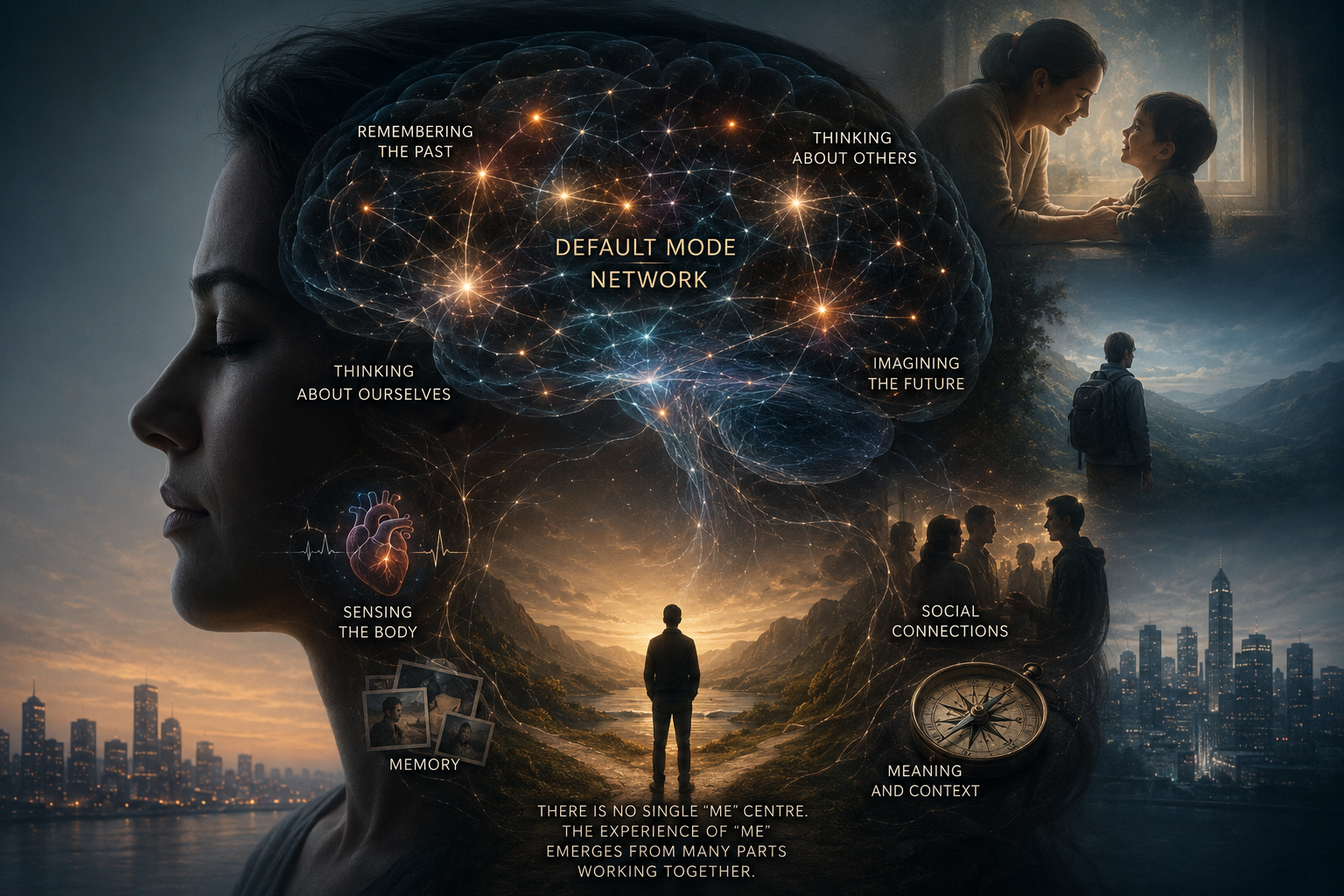
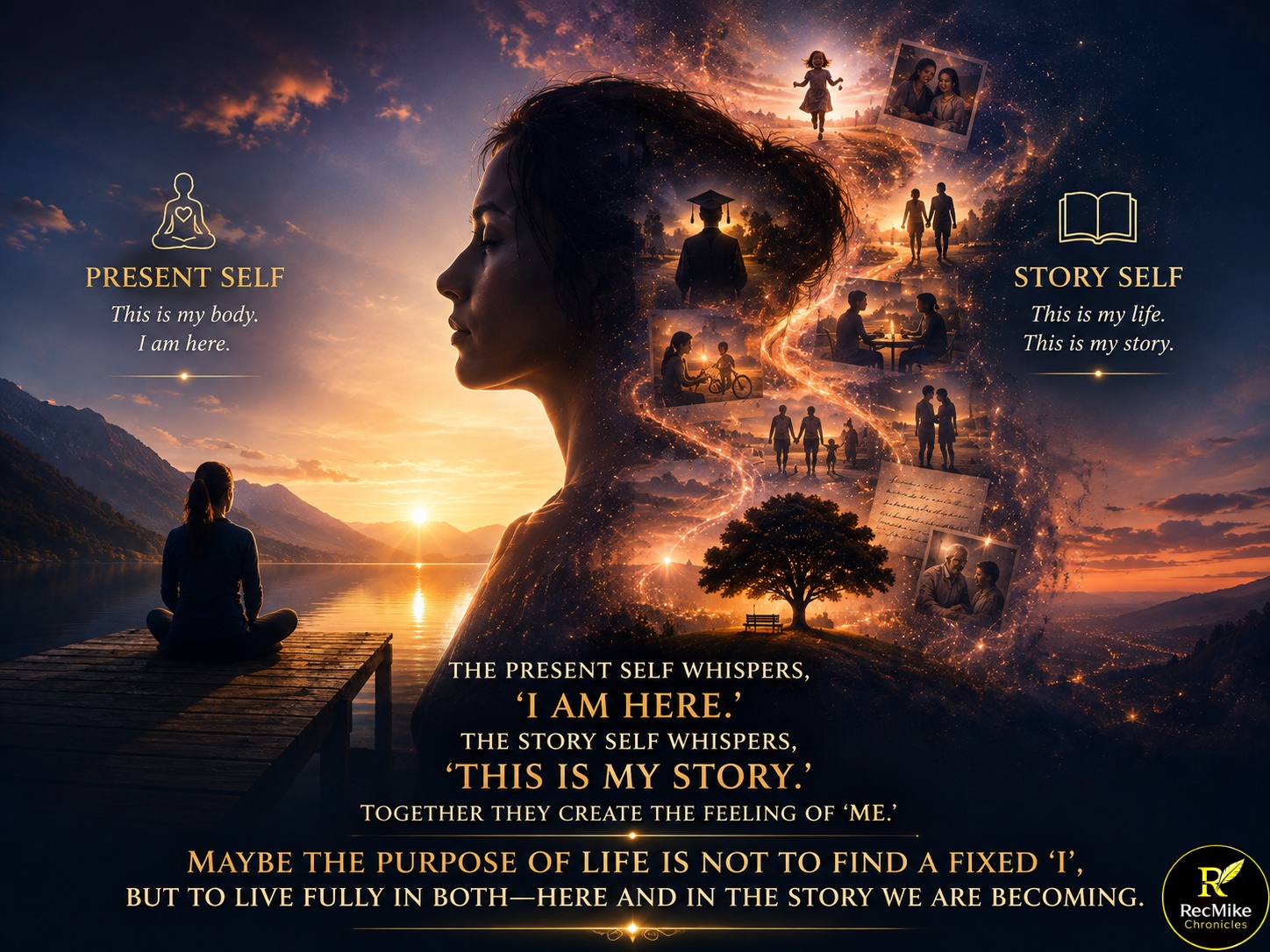
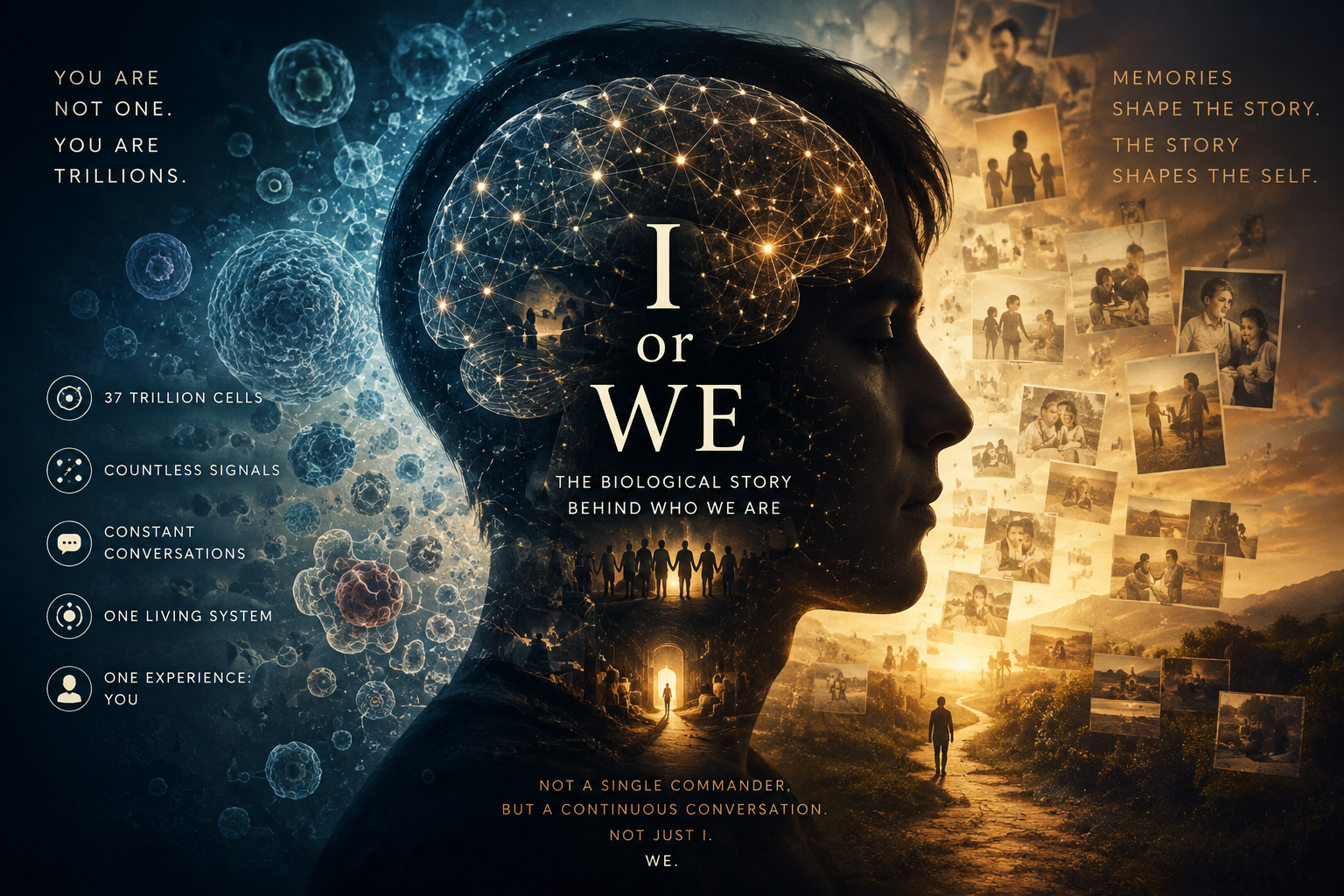
In the first two parts, we looked at what "I" means and why there is no single place in the brain where the self lives. Now we can move into something closer to everyday life. How does the brain turn raw experience into a story about who you are?
Think about your own life. You have lived through thousands of days, conversations, meals, journeys, successes, and disappointments. Most of it is gone. You remember a small fraction of what actually happened to you. Somewhere in the brain, a decision gets made about which experiences deserve attention, which become memories, and which eventually become part of the story you tell about yourself.
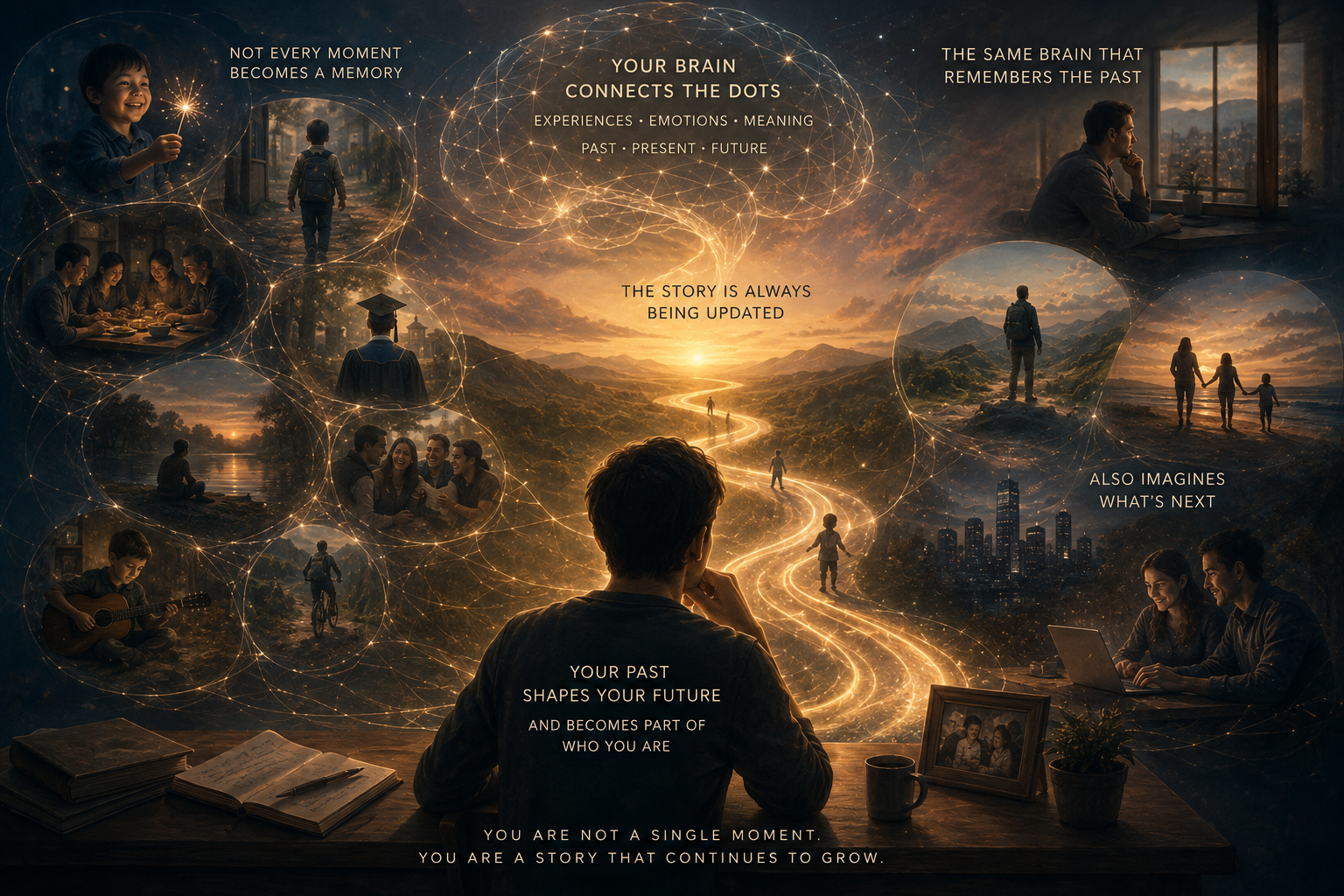
Not everything becomes a memory
Every second, your senses hand your brain an overwhelming amount of information. Sights, sounds, touch, smell, movement, and your own internal reactions all arrive at once. The brain does not have the capacity to store all of it with equal weight, so it filters.
Attention is one filter. If you are not paying attention to something, it is far less likely to be encoded as a memory at all. Emotion is another. The amygdala, a small structure near the center of the brain, responds to emotionally charged events and signals to the hippocampus that this particular moment is worth holding onto. That is part of why you can remember exactly where you were during a piece of frightening or joyful news, while an ordinary Tuesday from the same month has vanished completely. Novelty matters too. A brain that has seen the same commute, the same kitchen, and the same faces a thousand times stops flagging them as new information worth storing in detail.
This is why two people can sit through the same event and remember it differently afterward. They were in the same room, but their brains were not doing the same work. One person's attention was on the conversation, another's was on how they felt about it, and each ended up encoding a different version of what happened.
Your brain is not recording your life the way a camera does. It is deciding, moment by moment, what is worth keeping.
From experience to personal memory
Picture meeting someone who eventually becomes important in your life. At the start, it is just an experience. You see their face, hear their voice, register what they say, and feel some kind of reaction, curiosity, comfort, maybe nothing much at all.
If that encounter turns out to matter, the different pieces of it start getting bound together into something the brain can retrieve later as a single memory. This binding is largely the job of the hippocampus. It does not store the memory permanently in one place. Instead, it acts more like an index, linking the sight of that person's face, the sound of their voice, the room you were in, and your emotional state at the time, so that all of it can be pulled back together later. Over months and years, through a process called systems consolidation, much of that information gradually shifts toward the neocortex, spread across networks rather than held in a single structure. This is one reason very old memories can survive even after hippocampal damage, while very recent ones are often the first to be lost.
Years later, you may not remember a single word that was spoken. But you might remember where you were, what the person looked like, and most of all, why that moment mattered to you.
An experience has become part of your personal history.
Memory gives experience meaning
A memory is rarely just a fact sitting in storage.
Think about an old photograph. You recognize the people, the place, roughly the year. But the photograph also pulls up feelings, relationships, and other memories tied to that period of your life. That pull is not a side effect. It is close to the whole point of what memory does.
This is where memory and identity start to overlap. An experience gets linked to emotions, beliefs, relationships, and later events, and those links can keep shifting. Something that felt ordinary at the time can turn into something important years later, once your understanding of it has changed.
A hard experience can become the story "I got through that."
A failure can become "that taught me something."
A relationship can become "that person changed how I see things."
The event itself happened once. What it means to you can keep developing long after it is over.
The story can change
Here is one of the stranger features of memory. Remembering is not replaying a recording.
When you retrieve a memory, the hippocampus and related regions reconstruct it using whatever information is available to you right now, not just what was encoded at the original moment. Your current mood, your present knowledge, and everything that has happened to you since can all shape how you understand something from the past. There is even evidence that memories become briefly unstable each time they are recalled, a process researchers call reconsolidation, before being stored again, sometimes with small changes.
This does not mean your memories are false. It means human memory works more like an ongoing edit than a fixed video file.
You may remember the same event differently at fifty than you did at twenty. The event has not changed. Your understanding of it has.
That is one reason your personal story keeps evolving throughout your life, even when nothing new is happening to you.
The past also helps you imagine tomorrow
The brain does something even more useful with these stored experiences. It uses them to imagine futures that have not happened yet.
If you have sat through a difficult interview before, your brain draws on that memory when you are preparing for the next one. If you have traveled before, those memories give your mind material to picture the next trip. This is not a coincidence of language. Brain imaging studies have found that remembering the past and imagining the future activate overlapping networks, including the hippocampus and regions involved in constructing scenes. The same machinery that reconstructs where you have been also builds where you might go.
So memory is not only the brain looking backward. It is raw material the brain uses to look forward.
But what happens when the story starts to fade?
This is where the series is heading next, and where the questions get harder.
If memories build our personal story, what happens when those memories become difficult to retrieve?
What happens when someone remembers their childhood clearly but cannot remember what happened yesterday?
What happens when a person can no longer tell us the story of their own life?
And the harder question underneath all of this: if parts of my story disappear, what happens to my sense of "me"?
To get anywhere close to answering that, we first need to understand memory itself in more detail. What actually happens inside the brain when an experience becomes a memory? Where does it go? How does it survive for decades? And why can a single smell, a song, or a familiar voice suddenly open a door to a part of your past you thought was gone?
Next: Part 4, Memory and "me": why do my memories feel like they belong to me?
The next article goes into the connection between memory and identity, and why remembering an event carries the powerful feeling that it happened to you, specifically, and not to someone else.