
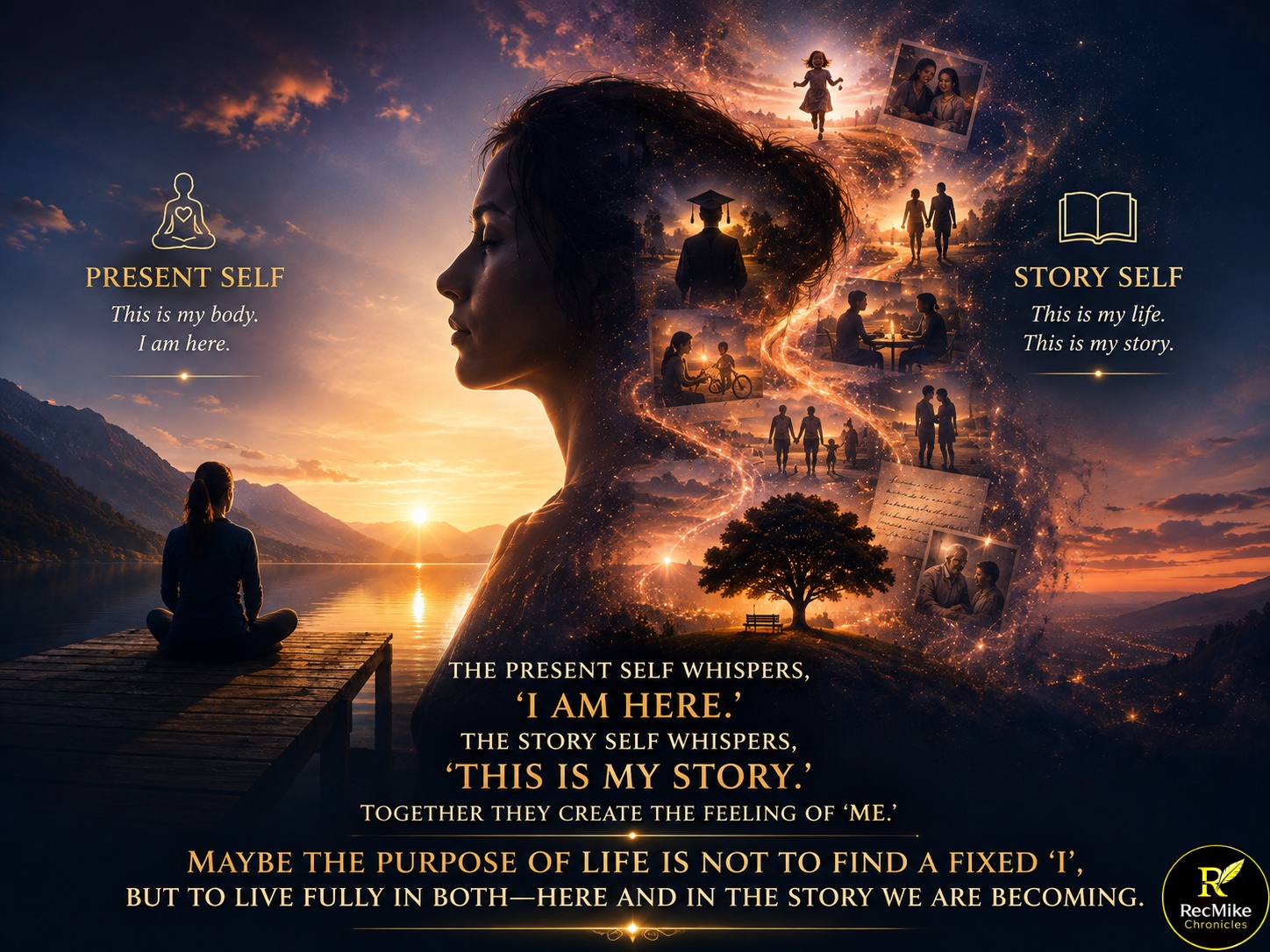
How the Brain Creates the Feeling of Being Me
Every person uses the word “I” thousands of times without thinking about what it actually means. “I am tired.” “I am hungry.” “I remember.” “I am happy.” “I want to go home.” The word seems simple, but behind that small word is one of the most fascinating questions in neuroscience: what exactly is the “I” that we experience as ourselves?
Is “I” my body? Is it my brain? Is it my memories, personality, thoughts, or emotions? Or is the feeling of being “me” created from all of these things working together? Neuroscience does not point to one particular place in the brain and say, “This is where the self lives.” Instead, our sense of self appears to develop from many interacting brain systems, together with information coming continuously from our body and the world around us.
The “I” Begins With the Body
Before we knew our name, we had a body. Before we had childhood memories, we could feel hunger, pain, warmth, cold, touch, and discomfort. Our brains constantly receive information about what is happening inside the body, including signals related to heartbeat, breathing, digestion, temperature, and muscle activity. This process is known as interoception, which simply means the brain's ability to sense the internal condition of the body.
One brain region involved in processing many of these internal signals is the insula. The insula is not a place where the “self” is stored, but it is part of a larger network involved in bodily awareness, emotions, and conscious experience. Through this continuous communication between the body and brain, we develop a basic feeling that “this is my body” and “I am here.”
This is what we can think of as the Present Self. It does not require a detailed personal history. You do not need to remember your childhood to feel pain today. You do not need to know your name to feel warmth or comfort. It is the immediate experience of being a living person in the present moment.
Then We Develop a Story About Ourselves
As we grow, something more complex begins to develop. We learn our name, recognize our family, remember important experiences, develop preferences, form relationships, and begin to understand where we came from and where we might be going. Gradually, the brain builds a personal story.
We can describe ourselves by saying, “This is where I grew up,” “This is my family,” “This is what I do,” “This happened to me,” or “This is what I want to do in the future.” These statements are not simply facts about us. Together, they help create our sense of personal identity.
This is what we can call the Story Self. It is the feeling that “this is my life and this is my story.”
The Brain Behind Our Personal Story
Several interconnected brain systems contribute to this sense of personal identity. One important network is the Default Mode Network, or DMN. Despite its complicated name, the basic idea is quite simple. This network is active during many forms of inward thinking, such as remembering personal experiences, thinking about ourselves, imagining the future, and considering what other people may be thinking.
The DMN works together with other brain systems, including memory-related areas such as the hippocampus. Together, these systems help connect different moments of our lives. We can remember something from yesterday, think about something that happened twenty years ago, and imagine what might happen next year. Our brain links these experiences across time, helping create the feeling that the person we were in the past and the person we are today belong to the same continuing story.
Two Sides of the Same “I”
The Present Self and the Story Self are not two separate people living inside the brain. They are two useful ways of understanding different parts of our experience of being ourselves.
The Present Self gives us the feeling:
“I am here.”
The Story Self gives us the feeling:
“This is who I am.”
Most of the time, our brain combines these experiences so smoothly that we never notice the process. We can feel our body while remembering our past. We can think about yesterday while sitting in the present. We can imagine tomorrow while still feeling that we are the same person who lived yesterday.
All of these experiences come together into one simple word:
“I.”
But What Holds the Story Together?
Now we reach an important point.
If part of our identity comes from our personal story, what allows us to maintain that story?
The answer brings us to one of the most important functions of the human brain:
memory.
Your name is connected to memory. Your childhood is connected to memory. Your relationships, experiences, achievements, disappointments, and important moments are connected to memory. Memory helps link the person you were with the person you believe yourself to be today.
This means memory may be much more than a system for remembering where you left your keys.
Memory may be one of the threads that holds the story of “me” together.
And that leads us to the next question:
If memory is part of who I am, where is “me” in the brain?
Next: Part 2 — Where Is “Me”?
Is There a Self Centre in the Brain?