
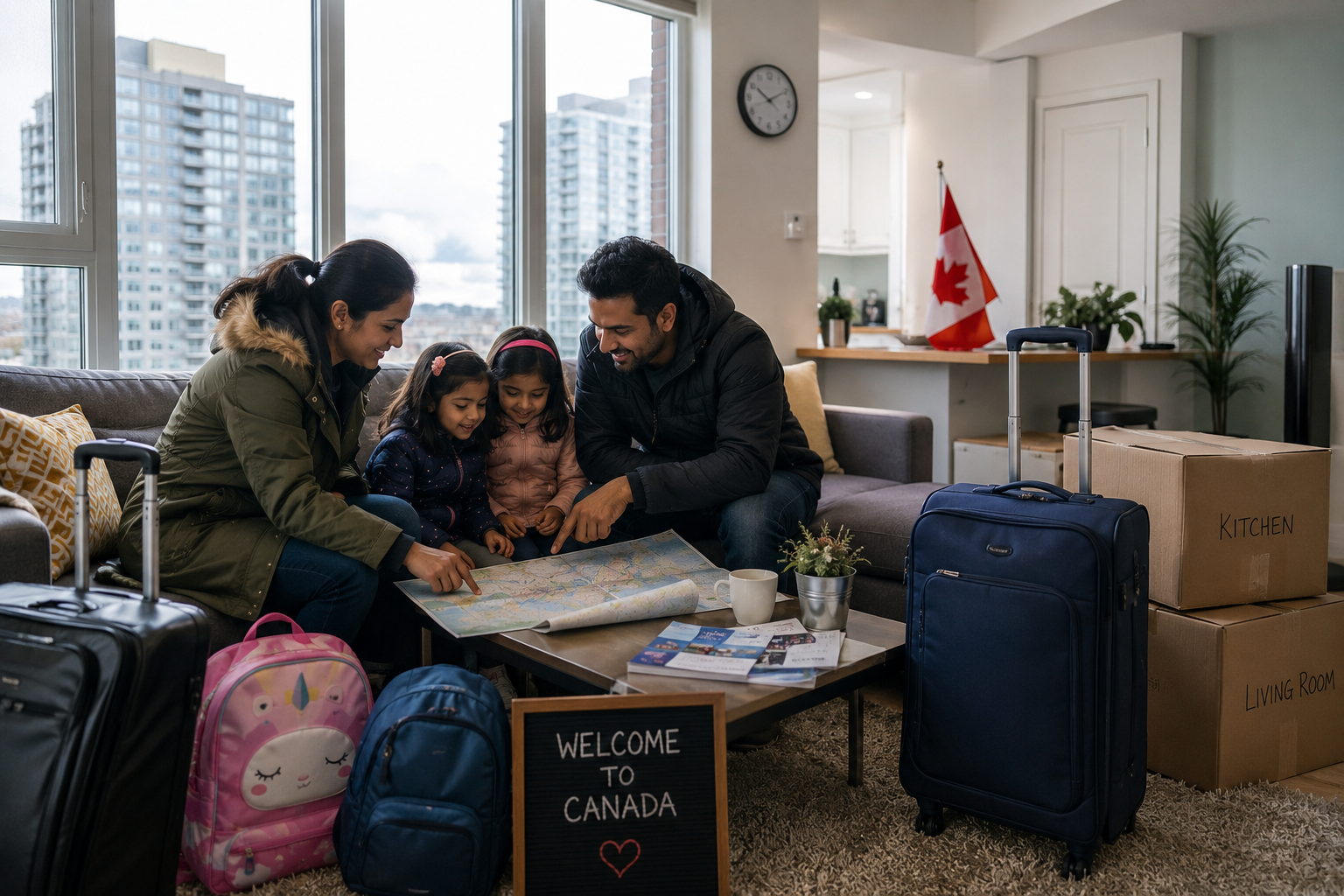
For many newcomers, one of the biggest questions after arriving in Canada is simple:
“Where should we stay now?”
It sounds like a basic question, but it carries a lot of emotions behind it. Safety. Money. Stability. Comfort. Family. Future plans.
When people first arrive, they often feel pressure to find a permanent home immediately. But in reality, rushing into housing decisions can create more stress later. Canada is a large country, and every city, neighborhood, and rental situation feels different once you actually start living there.
That is why many newcomers begin with temporary accommodation before moving into a permanent place.
Understanding the difference can save you money, stress, and disappointment.
🏠 What Is Temporary Accommodation?
Temporary accommodation means a short-term place to stay while you settle into the country and learn your surroundings.
This could be:
A hotel
Airbnb
A friend or relative’s home
A short-term rental
A newcomer housing program
Temporary housing is not meant to be perfect. Its purpose is simple. It gives you time.
Time to:
Understand the city
Explore neighborhoods
Learn transportation routes
Compare rental prices
Avoid rushed decisions
Many newcomers who rush into permanent housing within the first few days later realize:
The area is too expensive
Public transportation is difficult
Schools are far away
The neighborhood does not fit their lifestyle
A few weeks of temporary accommodation can prevent months of stress.
🧳 Why Many Newcomers Start Temporary
When you first arrive, almost everything is unfamiliar.
You may not yet understand:
Canadian rental systems
Lease agreements
Utility costs
Safe and unsafe areas
Commute times during winter
Online photos can also be misleading. Some places look beautiful in pictures but feel very different in reality.
Temporary accommodation gives you a chance to physically visit places before committing.
This matters more than people realize.
💰 The Financial Side
Temporary accommodation often costs more per day. That part is true.
Hotels and short-term rentals can feel expensive, especially in larger Canadian cities. Because of this, some newcomers try to secure a permanent rental before arriving in Canada.
Sometimes it works well.
Sometimes it becomes a difficult experience because they signed a lease without fully understanding:
The area
The building condition
The landlord
The transportation situation
A permanent lease is a serious commitment. In many cases, you may need to stay for one year or follow legal notice periods before leaving.
Spending slightly more money at the beginning for temporary stability can sometimes save much larger costs later.
🏘️ What Is Permanent Accommodation?
Permanent accommodation is the place you plan to live longer term.
This could include:
An apartment
Basement suite
Condo
Townhouse
Detached home
Permanent housing usually involves:
A lease agreement
Monthly rent
Security deposit requirements
Utility arrangements
Internet setup
Tenant responsibilities
This is where your daily Canadian life slowly begins to take shape.
📄 Understanding Canadian Rentals
In Canada, landlords often ask for:
Identification
Proof of income or employment
Credit history
References
For newcomers, this can feel frustrating because many people arrive without Canadian credit history or local job experience.
Do not panic.
Many landlords understand newcomer situations, especially in cities with large immigrant populations. Sometimes offering:
Several months of rent upfront
Bank statements
Employment offer letters
can help build trust.
Always read lease agreements carefully before signing.
🚩 Watch for Rental Scams
Unfortunately, rental scams exist everywhere, including Canada.
Be careful if:
Someone asks for money before showing the property
The rent seems unusually cheap
The landlord avoids video calls or meetings
Photos look too perfect or copied
Never send deposits without proper verification.
If possible:
Visit the property in person
Ask questions
Check reviews or building history online
A little caution can protect you from major problems.
🌍 Choosing the Right Area
Newcomers sometimes choose housing based only on one factor, usually price or staying near people from the same background.
But long-term comfort often depends on balance.
Consider:
Public transportation
Schools
Grocery stores
Safety
Work commute
Community environment
Living near people from your own culture can feel comforting in the beginning. There is nothing wrong with that. Familiar food, language, and support can reduce stress.
But it is also important to slowly connect with the wider community around you. That connection helps Canada feel less like a temporary place and more like home.
👨👩👧 For Families With Children
Families usually think differently about housing.
Parents often prioritize:
Safe neighborhoods
Good schools
Parks and libraries
Quiet surroundings
Children also adapt faster than adults in many situations. The environment you choose during the first few months can shape how comfortable they feel in their new country.
✔️ A Smart Approach for Most Newcomers
For many people, the safer path looks like this:
Arrive and stay temporarily
Explore the city slowly
Understand transportation and daily life
Visit rental places physically
Then choose permanent housing
This approach reduces pressure and allows clearer decisions.
🌱 Reflection: A Home Takes Time
Many newcomers arrive believing they must immediately “settle down.”
But home is not created by signing a lease.
Home is built slowly.
It grows through routines, conversations, familiar streets, nearby stores, neighbors, schools, and quiet moments that slowly stop feeling foreign.
Your first accommodation in Canada may not become your forever home. That is okay.
Sometimes the first place is simply a bridge between your old life and your new one.
Take your time choosing where you begin this next chapter.
A good home is not only about walls and rent.
It is about where you slowly begin to feel that you belong.