
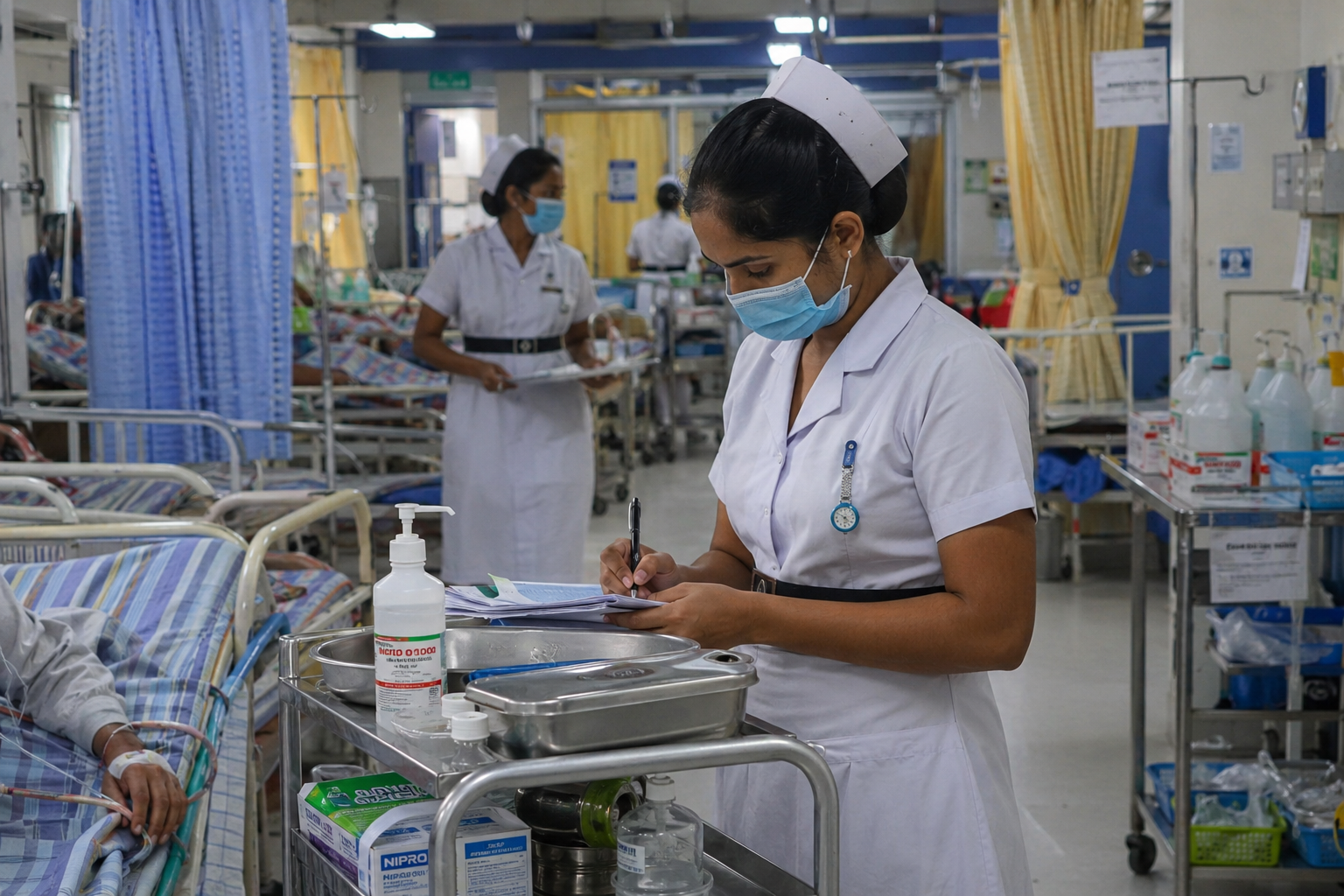
More Than the Public Sees
Ask someone on the street what a nurse does, and the answer is usually predictable. Most people mention giving injections, checking temperatures, administering medications, or following a doctor's instructions. These answers are not wrong, but they tell only a small part of the story.
The reality is that nursing is one of the most complex and demanding professions within healthcare. Much of what nurses do happens quietly in the background, often unnoticed by patients and families. Visitors may spend an hour at a bedside and believe they have seen the nurse's job. In truth, they have witnessed only a fraction of the responsibilities carried throughout an entire shift.
According to international nursing standards, Registered Nurses assess patients, administer medications, monitor health conditions, assist with procedures, operate medical equipment, educate patients and families, coordinate with healthcare teams, and support discharge planning. On paper, these responsibilities seem manageable. In a busy Sri Lankan government hospital, where staffing shortages are common and patient numbers are high, these tasks happen simultaneously and continuously under significant pressure.
The Skill of Seeing What Others Miss
Perhaps the most important nursing responsibility is also the one most people never notice.
Observation.
Throughout every shift, nurses monitor blood pressure, pulse, temperature, oxygen levels, and many other indicators of health. However, experienced nursing goes far beyond recording numbers on a chart.
A skilled nurse learns to recognize subtle changes long before a monitor sounds an alarm. A patient may appear slightly more confused than the day before. Another may be breathing just a little harder than usual. Someone's skin colour may change slightly. A normally talkative patient may suddenly become quiet.
These small observations often become the earliest warning signs of a developing problem.
Because nurses spend more time with patients than any other healthcare professional, they are often the first to notice when a patient's condition begins to deteriorate. Their observations frequently allow treatment to begin before a situation becomes a medical emergency.
Decisions That Cannot Wait
Recognizing a problem is only the beginning.
When a patient's condition changes, nurses must act quickly. They assess the situation, provide immediate care within their scope of practice, notify physicians, and begin coordinating the response required by the situation.
These decisions rarely occur in calm circumstances. Nurses are often caring for multiple patients simultaneously while responding to competing demands from different directions. Yet the quality and speed of these decisions can directly influence whether a patient recovers, develops complications, or faces a life-threatening crisis.
This level of responsibility requires knowledge, confidence, critical thinking, and the ability to remain calm under pressure.
The Responsibility Behind Every Medication
Medication administration is one of the most visible nursing duties, but few people appreciate the responsibility that comes with it.
Every medication given to a patient carries potential benefits and potential risks. Nurses follow what are known as the Ten Rights of Medication Administration. These include ensuring the right patient receives the right medication, in the right dose, through the right route, at the right time, for the right reason, with proper documentation, while respecting the patient's right to refuse treatment, providing education, and monitoring the patient's response.
This process is repeated carefully throughout every shift for every patient.
A single mistake can have serious consequences.
The responsibility does not end when the medication is administered. Nurses continue observing patients for side effects, allergic reactions, unexpected responses, and signs that treatment is not working as intended. A rash after an antibiotic, dizziness after blood pressure medication, or nausea caused by a drug reaction are often identified first by nurses because they remain closest to the patient throughout the day.
Caring Beyond Medical Treatment
Many people assume nursing is mainly about clinical tasks.
In reality, much of nursing involves helping people manage the basic challenges of daily life during illness.
Nurses assist patients with eating, bathing, mobility, toileting, positioning, pain management, and maintaining personal dignity. They help prevent falls, reduce complications, and support patients who may be frightened, confused, or overwhelmed.
This work is often underestimated.
Helping an immobile patient move safely requires knowledge and technique. Assisting someone who is weak or recovering from surgery demands patience and skill. Supporting a patient who is anxious, afraid, or facing a serious diagnosis requires compassion and emotional intelligence.
These responsibilities may not attract attention, but they have a profound impact on patient wellbeing and recovery.
The Emotional Work Nobody Talks About
One aspect of nursing that rarely appears in job descriptions is emotional support.
Nurses spend countless hours listening to worried patients, comforting frightened family members, and supporting people through some of the most difficult moments of their lives. They are often present when bad news is delivered, when fear takes over, and when families need reassurance.
In many cases, nurses become the familiar face patients trust most during a hospital stay.
This emotional labour can be exhausting, but it remains an essential part of quality healthcare.
The Work That Keeps Hospitals Running
When most people think about hospitals, they focus on doctors, medical procedures, and technology.
Yet behind every successful treatment, every safe discharge, and every well-managed ward is a team of nurses constantly assessing, monitoring, documenting, coordinating, educating, and responding.
Much of this work remains invisible to the public.
The patient who recovers safely, the medication error that never happens, the emergency identified before it becomes a crisis, and the frightened family that receives reassurance all have one thing in common: a nurse was likely involved.
Understanding what nurses actually do is the first step toward understanding why they are the backbone of every healthcare system. Their work extends far beyond injections and temperature checks. It combines science, critical thinking, technical skill, communication, compassion, and constant vigilance, carried out every day in every ward and every government hospital across Sri Lanka.