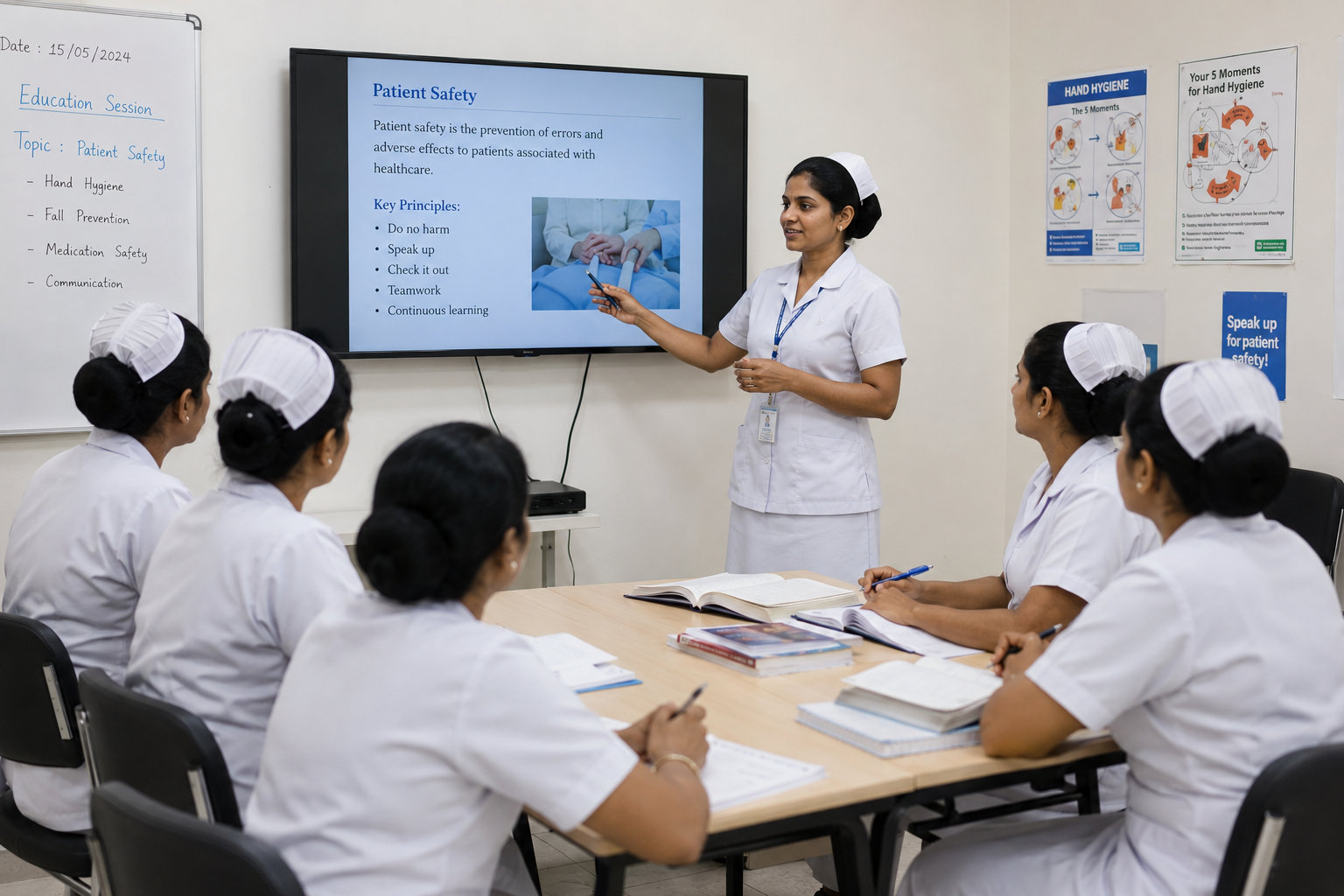
Education, Emotion, and the Weight of Invisible Labour
There is a moment that happens many times a day in hospital wards, and most visitors never see it. A doctor finishes a consultation with a patient. The door closes. And the patient, or the family member sitting by the bed, turns to the nurse.
What does this diagnosis mean for my life? Will the treatment hurt? What happens if it does not work? What do we do when we go home?
These are the questions people do not ask while the doctor is still there. These are the questions they ask the nurse.
The Education Work
We answer these questions. We explain diagnoses in plain language. We translate what the doctor said into terms that actually make sense. We help frightened people understand what is happening to their bodies and what will be done about it.
We teach patients how to take their medications at home. We show families how to care for wounds after discharge. We help them recognize warning signs that mean they need to come back to the hospital. We answer the same questions multiple times, patiently, because people who are scared or sick do not always remember the first explanation.
For many patients, this conversation with the nurse is the most important part of their entire hospital stay. It is where fear gets replaced with understanding. Where confusion becomes clarity. Where someone moves from feeling helpless to feeling like they can actually manage their own care.
This is not a side task. This is care.
The Emotional Weight
Emotional support is equally demanding. When someone gets a serious diagnosis, the nurse is often the first person to see how that lands. We see the fear. We see the tears. Sometimes we are the ones holding someone's hand when they cry.
When a family is waiting outside an operating theatre, the nurse is there. When someone is in pain at two in the morning with no one but the nurse for company, that human presence matters. A skilled, compassionate nurse can reduce anxiety. We can improve how well someone cooperates with their treatment. We can meaningfully affect recovery.
This kind of care cannot be automated. It cannot be given by someone who is not actually there. It requires presence. It requires attention. It requires the ability to recognize that someone needs more than medication right now. They need to be heard.
The Structural Problem
And here is where I need to be honest. Delivering education and emotional support consistently is genuinely difficult. Not because nurses do not want to do it. Because the system does not make space for it.
Time is the immediate problem. After completing urgent clinical tasks, giving medications, monitoring patients, responding to emergencies, and managing the ward, there is typically very little calm time left for extended conversations. This is not because individual nurses are failing. This is because there are not enough nurses to allow this work to be done properly. It is a structural failure.
Keeping Knowledge Current
There is another challenge that deserves acknowledgment. Most nurses develop strong practical skills through years of hands-on work. But knowledge changes. Healthcare changes. New treatments come along. New understanding emerges about how to manage conditions.
Without structured, mandatory education to keep knowledge current, a nurse who qualified fifteen years ago and has had no formal updates since then is still practicing with information that may have been superseded. In Western countries, regular professional development is required to maintain nursing registration. This requirement exists because healthcare changes constantly, and we need to change with it.
Supporting ongoing learning is not something extra for nurses. It is fundamental. It is how we stay safe practitioners.
The System Coordinator
Beyond the bedside, nurses also coordinate the entire hospital system for individual patients. We are the people who ensure that someone moves smoothly from admission through investigation, treatment, and discharge. We make sure accurate information follows them at every stage. We connect them with the departments and specialists they need.
This requires clinical knowledge. Communication skills. Patience. The ability to think across systems while simultaneously managing multiple urgent tasks. This is professional work of a high order.
Yet it is rarely recognized as such. Nurses are often seen as support staff, as helpers, as someone following instructions. The reality is that we are making complex decisions, coordinating multiple systems, and managing the flow of a patient's entire hospital experience.
The failure to recognize this work for what it is has real consequences. Not just for nurses, but for every patient in Sri Lanka's public hospitals. When nurses are unsupported and undervalued, this work suffers. And when this work suffers, everything suffers.