
Every year, thousands of people visit Banff National Park hoping to experience something unforgettable. Seeing a grizzly bear in its natural habitat is certainly one of those moments. It is exciting, humbling, and a reminder that we are visitors in one of Canada's last great wilderness areas.
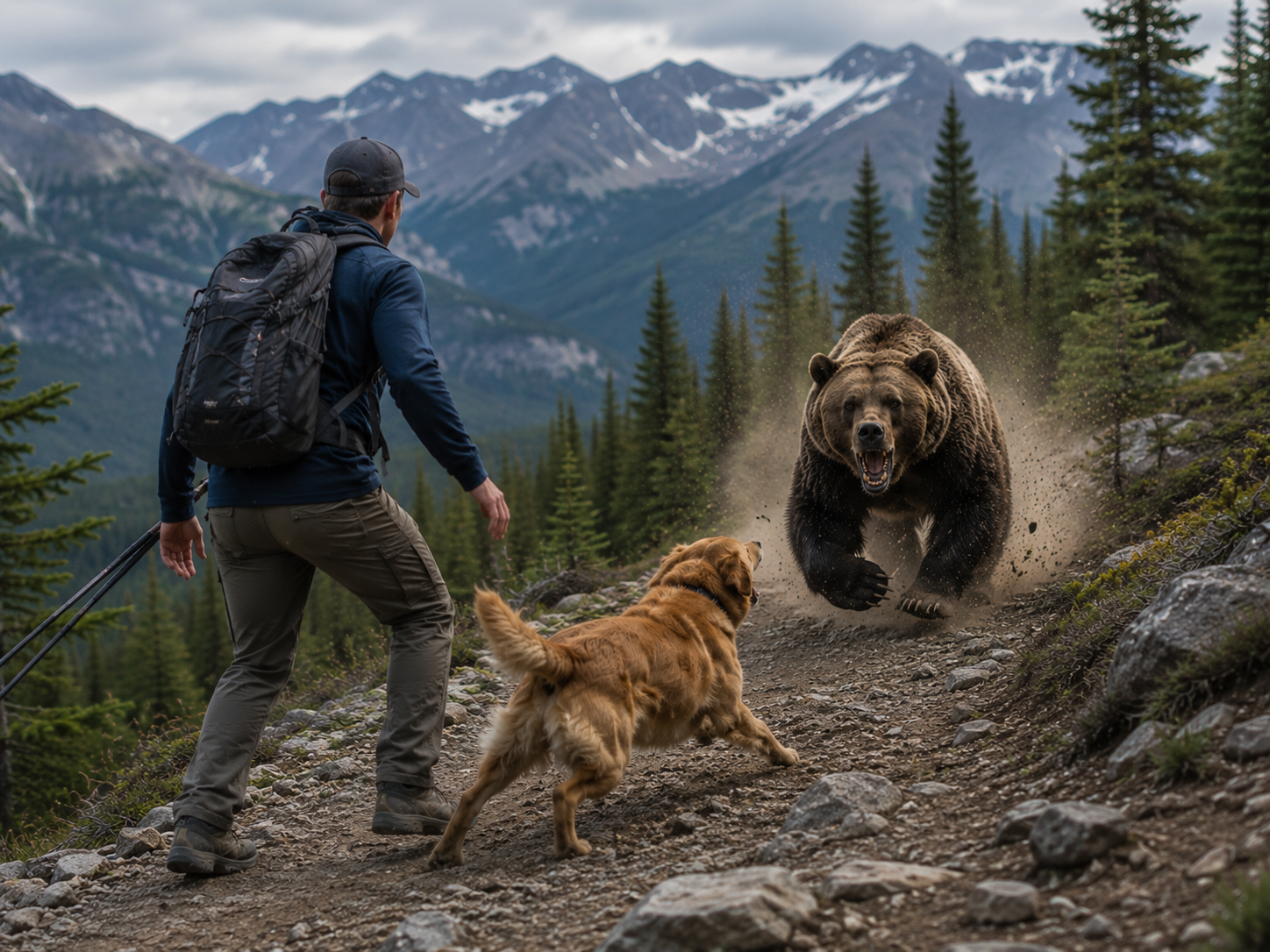
Recently, a widely shared video showed a couple walking with an off-leash dog dangerously close to a grizzly bear in Banff National Park. While no one was injured, the incident serves as an important reminder that wildlife safety rules are there to protect everyone, including the animals themselves.
Nature Has Its Own Rules
Many people think of national parks as beautiful places to hike or take photographs. In reality, they remain functioning ecosystems where predators, prey, and countless other species continue the same natural relationships they have followed for thousands of years.
A grizzly bear does not recognize hiking trails, social media videos, or family pets. It reacts to what it sees as potential threats or disturbances. When people enter bear habitat, we become part of that environment, not the other way around.
Respecting wildlife means allowing animals to behave naturally without forcing them to react to us.
Why Dogs Must Stay on a Leash
Parks Canada requires dogs to remain on a leash and under physical control at all times within Banff National Park, except in designated off-leash areas or fenced private property. It is also illegal to feed, attract, or intentionally disturb wildlife.
These regulations are based on decades of wildlife research rather than simple precaution.
Even a friendly dog can unintentionally create danger. Dogs may bark, chase wildlife, or suddenly run toward a bear before returning to their owner. From the bear's perspective, this can appear to be an attack or a threat that requires an immediate response.
A situation that might have ended with both parties quietly moving away can escalate within seconds.
The Hidden Victim
When wildlife incidents occur, many people focus on the risk to hikers. However, the animal often suffers the greatest consequences.
Bears that become involved in repeated dangerous encounters with humans may be relocated to unfamiliar territory. If they continue to pose a risk, wildlife managers may have no choice but to euthanize them.
In many cases, the bear was simply behaving exactly as nature intended.
One careless decision by a visitor can have lifelong consequences for an animal that has done nothing wrong.
The Legal Consequences
Ignoring wildlife regulations can also carry significant legal penalties.
Parks Canada can lay charges for disturbing wildlife or allowing domestic animals to create dangerous situations within a national park. Depending on the offence, individuals may be required to appear in court, and penalties can reach up to $25,000.
Following the recent Banff incident, Parks Canada confirmed that charges were laid under the National Parks domestic animal regulations because the dog was off leash. The court will determine the final outcome, but the incident highlights how seriously these rules are enforced.
Respect Wild or Natural Selection
Nature has always operated through its own balance. Wildlife survives by instinct, experience, and natural selection. Bears do not make decisions based on human expectations, and they should never be expected to adapt their behaviour because we choose to enter their habitat.
Our responsibility is not to change nature. It is to respect it.
Keeping a respectful distance, remaining calm, keeping dogs leashed, and allowing wildlife an escape route are simple actions that protect people while preserving the natural behaviours that make places like Banff so remarkable.
The Takeaway
Visiting Canada's national parks is a privilege.
Every responsible choice we make helps protect both people and wildlife. The goal is not simply to avoid fines or dangerous encounters. It is to ensure that future generations can experience truly wild places where animals remain exactly what they should be: wild.
When we respect nature on its own terms, everyone benefits.
Stay safe, leave no trace, and remember. We are guests in their home, not the other way around.