
A Profession Built on Trust
The relationship between Sri Lankan society and its nurses is long, layered, and genuinely contradictory. To understand where nursing stands today, it helps to understand how that relationship has evolved.
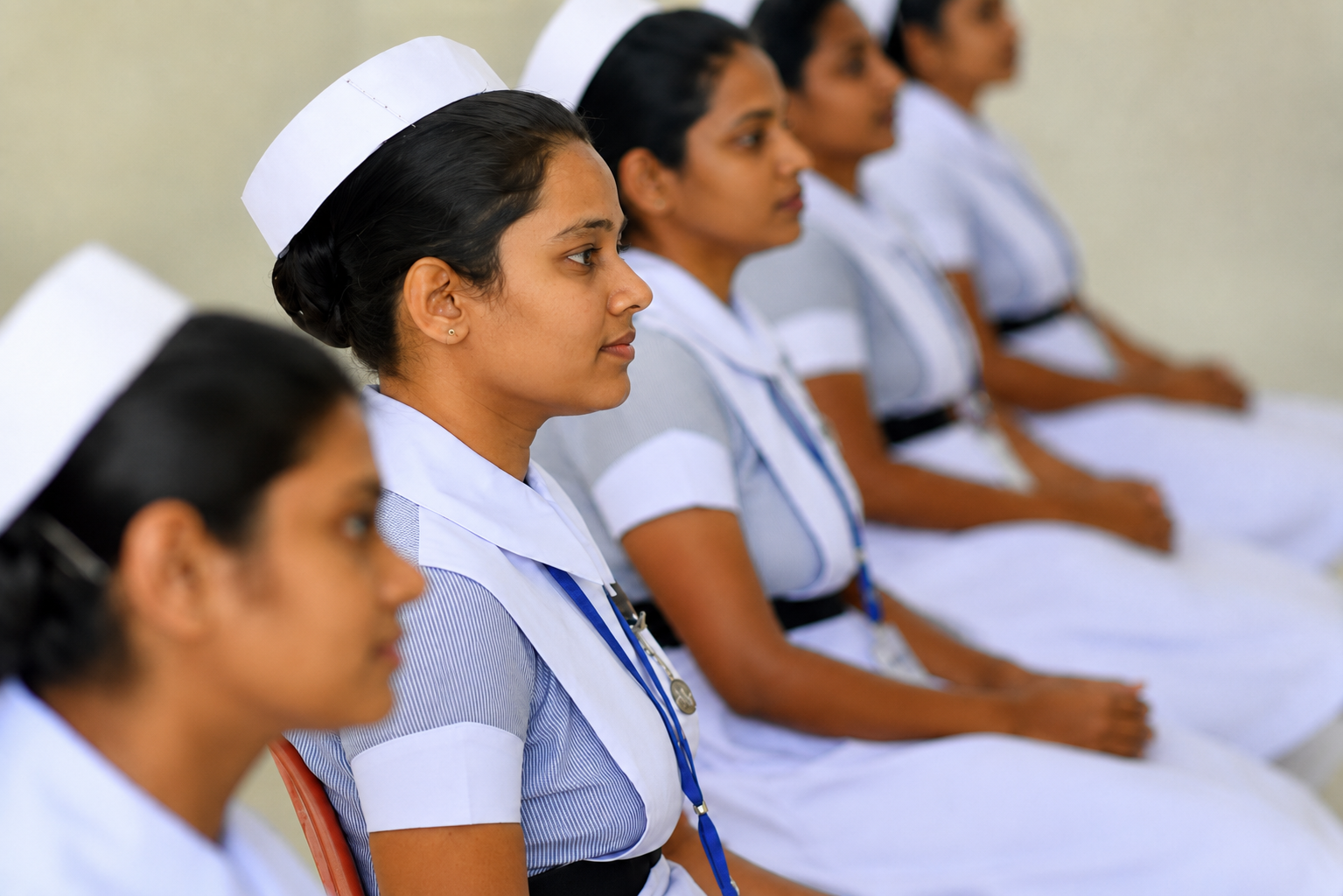
For much of Sri Lanka's modern history, the nurse occupied a position of real community respect. In villages and small towns, the government hospital nurse or the public health nurse who made home visits was a trusted figure: someone who could give injections, dress wounds, explain an illness, and offer practical guidance that made a concrete difference to everyday health. Families with a nurse among them felt a quiet pride. Nursing was seen as honourable work, meaningful in the way that few careers are.
Trust Earned Through Service
This respect extended, with some modifications, into urban areas as well. Nurses were sometimes overshadowed by the higher social status accorded to doctors, but the image of the nurse as compassionate, patient, and dedicated remained broadly positive. Nurses who worked long-term in the same hospital or community became familiar and trusted figures. The fact that families entrust their most vulnerable loved ones to nurses day after day reflects a foundation of trust built over decades of genuine service.
Changing Public Perceptions
But public perception is not static or uniform. Alongside this respect, a more critical image has grown. Some people describe nurses as short-tempered, rude, or difficult to approach. Others believe that nurses are perpetually on strike and have concluded that strikes reflect a lack of care for patients rather than a response to genuine grievances. Because nurses are the most visible staff members in the ward, frustration about the system often lands on them, even when the real problem is understaffing, resource shortages, or structural failures that no individual nurse caused or could fix.
Looking Beyond First Impressions
What gets lost in these perceptions is the human reality behind them. A nurse who does not smile after twelve hours of managing fifteen critically ill patients is not a cold person. A nurse who cannot stop to answer a detailed question because she is in the middle of administering time-sensitive medications is not indifferent. These are people functioning at the outer edge of their capacity, in conditions that most critics have never experienced and would not choose to experience.
The Impact of Gender Stereotypes
Gender stereotypes complicate the picture further. Nursing is still widely perceived as a female profession, associated more with caring instinct than with professional skill. Male nurses face their own set of challenges: they are sometimes mistaken for attendants or assumed to be doctors simply because they are men. These assumptions are not harmless. They undermine professional identity and reinforce the idea that nursing is not a skilled occupation but a gendered service role.
The Pandemic and Public Recognition
During the COVID-19 pandemic, something shifted. Media, politicians, and ordinary citizens described nurses as heroes. Communities clapped. There were messages of gratitude and public acknowledgment of the risks nurses were taking. For a period, society clearly saw what nurses contribute. That recognition mattered to many nurses. But it also revealed something uncomfortable: the idea of nurses as heroes can sometimes function as a substitute for structural change rather than a prompt for it. Applause and social media posts do not improve staffing ratios, raise wages, or provide mental health support. True respect must be expressed through policy, not just sentiment.
Building a Better Relationship
The path forward requires honesty from both sides. The public needs a more complete understanding of what nurses actually do, and why the system sometimes produces interactions that feel cold or abrupt. Nurses, in turn, have a responsibility to reflect on their communication and professionalism, because public trust is genuinely important to the future of the profession. This is not about assigning blame. It is about building the mutual understanding that a healthier relationship between nurses and the public requires.