
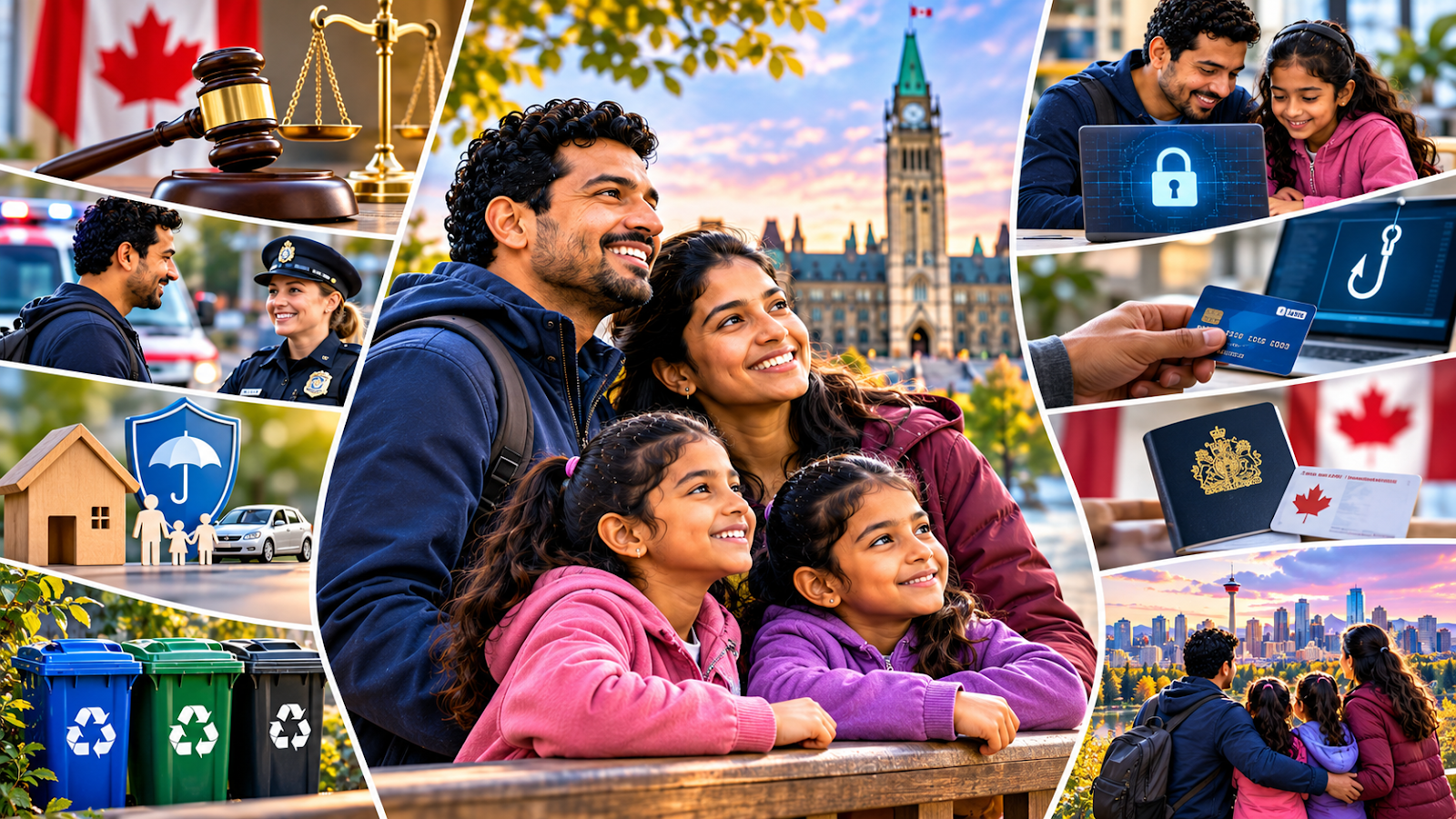
Welcome to Canada Series | Part 25
Canadian Laws Every Newcomer Should Know
⚖️ Understanding Your Rights and Responsibilities
Throughout this series, we have explored many parts of starting a new life in Canada, from finding a home and getting a job to understanding healthcare, managing money, and becoming part of your community. As you become more settled, it is equally important to understand the laws and responsibilities that shape everyday life in Canada.
You do not need to become a legal expert, but knowing your basic rights and responsibilities can help you protect yourself, make informed decisions, and avoid unnecessary problems. Remember that some laws apply across Canada, while others vary between provinces, territories, and municipalities.
🇨🇦 Your Rights and Responsibilities
Canada has laws that protect fundamental rights such as equality, freedom of expression, freedom of religion, and protection from discrimination. These rights are important parts of Canadian society and apply to people living in Canada, not only citizens.
At the same time, everyone has a responsibility to follow the law, respect other people's rights, and contribute to a safe community. Cultural traditions and personal beliefs are important, but they do not justify violence, abuse, forced marriage, or discrimination. Understanding this balance helps newcomers maintain their cultural identity while adapting to Canadian society.
🚓 Dealing With Police and Emergencies
If you interact with the police, remain calm and communicate respectfully. If you are arrested or detained, you have important legal rights, including the right to know why and the right to speak with a lawyer without delay. If you do not understand English or French, ask for interpretation assistance.
For immediate emergencies involving serious injuries, fire, danger to life, or a crime in progress, call 911. For non-emergency matters, contact your local police service through its non-emergency number. Knowing when and how to seek help is an important part of staying safe.
🛡️ Understanding Insurance
Insurance helps protect you and your family from unexpected financial difficulties. Depending on your circumstances, you may need vehicle, tenant, home, travel, life, or additional health insurance.
For example, tenant insurance can help protect your belongings and provide personal liability coverage, while automobile insurance is generally mandatory for drivers. Before purchasing a policy, understand what it covers, what is excluded, and how to make a claim. Never assume that every expense or accident is automatically covered.
🛒 Knowing Your Consumer Rights
As a consumer, you have certain protections when purchasing products and services. These may include protection against misleading advertising, unfair business practices, and certain unfair contract terms. Consumer protection laws vary between provinces and territories.
Before signing an agreement, purchasing an expensive item, or accepting a service, read the conditions carefully. Keep receipts and understand refund policies, warranties, and cancellation terms. If you experience an unfair business practice, your provincial or territorial consumer protection office can provide guidance.
🔐 Digital Life and Online Safety
Online services have become part of everyday life in Canada. You may use the internet for banking, shopping, healthcare appointments, government applications, and communication. While these services make life easier, protecting your personal information is essential.
Use strong passwords, enable additional security verification where available, and avoid opening suspicious links or attachments. Never share your banking passwords or verification codes with someone who contacts you unexpectedly. When accessing government services, make sure you are using official websites.
🚨 Banking Scams and Fraud Awareness
Newcomers can sometimes become targets of financial scams because they are unfamiliar with Canadian systems. Scammers may pretend to be immigration officers, police officers, bank employees, or government representatives. They may threaten you with arrest, promise guaranteed immigration approval, or demand immediate payment.
Be cautious when someone pressures you to transfer money or share personal information. Government agencies and legitimate financial institutions have established procedures, and unexpected demands for gift cards, cryptocurrency, or immediate payments should raise concerns. If you suspect fraud, contact your bank through its official contact details and report the incident to the Canadian Anti-Fraud Centre.
♻️ Recycling and Waste Systems
Looking after the environment is part of everyday community life in Canada. Most municipalities have systems for household garbage, recycling, and sometimes organic waste. The rules and collection schedules depend on where you live.
Learn which materials belong in each bin and how to dispose of items such as batteries, electronics, and hazardous household products. Following local recycling guidelines helps keep neighbourhoods clean and reduces unnecessary waste.
🤝 Understanding Canadian Values
Canada is home to people from different cultures, languages, religions, and backgrounds. Equality, respect, fairness, individual freedom, and the rule of law are important principles in Canadian society.
You do not need to abandon your cultural identity to become part of Canada. You can maintain your language, traditions, food, and beliefs while learning to understand and respect the values and rights of others. A successful multicultural society depends on mutual respect and participation.
🛂 Staying Updated on Permanent Residency
For many newcomers, permanent residency is an important milestone. If you are already a permanent resident, understand your responsibilities, including the residency obligation and keeping your immigration documents up to date.
If you are still working towards permanent residency, remember that immigration programs, eligibility requirements, and application procedures can change. There are different pathways, including economic immigration, family sponsorship, and certain humanitarian or protected-person pathways.
Use the official Immigration, Refugees and Citizenship Canada (IRCC) website to check program requirements, application updates, processing times, and announcements. If you have submitted an application, use your official IRCC account or application status tracker to follow its progress. Be careful of individuals or websites promising guaranteed approval.
🍁 Pathways to Canadian Citizenship
For many permanent residents, Canadian citizenship is a long-term goal. Citizenship provides additional rights, including the right to vote in Canadian elections and apply for a Canadian passport.
Most adult applicants must have permanent resident status, meet the physical presence requirement, satisfy applicable tax-filing requirements, and demonstrate adequate knowledge of English or French if they are between 18 and 54. Applicants in that age group must also pass the citizenship test. Requirements can change, so always check the official IRCC website before applying.
🏡 Building a Long-Term Life in Canada
Settling in Canada is not a single event. It is a gradual process of building a career, supporting your family, managing finances, understanding your responsibilities, and becoming part of your community. Your priorities may change over time, and your journey may include new opportunities, challenges, and decisions.
Some newcomers may choose to become Canadian citizens, while others may build a fulfilling life as permanent residents. Some may move between provinces, change careers, start businesses, or continue their education. There is no single definition of success. What matters is understanding your opportunities and making decisions that support the future you want.
🌱 Reflection: Making Canada Your Home
When you first arrive in Canada, almost everything feels unfamiliar. You gradually learn how to find a home, access healthcare, use public transportation, manage money, understand workplace culture, and communicate with people from different backgrounds.
Over time, these unfamiliar experiences become part of your everyday life. You begin to understand not only how things work in Canada but also how you can contribute to the society around you.
Building a life in a new country does not mean leaving your past behind. Your culture, language, experiences, and personal values remain important parts of who you are. You can carry those roots with you while building new relationships and embracing new opportunities.
Canada may have started as a destination, but with time, effort, and meaningful connections, it can become your home. The journey from newcomer to belonging is not about becoming someone else. It is about building a new chapter of your life while remaining true to who you are.