
Part 21: Someone to Talk To — The Case for Employee Assistance Programs
"Ayiya, I cannot handle this anymore. It is too much at work, and at home, I have no support. I just want to sleep for weeks."
I have lost count of how many times I heard words like these from colleagues during my years of nursing in Sri Lanka. Some were struggling with serious financial pressures, while others were dealing with difficult family situations or personal problems they had no one to turn to for help with. Many simply needed someone who would listen without judging them, questioning their ability, or making them feel professionally vulnerable. In a profession built around listening, understanding, and supporting others, the absence of that same support for nurses themselves is a painful irony.
The Emotional Weight of Nursing
Throughout this series, we have looked at the many pressures facing Sri Lankan nurses, including staff shortages, excessive workloads, limited resources, financial difficulties, and professional challenges. These problems do not exist separately. They overlap, accumulate, and eventually affect the physical and emotional well-being of the people working within the system.
Long shifts, high patient loads, repeated exposure to suffering and death, financial responsibilities, and family pressures create an environment in which emotional exhaustion can become part of everyday working life. Add to this the cultural expectation that nurses should remain strong, manage their problems quietly, and continue working regardless of their personal circumstances, and it becomes clear why mental health support is not a luxury. It is a necessity.
As discussed in Part 12, research has reported burnout among approximately 72.5 percent of Sri Lankan nurses, while only around 28.4 percent demonstrated high resilience at work. These figures should make us think seriously about the human cost of working in an overstretched healthcare system. They are not evidence of weak individuals. They reflect a workforce carrying more than it can reasonably sustain without adequate support.
What Is an Employee Assistance Program?
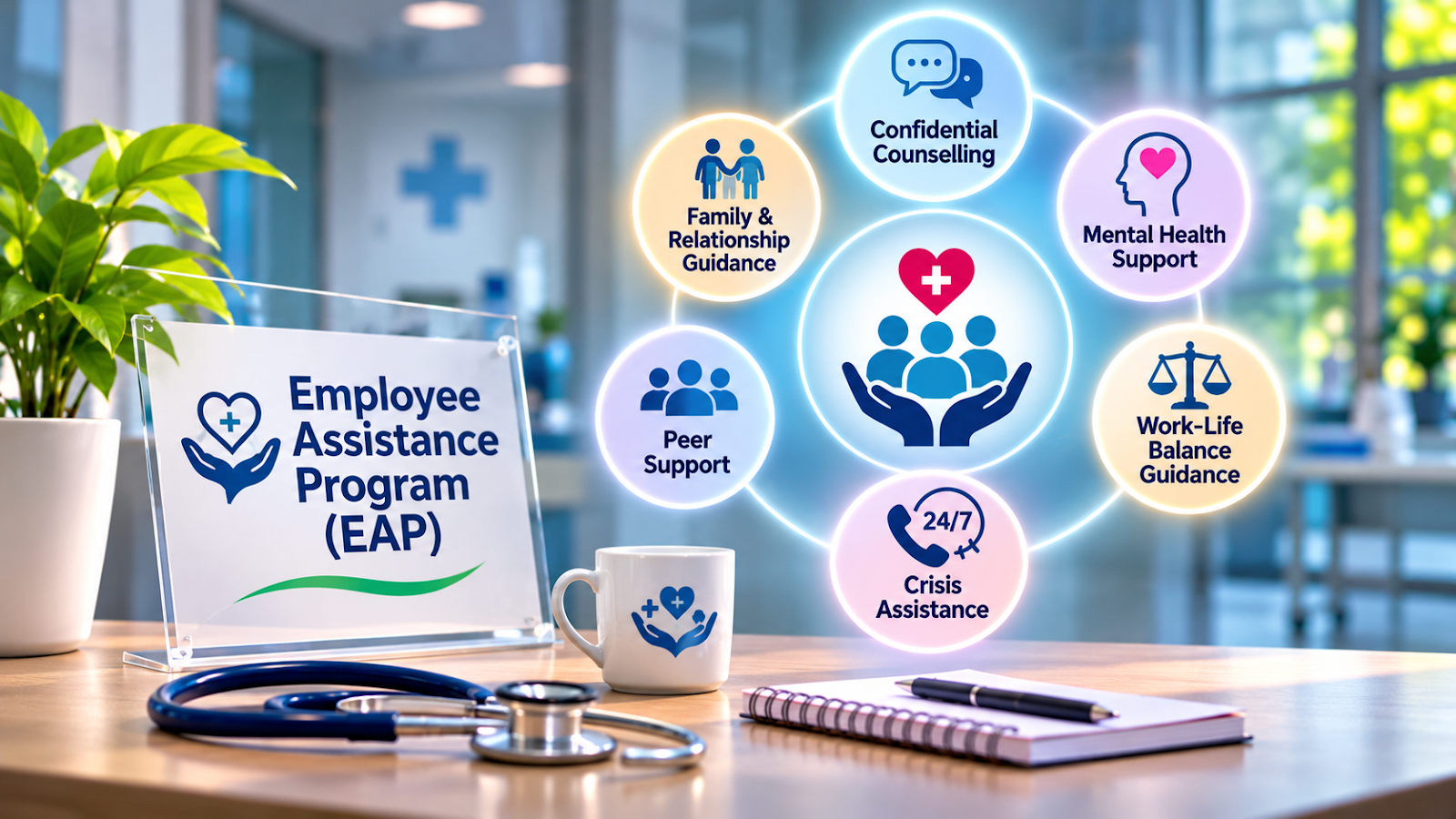
One practical way to address this gap is through an Employee Assistance Program, commonly known as an EAP. It is a structured workplace support service that gives employees confidential access to professional counselling, mental health resources, practical guidance, and crisis support, usually at no direct cost to the employee.
An EAP is not a replacement for the wider reforms discussed throughout this series. Counselling cannot solve chronic understaffing, increase salaries, or provide missing medical equipment. However, it can give nurses something equally important: a safe and confidential place to seek help when personal or professional pressures become difficult to manage.
The important point is that support should be available before someone reaches breaking point, rather than only after a serious mental health crisis develops.
A Personal Experience of What Works
The EAP available to my wife and me in the country where we now work has been genuinely valuable. During the COVID-19 period, when stress levels were particularly high and the psychological demands of healthcare work were enormous, having access to confidential support made a real difference.
The service provided access to trained counsellors, assistance with work-life balance, family and relationship guidance, and support during difficult personal circumstances. Employees could access these services by telephone, through an app, or in person, without having to justify why they needed help or worry about professional consequences for seeking it.
What I particularly appreciated was the accessibility and confidentiality. Sometimes, knowing that there is someone available to talk to is reassuring in itself. You do not always need an immediate solution. Sometimes, you simply need a professional who will listen, help you understand what you are going through, and guide you towards a healthier way of managing it.
This is an approach Sri Lanka could learn from and adapt to its own healthcare environment.
What Would an EAP Look Like in Sri Lanka?
A successful EAP for Sri Lankan healthcare workers would need to reflect the country's language, culture, working conditions, and geographical challenges. Services should be available in Sinhala, Tamil, and English, ensuring that nurses can communicate comfortably in the language they prefer.
Accessibility is equally important. Nurses working rotating shifts, extended hours, or in rural hospitals cannot always travel to a counselling centre during normal office hours. Telephone counselling and secure online services would therefore be essential components of the program. Nurses should be able to access support between shifts, during difficult personal circumstances, or whenever they genuinely need it.
Another valuable approach would be structured peer support programs. Nurses often find it easier to discuss their experiences with colleagues who understand the realities of hospital work. However, these programs should be properly facilitated and confidential, rather than relying entirely on informal conversations among colleagues.
Making Emotional Well-Being Part of Professional Development
Mental health support should not begin only after nurses experience burnout. It should also be incorporated into nursing education and ongoing professional development.
As discussed in Part 17, continuing professional development should be an essential part of a modern nursing profession. Alongside clinical knowledge and technical skills, nurses should receive practical training in stress management, emotional regulation, mindfulness, grounding techniques, and reflective practice.
These are not simply additional activities or soft skills. They are useful, evidence-based approaches that can help healthcare professionals manage demanding situations, recognize emotional exhaustion, and maintain their ability to provide safe and compassionate care.
Learning how to recognise personal stress and seek appropriate support should be treated as a professional strength, not a sign of weakness.
Supporting Nurses Before They Leave
Another important consideration is how hospitals respond when a nurse begins experiencing burnout or emotional difficulties.
Unfortunately, in many workplaces, struggling employees may feel that admitting they are overwhelmed will affect how managers and colleagues perceive them. Some keep working despite exhaustion because they fear being judged, losing opportunities, or adding pressure for already overstretched colleagues.
This needs to change.
When burnout is identified, the response should be supportive rather than punitive. Depending on individual circumstances, temporary workload adjustments, mentoring, access to counselling, or short-term rotations to less demanding clinical settings may help nurses recover while remaining connected to their profession.
Early intervention matters. Without appropriate support, prolonged burnout can eventually lead to extended sick leave, reduced performance, or complete departure from nursing. Retaining an experienced nurse is far better than waiting until they feel they have no option but to leave.
Caring for Those Who Care for Others
International experience suggests that well-designed Employee Assistance Programs can provide organisational benefits through reduced sick leave, improved staff retention, fewer workplace-related errors, and better employee morale. However, the value of such programs should not be measured only through financial savings.
There is a much more fundamental reason to introduce them.
Nurses spend their working lives caring for people who are frightened, unwell, vulnerable, and sometimes approaching the end of their lives. They carry professional responsibilities while managing their own families, financial commitments, and personal challenges. They are human beings, not machines designed to work endlessly without emotional consequences.
Sri Lankan nurses have demonstrated their dedication through difficult circumstances for generations. The question is whether the healthcare system is prepared to recognise that dedication with meaningful support.
We have discussed protecting nurses legally, financially, professionally, and through better working conditions. Mental health support is another essential part of that protection.
Because a healthcare system cannot continue to care for its people while overlooking the well-being of the very people who make that care possible.