
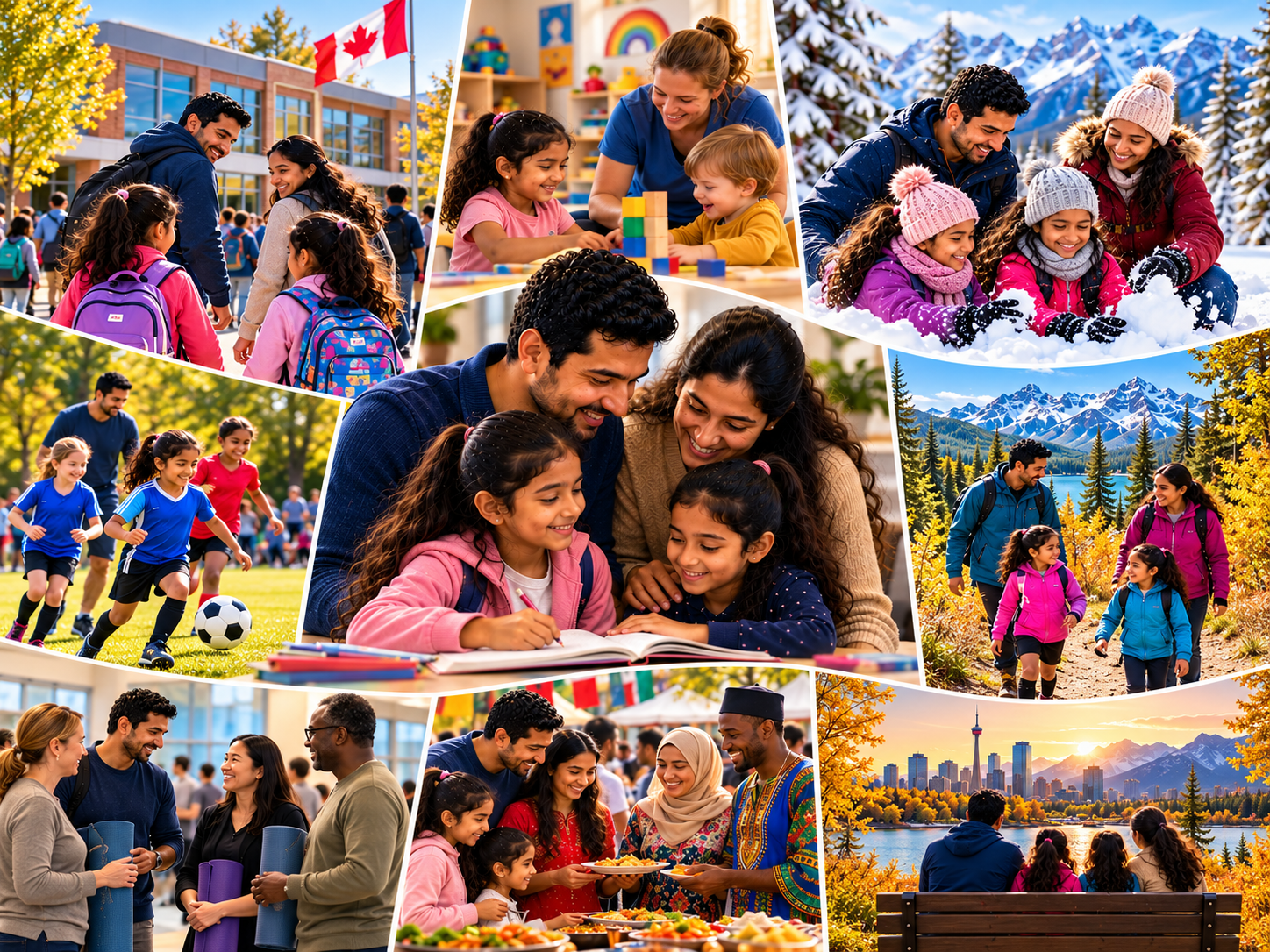
👨👩👧👧 Helping Your Family Feel at Home
In the previous articles, we explored healthcare, transportation, and adapting to Canada's changing seasons. As you become more comfortable with everyday life, another important part of settling in begins to take shape: building relationships, supporting your children, and finding a sense of belonging in your community. A home is more than a place to live, and settling in is about more than finding a job or learning how the system works. It is also about the people you meet, the friendships you develop, and the memories you create together.
🎒 Enrolling Your Children in School
For families with children, enrolling in school is often one of the first major steps after arriving in Canada. Public schools generally serve children according to their age and where they live, although enrolment requirements and procedures vary by province, territory, and school board. You may need documents such as proof of address, identification, and your child's previous school records. Contact your local school board to understand the requirements and available language support.
Starting school in a new country can be exciting but challenging for children. They may need time to adjust to a different language, teaching style, classroom environment, and group of classmates. Staying in contact with teachers and encouraging your children to talk about their experiences can help them feel supported during this transition.
📚 Understanding the Education System
Canada does not have one identical education system across the country. Each province and territory manages its own system, so school structures, curriculum, assessment methods, and graduation requirements can differ. Most children attend elementary and secondary school before moving on to college, university, apprenticeship training, or other career pathways.
As a parent, take time to learn how your local system works and what options are available. Remember that education is not only about grades and examinations. It also helps children develop independence, communication skills, friendships, and confidence as they grow.
🧸 Understanding Childcare Options
If both parents work or study, finding suitable childcare may become an important priority. Depending on your community and your child's age, options may include licensed daycare centres, family childcare providers, preschool programs, and before- or after-school care. Availability, costs, waiting lists, and eligibility for financial assistance can vary considerably.
Start looking early, especially if you need care for a young child. Check whether a provider is licensed where required, ask about safety procedures, and understand the fees, hours, and policies before making a decision. Reliable childcare can help parents manage work and family responsibilities while giving children opportunities to learn and socialize.
❤️ Parenting in a New Culture
Parenting in Canada can sometimes feel unfamiliar, particularly when the expectations around independence, discipline, education, and communication differ from those in your country of origin. Your children may adapt to Canadian culture faster than you do, especially through school and friendships. They may begin questioning traditions or expressing opinions in ways that feel new to you.
These differences do not mean that your family has to abandon its values. Instead, they offer an opportunity to talk openly, understand one another, and find a balance between family traditions and the environment your children are growing up in. Listening to your children while providing guidance can help build trust and keep family relationships strong.
🤝 Making Friends as an Adult
Making friends can be surprisingly difficult after moving to a new country. As adults, we often have fewer natural opportunities to meet people than children do at school. Work, family responsibilities, language differences, and unfamiliar social customs can make it harder to develop close relationships.
Friendships often begin with small, repeated interactions. Talking to a neighbour, joining a local activity, attending a community event, or getting to know colleagues can gradually lead to meaningful connections. You do not need a large social circle to feel that you belong. Even a few trusted people can make a new place feel much more welcoming.
💬 Understanding Cultural Differences in Communication
People communicate in different ways depending on their culture, upbringing, and personal experiences. In Canada, polite greetings, respectful disagreement, personal boundaries, and direct but considerate communication are common in many settings. However, communication styles vary, and there is no single way that all Canadians behave.
A comment or gesture that seems normal to you might be understood differently by someone else. When misunderstandings happen, try not to assume that the other person intended to be rude. Asking questions, listening carefully, and explaining your meaning calmly can help prevent small differences from becoming bigger problems.
🏞️ Exploring Community Centres and Activities
Community centres, public libraries, recreation facilities, and local organizations can be wonderful places to meet people and discover activities for the whole family. Depending on your area, you may find swimming lessons, sports, arts programs, language classes, cultural events, fitness activities, and programs for children and older adults.
Many communities offer free or low-cost activities, although fees and eligibility vary. Exploring these options can help you and your family develop new interests, practise language skills, stay active, and connect with people from different backgrounds. Sometimes, the easiest way to begin feeling at home is simply to participate in the life happening around you.
🌱 Dealing With Loneliness
Even when life appears to be going well, loneliness can affect newcomers. You may miss family gatherings, familiar food, old friends, and the comfort of knowing how everything works. Special occasions can be particularly difficult when loved ones are far away, and it may take time to build the same sense of connection you once had.
Give yourself permission to experience these feelings without judging yourself. Keep in touch with loved ones, create regular opportunities to meet people, and maintain activities that bring you enjoyment. If loneliness becomes persistent or begins affecting your daily life, consider speaking with a healthcare professional or seeking community support. Building a new life takes time, and asking for help is a sensible step when you need it.
🌏 Maintaining Your Cultural Identity
Settling in Canada does not mean forgetting where you came from. Your language, food, music, traditions, family stories, and cultural values are important parts of your identity. Sharing them with your children can help them understand their roots while they grow up in a multicultural society.
At the same time, adapting to a new country means learning how things work and becoming comfortable with different perspectives. You do not have to choose between your original culture and your new home. You can preserve the traditions that matter to you while discovering new experiences and ideas.
🇨🇦 Celebrating Multiculturalism
One of Canada's distinctive features is the presence of people from many cultural, linguistic, and ethnic backgrounds. In schools, workplaces, neighbourhoods, and community events, you may encounter traditions and perspectives that are very different from your own. This diversity creates opportunities to learn from others and build relationships beyond familiar cultural groups.
Multiculturalism works best when people are willing to show curiosity, mutual respect, and a genuine interest in one another. You can celebrate your own traditions while making space for others to celebrate theirs. Belonging does not require everyone to be the same; it grows when people can participate in a shared community while respecting their differences.
🌱 Reflection: Finding Your Place
When you first arrive in Canada, much of your energy goes toward practical needs such as housing, employment, transportation, healthcare, and managing money. As those things become more familiar, you may begin to notice another change: your life is no longer only about settling in. You are starting to build connections, establish routines, and create a sense of home.
Your children may find their place through school and activities, while you may find yours through friendships, work, volunteering, or community involvement. Some days will feel easy, and others may bring homesickness or uncertainty. That is a normal part of adjusting to a new environment.
Over time, the people you meet, the places you visit, and the traditions you create can become part of your family's story in Canada. You can carry your roots with you while growing new ones. That is how a new country gradually becomes more than the place where you live. It becomes a community in which you and your family can belong.