
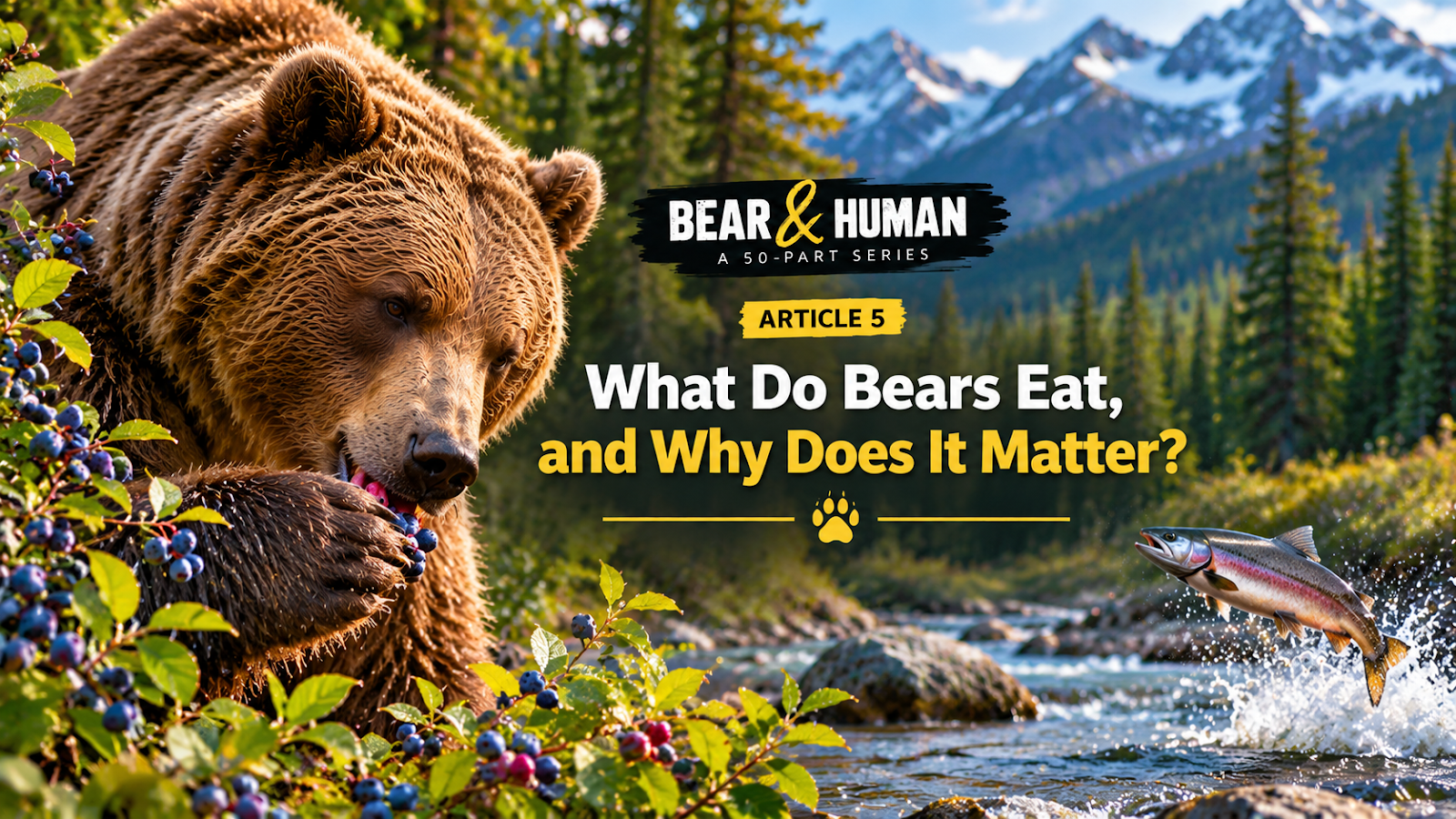
What Do Bears Eat, and Why Does It Matter?
Bear & Human Series | RecMike Chronicles
In our previous article, we followed bears through the changing seasons and discovered how they prepare for winter. But what makes this seasonal journey possible? Food.
Imagine walking through an Alberta forest in late summer. Berries grow on bushes, insects move beneath fallen logs, and roots are hidden in the soil. For a brown bear, this forest is more than a beautiful place to explore. It is a natural food store.
A bear's diet is surprisingly varied. It does not spend every day hunting large animals or catching fish. Much of its time is spent searching, digging, grazing, and eating whatever nutritious food the environment provides.
A Bear Is Not Just a Meat-Eater
Brown bears are omnivores, meaning they eat both plants and animals. Their diet can include grasses, roots, berries, nuts, insects, fish, small mammals, and carrion.
In the Canadian Rockies, plant foods make up a large part of a grizzly bear's diet. Meat is only one part of the picture. Bears are opportunistic feeders, which means they take advantage of whatever food is available.
This flexible diet helps them survive in different habitats, from mountain forests to coastal regions. It also means that two bears living in different environments may eat quite different foods.
A Menu That Changes With the Seasons
A bear's food choices change throughout the year.
In spring, when bears emerge from their winter dens, they search for roots, bulbs, fresh grasses, and animals that died during winter. As summer arrives, insects, vegetation, and other available foods become important.
By late summer and autumn, berries and other high-energy foods can become especially valuable. Bears need to build up fat reserves before returning to their winter dens.
This period of intensive feeding is known as hyperphagia. Bears may spend much of their waking time searching for food and eating. The energy they gain helps them survive months without feeding during winter.
When Salmon Is on the Menu
Along the Pacific coast of North America, salmon can be an important food source for brown bears. During salmon runs, bears gather near rivers and streams to catch fish.
But the relationship does not end with feeding. Bears often carry salmon away from the water, leaving remains in the surrounding forest. These remains provide nutrients to the soil and nearby plants.
Research has shown that bears help move nutrients from salmon streams into the surrounding ecosystem. In this way, feeding bears can also contribute to the health of the forest.
More Than Just Feeding
Bears also help spread plant seeds. When they eat berries, some seeds pass through their digestive systems and are deposited elsewhere in their droppings.
This helps certain plants spread to new areas. It is a reminder that bears are not simply consumers within an ecosystem. Their everyday feeding habits can influence the environment around them.
When Natural Food Becomes Scarce
Food availability can also affect how bears interact with people. When natural food is limited, bears may travel farther in search of something to eat.
Unsecured garbage, birdseed, pet food, and other human food sources can attract them into residential areas. Once bears become accustomed to finding food near people, the situation can become dangerous for both humans and bears.
Keeping food and garbage secure is therefore an important part of living responsibly in bear country.
A Food Story Worth Understanding
A bear's diet tells us much more than what it eats. It reveals how closely the animal depends on seasonal changes, healthy habitats, and the availability of natural food.
Understanding this connection helps us see bears as part of a much larger natural system.
In our next article, we will explore another interesting question: Are Bears Really Solitary Animals? Although brown bears are often described as animals that live alone, their social lives are more complicated than we might think.