
Looking at the Whole Picture
In the previous articles, we have looked closely at the pressures facing Sri Lanka's nursing workforce, from staff shortages and long working hours to limited resources, financial pressures, and burnout. At the same time, we have also explored the strong relationship of trust that nurses have built with patients and communities over generations.
So, if we are going to talk honestly about how the public sees nurses, we have to look at the whole picture. There are positive perceptions, but there are also negative ones. Acknowledging both is not about blaming nurses or the public. It is about understanding why those perceptions exist and what they mean for the future of the profession.
When Frustration Falls on Nurses
Anyone who has spent time in a crowded government hospital knows how quickly frustration can build. Patients are waiting, families are anxious, wards are overcrowded, and everyone wants answers. In these situations, nurses often become the most visible representatives of the healthcare system, even when the problem is much bigger than the individual nurse standing in front of them.
Long waiting times, limited resources, treatment delays, and overcrowded wards can lead some patients and families to describe their encounters with nurses as short-tempered, unhelpful, or difficult. When similar experiences are repeated over many years, they can gradually create a generalized image of the stern government nurse.
That image can be damaging. It affects the public standing of the profession, but it can also affect the morale of nurses who genuinely care about their patients and take pride in their work.
Context Matters
There is, however, an important part of the story that is often missing.
A nurse who has been on her feet for twelve hours, caring for twenty patients, without a proper meal break and with colleagues absent because of staff shortages, is working under very different circumstances from a nurse in a well-staffed ward with reasonable patient ratios and adequate resources.
Both are professional nurses. The difference is the environment in which they are expected to work.
This does not mean that poor communication or unprofessional behaviour should simply be excused. Nurses have a responsibility to communicate respectfully, maintain professional standards, and treat patients with dignity. But understanding the working conditions helps us understand why interactions can sometimes become difficult.
The person standing in front of the patient may be carrying the pressure of an entire system on their shoulders.
The Difficult Question of Strikes
Few issues create stronger public reactions toward nurses than strikes.
When nurses take industrial action, public opinion can divide sharply. Some people see a strike as a betrayal of the duty of care that nursing represents. From the patient's perspective, this reaction is understandable. People seek healthcare because they are vulnerable, and any disruption can create fear, uncertainty, and additional hardship.
Others look at the same situation differently. They see nurses who have raised concerns about wages, overtime, staffing, and working conditions through official channels and believe that industrial action may come only after other efforts have failed.
Both perspectives contain something important.
Strikes do affect patients, and that matters. At the same time, strikes generally do not happen without underlying grievances. They can be a sign that a workforce has reached a point where ordinary discussions and requests have failed to produce meaningful change.
The answer, therefore, is not to pretend that one side is completely right and the other completely wrong. A mature public discussion needs to recognise the impact of industrial action on patients while also understanding why healthcare workers reach the point of taking such action.
The Gender Stereotype That Starts Early
There is another issue that has influenced nursing for generations: the idea that nursing is primarily a woman's profession.
Nursing is often associated with femininity, compassion, and a natural instinct to care. Those qualities are certainly valuable in nursing, but they can overshadow something equally important: nursing is a skilled profession requiring education, clinical knowledge, judgment, technical ability, and significant responsibility.
Male nurses can face particular challenges because of these stereotypes.
I experienced this myself. When my aunt suggested nursing as a career during my school years, my immediate reaction was dismissive. I remember thinking of nursing as a female job and saying that it was not for me.
Looking back, that reaction tells me something about how deeply those ideas were embedded in Sri Lankan culture. At that age, I simply did not understand what nursing really involved.
Once I entered the profession and experienced the work firsthand, those attitudes disappeared completely. I began to understand the level of knowledge, responsibility, clinical judgment, communication, and practical skill that nursing demands.
The experience changed my perception entirely.
But the fact that the stereotype existed so strongly in the first place points to a wider cultural issue. When society continues to view nursing primarily as a caring role rather than a skilled professional discipline, it can influence who chooses nursing as a career, how nurses are treated, and how nurses themselves understand their professional identity.
Beyond the "Hero" Label
The idea of nurses as heroes also deserves some thought.
During the COVID-19 pandemic, nurses were publicly recognised as heroes. For many nurses, that recognition was meaningful. After years of working under pressure, it was powerful to see society acknowledge the risks they were taking and the contribution they were making.
But there is another side to the hero narrative.
When nurses are repeatedly described as heroes, extraordinary sacrifice can slowly become something people expect from them. Long hours, staff shortages, emotional exhaustion, and inadequate resources can begin to seem acceptable because nurses are assumed to be strong enough to cope.
That is not sustainable.
A healthcare system should not depend on nurses being heroic simply to keep the system functioning.
What Real Respect Looks Like
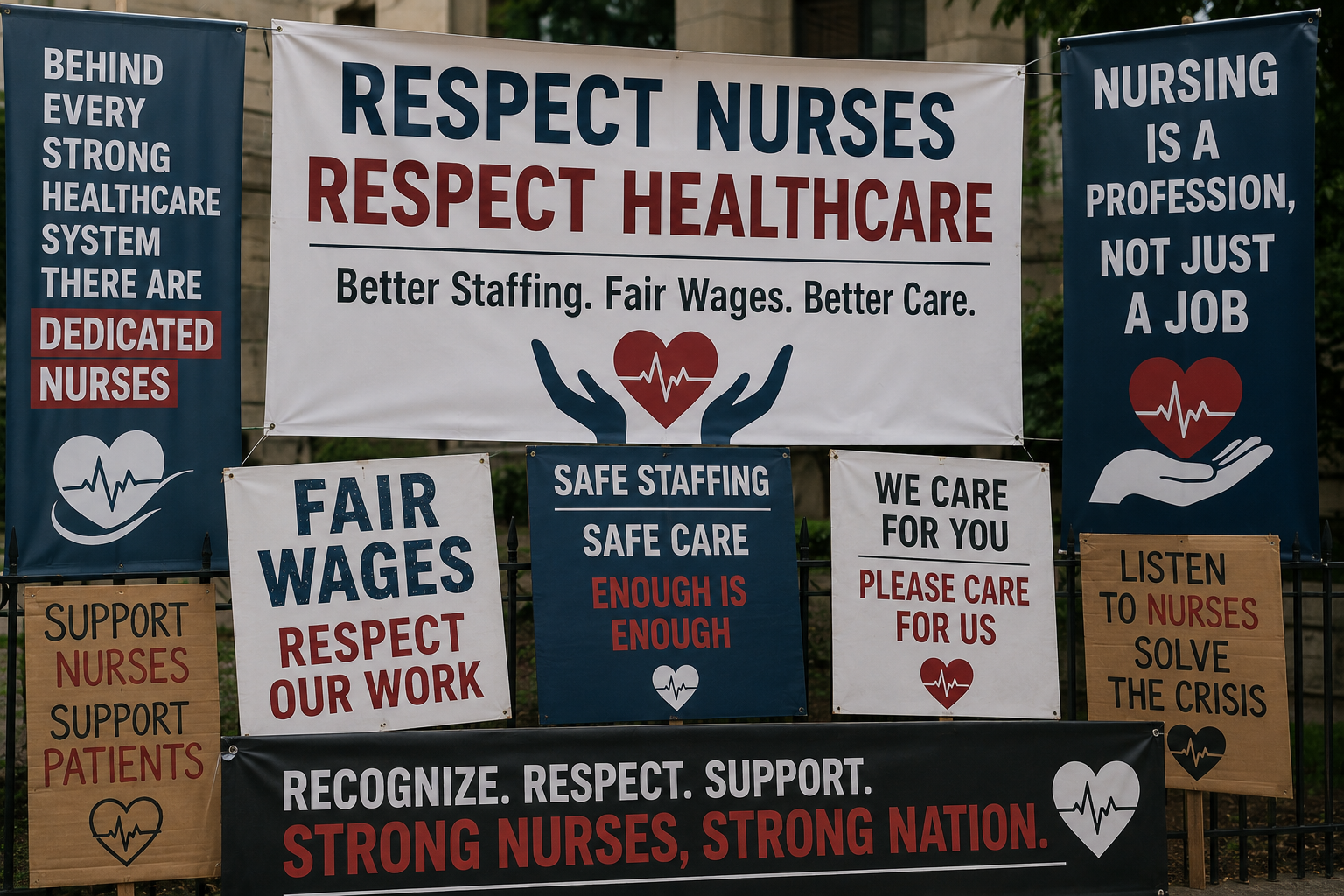
Genuine respect for nursing has to go beyond applause, appreciation posts, and words of gratitude during a national emergency.
Respect should be visible in the way the profession is supported.
It should mean fair wages, adequate staffing, reasonable working conditions, professional support, opportunities for career development, and meaningful involvement of nurses in decisions that affect healthcare delivery. These are not special privileges. They are practical foundations for a safe and sustainable nursing workforce.
Sri Lankan nurses have already demonstrated their dedication countless times. The question is not whether they are willing to give more. They have been giving more for years.
The more important question is whether the system and society are prepared to give nurses the support they need to continue doing their work safely, professionally, and with the dignity they deserve.
No comments:
Post a Comment
(අදහස් දැක්වීමට කිසිදු බාධාවක් නැති වුවත් , සතියකට වඩා පැරණී ලිපි වලට අදහස් දැක්වීමේදී එය පිටුවෙහි පළ වීමට සහ පිළිතුරු ලබා දීමට ප්රමාදයක් විය හැක.)
Note: Only a member of this blog may post a comment.